
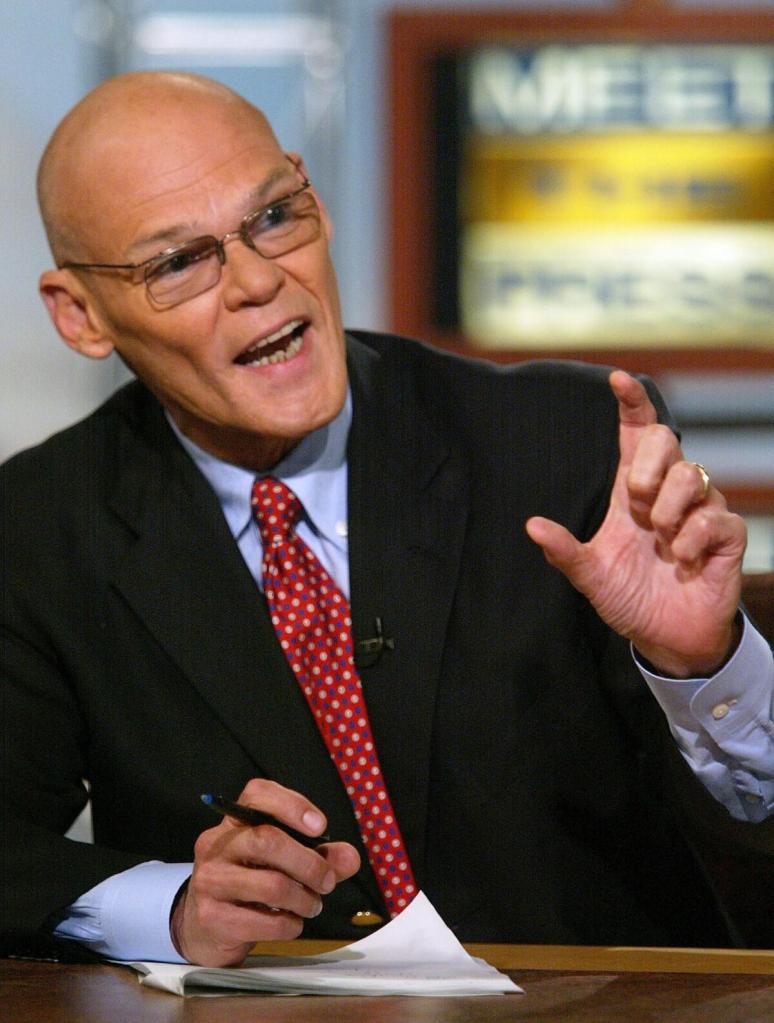
James Carville, I Was Wrong About the 2024 Election
This is a companion to the post immediately below, What Word Best Describes Trump Suppporters?—wherein another blogger debates with herself about whether that word is “stupid” or something even worse.
Well, dear reader, if you are a person of some maturity, you have learned that there are many ways of being smart, and many ways of being stupid.
And if you are situationally self-aware you are aware that Trump managed to put together a plurality based on a portfolio of folks suffering from a very wide variety of ways of being stupid.
And if you are capable of strategic thinking, you will have figured out that the way forward is to bust open the Trump’s fragile coalition of racists, anti-vaxxers, Christianist nationalists, people in a moral panic over transgender rights, and the terminally illiterate and uninformed.
James Carville writes,
I thought Kamala Harris would win. I was wrong. While I’m sure we Democrats can argue that the loss wasn’t a landslide or take a little solace in our House performance, the most important thing for us now is to face that we were wrong and take action on the prevailing “why.”
I’ve been going over this in my head for the past two months, all the variables, all the what-ifs, all the questions about Joe Biden’s re-election decisions and what kind of Democrat or message might have worked against Donald Trump. I keep coming back to the same thing. We lost for one very simple reason: It was, it is and it always will be the economy, stupid. We have to begin 2025 with that truth as our political north star and not get distracted by anything else. …
Mr. Trump, for the first time in his political career, decisively won by seizing a swath of middle-class and low-income voters focused on the economy. Democrats have flat-out lost the economic narrative. The only path to electoral salvation is to take it back. Perception is everything in politics, and a lot of Americans perceive us as out to lunch on the economy — not feeling their pain or caring too much about other things instead.
To win back the economic narrative, we must focus on revving up a transformed messaging machine for the new political paradigm we now find ourselves living in. It’s about finding ways to talk to Americans about the economy that are persuasive. Repetitive. Memorable. And entirely focused on the issues that affect Americans’ everyday lives.
This starts with how we form our opposition. First of all, we have got to stop making Mr. Trump himself our main focus; he can’t be elected again. Furthermore, it’s clear many Americans do not give a rat’s tail about Mr. Trump’s indictments — even if they are justified — or about his antidemocratic impulses or about social issues if they cannot provide for themselves or their families.
Mr. Trump won the popular vote by putting the economic anger of Americans front and center. If we focus on anything else, we risk falling farther into the abyss. Our messaging machine must sharply focus on opposing the unpopular Republican economic agenda that will live on past him. Vocally oppose the party, not the person or the extremism of his movement. I don’t always agree with Wall Street, but Jamie Dimon was right when he said that Democrats’ railing against “ultra-MAGA” was insulting and politically tone-deaf. Denouncing other Americans or their leader as miscreants is not going to win elections; focusing on their economic pain will, as will contesting the Republican economic agenda. …
Let’s start by forcing [Republicans] to oppose a raise in the minimum wage to $15 an hour. Let’s make Roe v. Wade an economic messaging issue and force them to block our attempts to codify it into law. And let’s take back the immigration issue by making it an economic issue and force the G.O.P. to deny bipartisan reform that expedites entry for high-performing talent and for those who will bring business into our nation. This year the Democratic Party leadership must convene and publish a creative, popular and bold economic agenda and proactively take back our economic turf. Go big, go populist, stick to economic progress and force them to oppose what they cannot be for. In unison.
Finally, Democrats must trudge headfirst with this economic agenda into the new media paradigm we now live in. I am an 80-year-old man and can see clearly that we are barreling toward a nontraditional and decentralized media environment. Podcasts are the new print newspapers and magazines. Social platforms are a social conscience. And influencers are digital stewards of that conscience. Our economic message must be sharp, crisp, clear — and we must take it right to the people. To Democratic presidential hopefuls, your auditions for 2028 should be based on two things: 1) How authentic you are on the economy and 2) how well you deliver it on a podcast.
The road ahead will not be easy, but there are no two roads to choose from. The path forward could not be more certain: We live or die by winning public perception of the economy.
Thus it was, thus it is, and thus it forever shall be.
 Facing MAGA