
Senator Tillis, Republican of North Carolina, Would Like to Share Some Thoughts on Putin, Ukraine, and Democracy
The Ninth Circuit Panel’s Decision in State of Washington v. Trump, One of the Birthright Citizenship Cases—Shock and Awe or Shock and Awful?

The opinion, issued on February 19, denied the Justice Department’s “emergency” request for the appeals court to overrule a district judge’s injunction against Trump’s executive order purporting to end birthright citizenship, despite the language of the Fourteenth Amendment and despite consistent judicial interpretations of the Fourteenth Amendment, going back to 1898. (If anyone cares, that district judge, who reamed out Trump and his Justice Department, was appointed by President Reagan.)
To be clear, the district court’s ruling in question was not the judge’s definitive answer to the question whether Trump was right or wrong on birthright citizenship. It was, instead, a decision ordering a “preliminary injunction” pending full briefing, trial, and argument of the case.
Brushing away lots of legalese, the central issues at play when a judge rules on a request for a preliminary injunction are three:
- the “likelihood of success on the merits,” in other words, what does the judge think will probably happen when all the dust settles: Is the plaintiff more likely to win, or is it the defendant who will probably prevail? and, second,
- the harm issue—will the plaintiff be harmed if a preliminary injunction is not issued to preserve the state of play, while the issue is litigated? Or is it the defendant who will suffer harm if it is enjoined from doing what it wants to do?
- the public interest issue—apart from the parties to the case, what about the broader public?
In my experience, the first of these factors—“likelihood of success on the merits”—tends to be dispositive. And so it was here. Two of the three panel members of the appellate panel, Judge William Canby (appointed by Carter) and Milan Smith (appointed by Bush the Elder), joined in a terse, one page decision, declining to overrule the district court, because Team Trump did not make a “strong showing that [they are] likely to succeed on the merits.”
The third judge, Danielle J. Forrest, wrote a much more expansive piece of prose, concurring in the majority’s bottom line result, but “for reasons different than relied on” by the other two members of the panel.
Many are wondering how the Federalist Society judges, who now bestride the third branch of our federal government, will deal with Team Trump. What the Supreme Court does with birthright citizenship remains to be seen. But Judge Forrest’s treatment of the case is not without interest.
A bit of background: Judge Danielle Forrest was appointed to the bench in 2019, during Trump 1.0. Reading between the lines of her Wikipedia biography, I glean that Democratic opposition to her appointment was weak, probably on the ground that, “Well, this is about the best we can expect from a Trump appointment.”
Interestingly, her Wikipedia entry says, in black and white, that “She was a member of the Federalist Society from 2002 to 2006 and again from 2017 to present.” One might wonder whether her renewed commitment to the Federalist Society in 2017 might have had something to do with a desire for higher office—given that Trump 1.0 farmed out the judicial selection function to the esteemed Society. That said, in any event …
In her six pages of prose, Judge Forrest manfully eschewed any views on the “likelihood of success on the merits”—in other words, whether birthright citizenship is found in the Constitution, or whether it isn’t.
Instead, the very large burr in her saddle was the purported “emergency” referenced by Team Trump. The implication is that birthright citizenship has been the law of the land ever since 1866 or 1898, depending on how you count. Letting it be the law of the land for a few more weeks, or a few more months, is in no way an emergency.
And just because Team Trump SAYS there’s an emergency does not mean there REALLY IS an emergency.
In short, for this one Federalist Society jurisprude, Team Trump’s legal Shock and Awe is really Shock and Awful.
The Mad King: a Tour d’Horizon
In this video, the two talking heads cover a whole lot of ground. I mostly agree with them. If you don’t, then God bless, and have a nice day.
Toward the end, they turn to trying to suss out what’s going on in Trump’s brain. I particularly commend that part of the video.
In case you don’t know:
Rick Wilson is a former Republican and former Republican political consultant. He currently writes political opinion pieces and is a political talking head on YouTube and elsewhere. He has written two books, including Everything Trump Touches Dies.
During the video Wilson refers, at one point, to his “misspent youth.” He may be thinking about the time he created the ad that defeated Max Cleland—a war hero paralyzed by his wounds—by implying that Cleland supported Al-Qaida.
Will Saletan has been writing on public affairs since 1996. He has also written two books. Sometimes he’s right, and sometimes he’s not. In 2003 he wrote a book arguing that conservatives had won the public debate about abortion rights. Well, if they had won it in 2003, they have lost it now; look at the headlines out of Missouri today. In 2023, he wrote The Corruption of Lindsey Graham: A case study in the rise of authoritarianism.
The Man Who Saved Cancer
A Little Context for the Preceding Post—the One About the New York City Bar Association

It’s the Incentives, Stupid
In a couple of hours, my wife will be having a pointed discussion with the local tax assessors over the value of her apartment. The condos in our building vary a whole lot in size, layout, and many other features. But guess what? It turns out that the thing that best predicts the sale price is the number of square feet in the condo. If you know that number, then you have a very good idea of the condo’s fair market value.
Why in the world make that point? Because, let me humbly submit, while people vary in all sorts of ways, the one thing that best predicts their behavior is their incentives.
I was in Big Law for a long time. Some of the people I knew were fine human beings. Some, I’m sorry to say, had the morality of a sea slug. But, like the rest of the human race, most of them were somewhere in the middle, morality-wise.
I am confident that, for some of those who wrote and promoted the New York City Bar Association’s statement on the Adams case, promoting justice and good government was a driving concern. I am equally confident that the objective incentives of the Bar Association’s members was a driving force, as well.
Let me put it bluntly.
If the legal system breaks down, ain’t nobody gonna pay you no $2.5 million for your skilful manipulation of the legal system.
And Now, a Word from the Big Law Firms in New York City

Back in my day, it was officially The Association of the Bar of the City of New York, its original name from back in 1870, when it was formed to fight the judicial corruption promoted by the Tammany Hall machine. Now, it’s the New York City Bar Association. Its president is a partner in a global law firm with profits per partner of $2.5 million. Its leadership includes a number of the president’s peers in other global law firms (together with others too, like professors and legal aid attorneys).
Yesterday, the association issued this press release.
On United States v. Eric Adams
Since its founding in 1870, the New York City Bar Association has supported the rule of law as one of its core missions – regardless of politics or ideological persuasion. “The true administration of justice is the firmest pillar of good government” is not merely an aphorism engraved in stone on courthouses but, together with the rule of law, the essence of American democracy. This mission and these values necessitate voicing our concern about the events of recent days in the ongoing federal case of United States v. Eric Adams, 24-CRIM-556 (S.D.N.Y.).
Prosecutors have a duty to act in the public interest, to perform their duties with objectivity, and to analyze all the evidence when deciding whether to pursue criminal charges. This is especially true in the prosecution of crimes allegedly committed by public officials involving abuses of power or corruption.
While the City Bar takes no position on the substantive merits of the Adams case, the numerous resignations by prosecutors from the office of the United States Attorney for the Southern District of New York and the Public Integrity Section of the United States Department of Justice, and the flurry of letters from those who have resigned and from the Acting Deputy Attorney General, command the City Bar’s attention and expression of concern.
The events of recent days are reminiscent of the Saturday Night Massacre resignations of Attorney General Elliot Richardson and Deputy Attorney General William Ruckelshaus, which precipitated the crisis of public confidence when they were ordered by President Nixon to dismiss Special Prosecutor Archibald Cox to halt the Watergate investigation.
The direction of Acting Deputy Attorney General Emil Bove III to the Southern District prosecutors to prepare and file a motion to dismiss the case against the Mayor of New York City cuts to the heart of the rule of law. The unusual form of Mr. Bove’s direction via a public memorandum buttresses arguments that the direction is based on pretextual grounds.
The letter from Acting United States Attorney Danielle Sassoon and Mr. Bove’s response give every indication that the dismissal of Mayor Adams’ case, without prejudice, is predicated on his agreeing to increase New York City’s assistance in the Trump administration’s immigration enforcement efforts. When the proposed dismissal is made “without prejudice” to the charges possibly being reinstated at some future date, the entire proposal raises serious questions involving both the potential quid pro quo and prosecutorial weaponization of our justice system.
Indeed, the justification offered by Mr. Bove for his decision expressly avoids any consideration of the merits of the prosecution, instead resting on a rationale which is expressly political. In particular, Mr. Bove suggests that dismissal is predicated upon Mr. Adams’s continuing agreement to use the power of his office as mayor to facilitate the administration’s immigration enforcement policies. The policy choices of the government of New York City cannot be dependent on or appear to be dependent on the decision of the Justice Department to prosecute or withhold prosecution of corruption charges against the mayor.
Against such a backdrop, the City Bar commends Ms. Sassoon for her courageous decision to offer her resignation from a post she assumed a few short weeks ago. Whatever the merits of the underlying case against Mayor Adams, her letter reflects the proper course of conduct for a prosecutor seeking to adhere to her oath to pursue justice without fear or favor. Her letter reflects integrity and a principled commitment to the rule of law and democracy. The City Bar likewise applauds Assistant United States Attorney Hagan Scotten, Acting Chief of the Criminal Division Kevin Driscoll, Acting Chief of the Public Integrity Section John Keller, and the other attorneys at the Department of Justice who chose to resign rather than acquiesce to a decision raising profound questions of legality, morality, and legal ethics.
The interests of the public are best served by the continuation of the prosecution of Mr. Adams. In any event, the Department of Justice’s motion to dismiss the charges must be resolved on the basis of a complete record, which should include a searching inquiry into the nature of the bargain struck and a determination of its benefit to the public. If, as Mr. Bove contends, the prosecution of Mayor Adams was brought for improper political purposes, such an allegation can and should be adjudicated in the District Court. There is precedent for the District Court’s appointment of amicus curiae to obtain input from an independent counsel. See United States v. Flynn, No. 20-5143 (D.D.C.) (brief by former federal judge John Gleeson). In our view, the District Court should not dismiss the indictment against Mayor Adams without hearing from an independent lawyer, as neither the Mayor’s counsel nor the lawyers from the Department of Justice can fulfill that role.
Now it is for the United States District Court for the Southern District of New York to examine whether dismissal of the charges in United States v. Eric Adams is “in the public interest” and is “not tainted by impropriety” or “bad faith.” All members of the public concerned about whether law enforcement agencies will protect the public rather than manipulate the criminal justice system for political means await the outcome. Whatever the outcome, this episode is a stark reminder of the dangers of political interference in our justice system and the potential such interference has to undermine the public’s trust and confidence in the rule of law.
About the Association
The mission of the New York City Bar Association, which was founded in 1870 and has 23,000 members, is to equip and mobilize a diverse legal profession to practice with excellence, promote reform of the law, and uphold the rule of law and access to justice in support of a fair society and the public interest in our community, our nation, and throughout the world. www.nycbar.org
Pam Bondi, Emil Bove, Danielle Sassoon, and the Thursday Afternoon Massacre
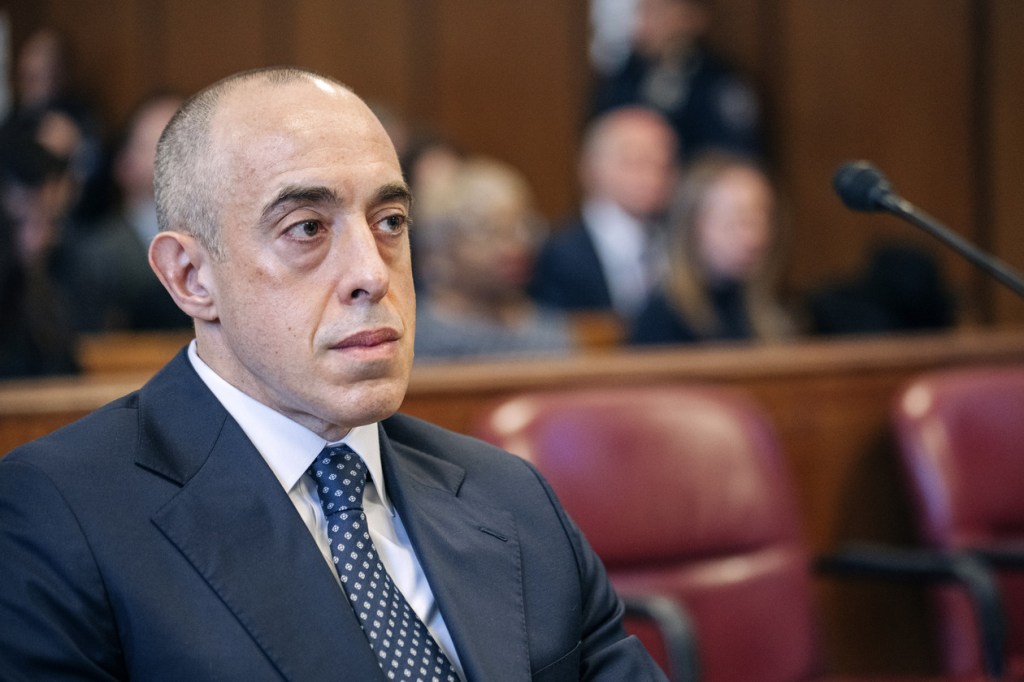
Pictured above is Emil Joseph Bove the Third, formerly criminal defense lawyer for Donald Trump and currently Acting U.S. Deputy Attorney General. Would you buy a used car from this man?
But I digress.
Many—including the Wall Street Journal Editorial Board—have applauded the actions of Danielle Sassoon,Hagan Scotten, and Justice Department attorneys who walked out the door last week, rather than sign their names to a bullshit legal filing. See, for example,
WSJ Editorial Board, The Trump Trial of Danielle Sassoon, The young prosecutor behaved well in resigning, not so her bosses at the Justice Department
Eric Lach (The New Yorker), Danielle Sassoon’s American Bravery: A conservative prosecutor in New York makes the first bold move against Donald Trump’s rampaging Presidency.
Ross Douthat (N.Y. Times), Why Picking a Fight with Danielle Sassoon Has a Downside for the Trumpists
But let me give you one lawyer’s perspective. Yes, courage and cowardice, political expediency, and common sense versus stupidity are all part of this. But, ladies and germs, there are also some rules.
On the One Hand …
The President appointed, subject to the advice and consent of the Senate, one Pamela Jo Bondi to be United States Attorney General. The Senate duly advised and consented to Ms. Bondi’s appointment, and she is now the head of the Justice Department.
In that role, it is reported that she has reminded all of her subordinate lawyers that they have an ethical duty to represent their client zealously, within the bounds of the law.
Now, at this point, kindly quibble me no quibbles about who “the client” is—Donald Trump poisonally, the “Office of the President,” or “the American people.”
For the fact is that Attorney General Bondi has the right to set the legal policy of the Justice Department. And the subordinate attorneys have nothing that prevents them from leaving if they have—for whatever reason—a strong personal antipathy for arguing “zealously, within the bounds of the law,” in support of the positions they are directed to advance.
A side note for context: Attorneys are encouraged to take unpopular causes, and to represent those causes “zealously, within the bounds of the law.” But there is no legal requirement to take on causes that are personally repugnant—for one thing, because if the cause is so damn repugnant, we probably would not do a bangup job advancing it.
But, if we do take on a cause, then we have a duty to advance that cause “zealously, within the bounds of the law.”
So, score one for Attorney General Bondi.
For Example …
The Attorney General might order a subordinate attorney to argue that United States v. Wong Kim Ark (Supreme Court, 1898), confirming birthright citizenship for children of Chinese immigrants, was wrongly decided and should be reversed. It would then be the subordinate’s duty EITHER to develop arguments to overrule the Wong case, whether or not the attorney thought those were persuasive arguments OR to seek other employment.
Litigators often advance argument which they do not personally believe. That is the core of the rule of legal ethics that requires us to represent our clients zealously, within the bounds of the law.
On the Other Hand …
There is that part about “within the bounds of the law.”
For Example …
Although you can and should urge the judge to focus on the facts that favor your side and to place less importance on facts favorable to the other side, you cannot misrepresent the facts. For example, if you’re a Justice Department lawyer in a case where the judge has issued an injunction against shutting down the Department of Education, you cannot tell the judge that the government is obeying the order when the government is actually violating the order.
Nor can you tell a judge that a case you cite stands for proposition X when the case does not stand for proposition X, it stands for something else.
In the Thursday Afternoon Massacre situation, Emil Joseph Bove the Third order Danielle Sassoon and others to declare that the dismissal of the Eric Adams criminal prosecution was something other than a corrupt political deal. When in fact it was exactly that: a corrupt political deal.
To Cut to the Chase …
If your boss tells you to do something grossly unethical or highly stupid, then it’s a good idea to walk out the door.
But if your boss tells you that you have to do an illegal act yourself, then you had really, really better skedaddle, and that right quickly. Because you are at risk not only of being sanctioned by your friendly local bar association, you are at also in danger of prosecution for criminal obstruction or justice or criminal contempt of court.
The Answer, My Friend, is Don’t Abandon Them
Happy Valentine’s Day, My Fellow Americans

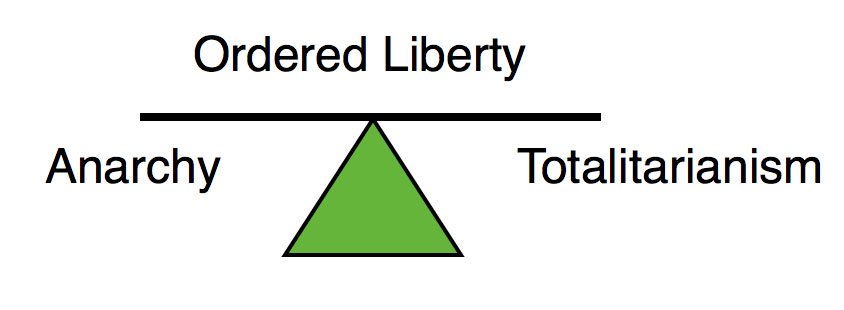
“No system of ordered liberty can allow the Government to use the carrot of dismissing charges, or the stick of threatening to bring them again, to induce an elected official to support its policy objectives.”
This afternoon, Hagan Scotten, who was Danielle Sassoon’s colleague and second in command, has followed her out the door. Mr. Scotten took his law degree at Harvard, was a clerk to Brett Kavanaugh and to Chief Justice Roberts, and prosecuted the case against Eric Adams.
On the way out, Scotten took out his undated resignation letter and fired it off. It reads as follows:
BY EMAIL
Re: United States v. Eric Adams, 24 Cr. 556 (DEH)
Mr. Bove,
I have received correspondence indicating that I refused your order to move to dismiss the indictment against Eric Adams without prejudice, subject to certain conditions, including the express possibility of reinstatement of the indictment. That is not exactly correct. The U.S. Attorney, Danielle R. Sassoon, never asked me to file such a motion,and I therefore never had an opportunity to refuse. But I am entirely in agreement with her decision not to do so, for thereasons stated in her February 12, 2025 letter to the Attorney General.
In short, the first justification for the motion—that Damian Williams’s role in the case somehow tainted a validindictment supported by ample evidence, and pursued under four different U.S. attorneys—is so weak as to be transparently pretextual. The second justification is worse. No system of ordered liberty can allow the Government to use the carrot of dismissing charges, or the stick of threatening to bring them again, to induce an elected official to support its policy objectives.
There is a tradition in public service of resigning in a last-ditch effort to head off a serious mistake. Some will view the mistake you are committing here in the light of their generally negative views of the new Administration. I do not share those views. I can even understand how a Chief Executive whose background is in business and politics might see the contemplated dismissal-with-leverage as a good, if distasteful, deal. But any assistant U.S. attorneywould know that our laws and traditions do not allow using the prosecutorial power to influence other citizens, much less elected officials, in this way. If no lawyer within earshot of the President is willing to give him that advice, then I expect you will eventually find someone who is enough of a fool, or enough of a coward, to file your motion. But it was never going to be me.
Please consider this my resignation. It has been an honor to serve as a prosecutor in the Southern District of New York.
Yours truly, Hagan Scotten
Assistant United States Attorney Southern District ofNew York
 Facing MAGA