
Memorandum for the Management Committee, Dewey Cheatem & Howe LLP
HIGHLY SENSITIVE AND CONFIDENTIAL
EYES ONLY
DESTROY AFTER READING
To: Management Committee, Dewey Cheatem & Howe LLP
From: Alphonse Thaddeus Vanderbilt-Morgan, Chair, Corporate Department
John Maximus Rambo, Chair, Litigation Department
re: possible participation by Dewey Cheatem as amicus in the Perkins Coie case
Question Presented
The Management Committee has asked for our joint advice on the question whether our firm should join with others as an amicus curiae in support of plaintiff in Perkins Coie v. United States Department of Justice.
Answer to Question Presented
After consulting with our colleagues and with each other, we concur in advising the Management Committee that the firm should not, at the moment, join in the amicus curiae brief.
We see the current situation as evolving rapidly. Our firm should establish a task force to monitor the situation, carefully assess alternatives, and be prepared to move when the time comes.
Analysis
In formulating our response to the Management Committee’s inquiry, we have placed most emphasis on the following eight factors (which we have not tried to rank order in importance.
1. Inevitable Litigation Victories by Perkins Coie (#66), Jenner & Block (#51), and WilmerHale (#31). (Throughout this memo, numbers in parentheses are a firm’s rank order in profits per partner.)
Constitutional case law establishes beyond peradventure of doubt that the government may not deprive a person or organization of a benefit in retaliation for that person or organization’s exercise of its constitutional rights. Moreover, the legal filings by the three law firm plaintiffs demonstrate clearly that they, and potentially their clients and other affiliates, were denied due process of law by President Trump’s unilateral and unsupported decision that they were guilty of some fault.
Each of the three firms has, with lightning speed, asked for and received a temporary restraining order. There is absolutely no reason to expect a more favorable outcome for the Administration as the cases move through the courts.
In our judgment, the case for the Trump Administration is indefensible—so bad, in fact, that do not know what Justice Department attorneys may argue on behalf of the Administration without jeopardizing their own standing at the bar.
Of particular note, people or agencies charged with unconstitutional retaliation generally try to confuse the issue by offering some pretext for their behavior. Here, however, whoever was preparing documentation in support of the Administrations executive orders against the three firms seems to have gone out of their way to create a written record that conclusively demonstrates the unconstitutionality of the orders.
2. Futility of an Amicus Brief by Other Firms. The three plaintiff law firms are very well represented: Perkins by Williams & Connolly (#89), Jenner by Cooley LLP (#23), and WilmerHale by the prestigious conservative boutique firm Clement & Murphy. Peer firms like ours have no additional legal insight to bring to bear on the situation, nor would a firm such as ours have some useful insight into the facts that might help a court to decide any of these three cases.
Our best judgment is that possible amicus briefs by other law firms, not presently involved in the lawsuits, would have zero likelihood of influencing the ultimate outcome of any of the cases.
3. Symbolic Support for the Plaintiff Law Firms and for the Rule of Law. We agree with those who have emphasized the need for joint action to support the rule of law. But we believe this is best done by the legal profession collectively, acting through the American Bar Association and other bar groups such as the New York City Bar Association. The ABA, the NYCBA, and many others have forcefully condemned the Administration’s challenges to the rule of law.
Our able young partner Mahmoud Sadiq serves on the NYCBA’s Board of Directors, and our senior partner Ophelia Orotund sits in the ABA House of Delegates. Both have supported resolutions condemning threats to the rule of law. We encourage them to continue along that path.
In short, our firm’s public position on the rule of law should already be clear to all concerned.
4. Potential Downsides of Going Out of Our Way to “Poke” President Trump. A small number of our clients, including two large and important clients, have been in touch with members of the firm to express concern if we “stick our heads up.”
Within the partnership, two senior deal makers, Ainsley Smart and Alexander Hurlbutt, have expressed particular concern. Our sense is that Ms. Smart and Mr. Hurlbutt would be reluctant to move elsewhere, but you never can tell for sure. Among our partners, the strongest opponent of anti-Trump action is the head of our Washington Office, Jayson Opponlander, who hopes to steal business from WilmerHale and from Covington & Burling, which Trump has targeted and which may be in negotiation with him.
By contrast with our Corporate Department, the instinct of many of our litigation partners is to stand up for the rule of law.
Finally, those involved in recruiting and retaining our associate work force advise that just standing pat probably will not affect us much, one way or another, in the current situation. But that could change as events evolve.
5. Piggybacking Off of Current Litigation by Perkins etc. Unless we join as an amicus againstPresident Trump, we do not see any big risk that our firm might become a target of his ire. But if that should happen, the relevant case law on which we will rely in defense us is already being created in the three pending cases.
6. Planning for a Hypothetical Trump Executive Order Against Dewey Cheatum. In our judgment, points one through five suffice to support our conclusion that the firm should not join an amicus brief at this time. That said, in our judgment, it is vital for the firm to begin to plan what do in the event of possible executive order against us. We believe a task force should be formed to, among other things,
- monitor developments in the three firms’ lawsuits versus the Administration,
- monitor client reactions to the split among the major law firms, and
- closely watch the effect on associate recruitment—will Scadden (#12) and Paul Weiss (#21) keep on getting the pick of the litter? Or will their brands suffer from a reputation for cowardice and weakness, leading to difficulty in recruiting associates?
Pending the monitoring of future developments, we have no definitive recommendation at the moment as to how the firm should respond to a hypothetical executive order against us.
7. Special Attention for DEI. We have a strong DEI program. Its purpose—and, we believe, its effect—is not to discriminate against anyone, including heterosexual white males. Its purpose is to make sure that the best and the brightest feel comfortable at our firm, regardless of gender, sexual orientation, religion, or ethnicity. We want the best people we can get, and we want their best efforts.
If necessary, we can and will defend the legality of our program in court.
While we do not recommend modifying our DEI program at this time, we nevertheless think the proposed new task force should take soundings to determine whether any of our partners, associates, or other employees feels like a victim of discrimination. If so, the firm should look into the matter and determine whether any action is required.
8. The View from 30,000 Feet. Finally, our proposed task force should monitor not only developments like associate recruitment and client sentiment but also the big picture.
From where we sit today, it looks as if President Trump and his advisers have initiated an aggressive authoritarian project. That project’s goals and techniques appear similar to Victor Orbán’s—except that President Trump seems to be trying to accomplish in ten weeks what Orbán did in ten years. Moreover, Orbán took care to promote the economic interests of his supporters while Trump seems to want to harm everyone.
In short, on the available evidence, President Trump literally does not know what he is doing.
Implication: over the long run, firms that appear supportive of President Trump, or that appear subservient to him, are likely to suffer a significant reputational loss, and conversely.
Accordingly, our firm must be ready to take appropriate action at the appropriate time.
The Big Law Split

The FT writes,
None of the top 20 law firms in the US have so far offered their “unconditional support” to an effort by Perkins Coie to fight sanctions imposed by the Trump administration.
Organisers of an amicus brief in support of Perkins Coie’s lawsuit are struggling to convince America’s most powerful law firms to sign up amid concerns they will face retaliation by the Trump administration, according to emails seen by the Financial Times.
Eric Green, a well-known mediator, has been circulating a draft of the brief and tallying daily numbers of those law firms willing to add their names to the document. The brief is being prepared by the Los Angeles firm Munger, Tolles & Olson.
According to an email sent on Saturday afternoon by Green’s firm, Resolutions LLC, which was seen by the FT, 173 of 248 law firms that have responded to the survey are offering “unconditional support”.
However, among the top 100 law firms by revenue, as ranked by The American Lawyer magazine, only three have offered “unconditional support” with none coming from the top 20.
The brief is supposed to be submitted to the court in the next few days in conjunction with the formal court papers Perkins Coie files to challenge the executive order against the firm, with Munger, Tolles & Olson trying to rally law firms behind the effort before that deadline.
Eight firms in the top 100 have offered their support with conditions, including that their closest peers also sign the brief, according to one person involved in the process. As such, nearly all of the full-throated support so far for the amicus brief originates from small and medium-sized firms.
“So the numbers are great, but not from the largest firms,” wrote Green in the email, which said the responses of law firms would remain anonymous in the current feedback phase.
According to Trump’s executive order, Perkins Coie would be banned from federal government work and have any security clearances revoked. A federal judge in Washington has issued a temporary injunction to halt the implementation of the order while Perkins Coie pursues its appeal in court.
Since the Perkins Coie order, the Trump administration has imposed sanctions on several top law firms tied to the Democratic party or who have hired investigators who previously targeted President Donald Trump.
Law firms have been struggling with the question of whether to publicly confront Trump’s campaign against the legal community or seek a détente in order to avoid the business disruptions that the executive orders could bring.
After facing a similar executive order, Paul, Weiss cut a deal with Trump to cancel the sanctions in exchange for $40mn of pro bono legal services dedicated in part to causes Trump supports. Another large firm, Skadden, said it would offer $100mn to support similar legal services to avoid facing its own order.
Two other firms, WilmerHale and Jenner & Block, have vowed court fights to contest their sanctions and had their own orders temporarily blocked in federal court on Friday.
Perkins Coie and Eric Green, the mediator, did not immediately respond to requests for comment.
The three-page draft brief seen by the FT sets out legal arguments that challenge the constitutionality of the executive orders.
It concludes: “Like every lawyer, the members of the amicus law firms have sworn an oath to uphold the constitution . . . that oath obligates all of us, no matter our political views, to be faithful custodians of our Nation’s commitment to the rule of law . . . we therefore feel a special responsibility to stand up now to the unprecedented threat posed by the Executive Order.”
They Say the Tide is Turning
Dana Milbank (Washington Post), As Trump mayhem spreads, MAGA unity cracks: From the Wall Street Journal editorial board to Fox News, capitulation is on the way out.
Daily Kos, 14 Signs That The Tide is Turning in OUR Direction: GNR [Good News Roundup]
Unitarian Universalist Congregation of Atlanta, We Have Higher Executive Orders (forthcoming sermon for March 30, available at https://www.youtube.com/watch?v=Np1WthUnKks)
It’s Saturday. How Stands the Rule of Law?
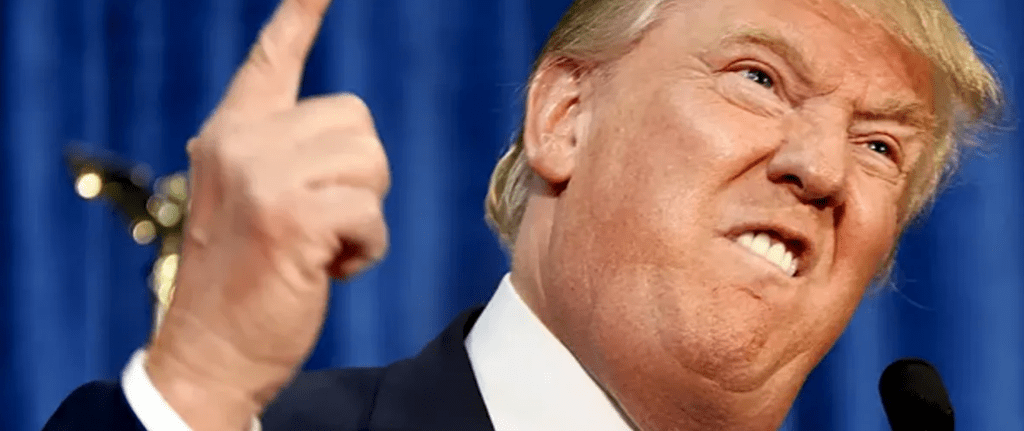
Comment: You don’t say!
N.Y. Times, Trump Suffers Day of Losses in His Retribution Campaign Against Law Firms
Comment: Just cry me a river.
Politico, If Trump Defies the Courts, It Will Backfire Badly
Comments: Despite the headline, the article mostly addresses this question: “Does the Trump administration plan to ignore or defy future court orders that it disagrees with—perhaps even an order from the Supreme Court?”
The author marshals arguments for the view that, at the end of the day, Trump will obey the courts, because he will understand and abide by his own self-interest.
The author might be right. I strongly suggest you read the piece.
I agree that, if Trump tells the Supreme Court just to pound sand, that will end the decades-long project to remake the courts into a powerful force for economic and social conservatism, all in the name of “federalism,” the Constitution, “originalism,” and “textualism.”
All hail James Madison!
But what the author does not say is that ending that decades-long Federalist Society project makes no nevermind if you plan a permanent rightwing dictatorship based on the exercise of ruthless force.
If you see our future as continuing a contest between two parties, then the Federalist Society project is important. If you see our future as fascist dictatorship, then the Federalist Society project is worth no more than a bucket of warm spit.
And let me add this: Trump is a doofus, and he has willfully surrounded himself with a coterie of doofi.
To me, the evidence strongly indicates that some of the doofuses are trying maneuver Orange Mussolini into a position where he will think he has not choice but to defy the Supreme Court.
Bad Bad Donald Trump, Baddest Man in the Whole Damn Dump
Wednesday
“They’re all bending and saying, ‘Sir, thank you very much,’” Mr. Trump said, adding that they were asking, “‘Where do I sign? Where do I sign?’”
Friday (Today)
Jenner & Block, WilmerHale both file complaints, and both are granted temporary restraining orders by the close of business the same day.
Jenner & Block and WilmerHale to Orange Mussolini: Fuck You Very Much
The Sheep are Separating from the Goats

There are reports that Skadden Arps is about to do a deal with Trump along the lines of the Paul Weiss capitulation. I am feeling nauseous. But all is far from lost.
Jenner & Block is a large, Chicago-based firm with a number of offices. It is among the top 100 American firms in profit per partner. It heavily emphasizes litigation, including a serious amount of pro bono work—much of it for organizations Trump does not like.
When the firm got in Trump’s cross hairs, it responded, in words or substance, “Fuck You Very Much.”
The firm’s statement of today reads,
Today, Jenner & Block filed a lawsuit to stop an unconstitutional executive order that has already been declared unlawful by a federal court. We expect to prevail quickly.For more than 100 years, Jenner has stood firm and tirelessly advocated for our clients against all adversaries, including against unlawful government action. We once again go to court to do just that. To do otherwise would mean compromising our ability to zealously advocate for all of our clients and capitulating to unconstitutional government coercion, which is simply not in our DNA.
Jenner & Block’s complaint, filed on its behalf by Cooley LLP, is 64 pages long and alleges 13 constitutional violations.
WilmerHale is the union of the old DC-based Wilmer Cutler & Pickering and the old Boston-based Hale and Dorr. It has 1000+ lawyers, and is particularly prominent in litigation. It was recently ranked as number 31 among American law firms.
To represent the firm, WilmerHale retained renowed conservative attorney Paul Clement, of whom Wikipedia notes,
During his career, Clement has argued cases on behalf of many conservative causes, such as opposing gun control;[4][5] defending a ban on federal recognition of same-sex marriage;[6][7]advocating to enjoin the Affordable Care Act;[8][9] defending Republican gerrymandering in North Carolina;[10] and, as Acting Solicitor General, defending the Controlled Substances Act under the Commerce Clause,[11] as well as the Bush administration’s treatment of terrorism suspects.
Mr. Clement’s complaint on behalf of WilmerHale runs to 57 pages, describes in great detail the eleven constitutional violations of his client’s rights, and is a masterpiece.
Also worthy of praise is the brief in support of a temporary restraining order by Williams and Connolly, on behalf of Perkins Coie. Follow the links and read ‘em both.
The American Bar Association: Against Intimidation, For the Rule of Law

Bar organizations’ statement in support of the rule of law
CHICAGO, March 26, 2025 — We the undersigned bar organizations stand together with and in support of the American Bar Association to defend the rule of law and reject efforts to undermine the courts and the legal profession.
In particular, as outlined by the ABA:
We endorse the sentiments expressed by the chief justice of the U.S. Supreme Court in his 2024 Year End Report on the Federal Judiciary, “[w]ithin the past year we have also seen the need for state and federal bar associations to come to the defense of a federal district judge whose decisions in a high-profile case prompted an elected official to call for her impeachment. Attempts to intimidate judges for their rulings in cases are inappropriate and should be vigorously opposed.”
We support the right of people to advance their interests in courts of law when they have been wronged. We reject the notion that the U.S. government can punish lawyers and law firms who represent certain clients or punish judges who rule certain ways. We cannot accept government actions that seek to twist the scales of justice in this manner.
We reject efforts to undermine the courts and the profession. We will not stay silent in the face of efforts to remake the legal profession into something that rewards those who agree with the government and punishes those who do not. Words and actions matter. And the intimidating words and actions we have heard and seen must end. They are designed to cow our country’s judges, our country’s courts and our legal profession.
There are clear choices facing our profession. We can choose to remain silent and allow these acts to continue or we can stand for the rule of law and the values we hold dear. We call upon the entire profession, including lawyers in private practice from Main Street to Wall Street, as well as those in corporations and who serve in elected positions, to speak out against intimidation.
If lawyers do not speak, who will speak for our judges? Who will protect our bedrock of justice? If we do not speak now, when will we speak? Now is the time. That is why we stand together with the ABA in support of the rule of law.
American Bar Association
Alameda County (California) Bar Association
Alexandria (Virginia) Bar Association
Allegheny County Bar Association (Pennsylvania)
American Immigration Lawyers Association
Appellate Lawyers Association
Arab American Bar Association of Illinois
Association of Professional Responsibility Lawyers
Bar Association of Erie County (New York)
Bar Association of Metropolitan St. Louis
Bar Association of San Francisco
Berks County (Pennsylvania) Bar Association
Boston Bar Association
Boulder County (Colorado) Bar Association
Chicago Bar Association
Chicago Council of Lawyers
Cleveland Metropolitan Bar Association
Columbus (Ohio) Bar Association
Connecticut Bar Association
Contra Costa (California) County Bar Association
Detroit Bar Association and Foundation
Erie County (Pennsylvania) Bar Association
First Judicial District Bar Association (Colorado)
Hawaii Women Lawyers
Hennepin County (Minnesota) Bar Association
Hispanic National Bar Association
Hudson County (New Jersey) Bar Association
Illinois State Bar Association
International Society of Barristers
Kansas Bar Association
Kansas City Metropolitan Bar Association
Kansas City Metropolitan Bar Foundation
Lawyers Club of San Diego
Long Beach (California) Bar Association
Los Angeles County Bar Association
Louisville Bar Association
Maine State Bar Association
Maricopa County Bar Association
Massachusetts Bar Association
Massachusetts LGBTQ Bar Association
Middlesex County (New Jersey) Bar Association
Milwaukee Bar Association
Minnesota State Bar Association
Monroe County (New York) Bar Association
Muslim Bar Association of Chicago
Nassau County (New York) Bar Association
National Arab American Bar Association
National Arab American Bar Association – Michigan Chapter
National Asian Pacific American Bar Association
National Association of Women Lawyers
National Conference of Bar Presidents
National Filipino American Lawyers Association
National LGBTQ+ Bar Association
National Native American Bar Association
New Jersey Women Lawyers Association
New Mexico Black Lawyers Association
New York City Bar Association
New York County Lawyers Association
North County (California) Bar Association
Board of Governors of the Oregon State Bar
Palestinian American Bar Association
Passaic County (New Jersey) Bar Association
Philadelphia Bar Association
Queens County (New York) Bar Association
Ramsey County (Minnesota) Bar Association
San Diego County Bar Association
San Fernando Valley (California) Bar Association
Santa Clara County Bar Association (California)
South Asian Bar Association of North America
State Bar of New Mexico
Virgin Islands Bar Association
Board of Governors of the Washington State Bar Association
Women’s Bar Association of the State of New York
Worcester County (Massachusetts) Bar Association
“As Much Pain as Possible”: A Message from Doug Ford, the Premier of Ontario
The Wall Street Journal Editorial Board Wants You to Know That the Winds They are A-Changin’
WSJ Editorial Board: A Shock to the GOP From MAGA Country: A county that went for Trump by 16 points swings to Democrats.
The Editorial Board writes,
Democrats have been lost in the wilderness since Donald Trump’s victory, but if Tuesday’s special election shocker in Pennsylvania is any harbinger, the MAGA Republican ascendancy is perishable. In Lancaster County, which went for Mr. Trump last year by 16 points, Democrats flipped a state Senate seat that the GOP had occupied for decades. …
[N]ationalizing relatively sleepy local races can be politically effective, and Democrats hope to do the same thing next week in Wisconsin’s state Supreme Court election, and in two special elections for open U.S. House seats in Florida.
Voter turnout in such races can be considerably smaller than in November, so the results aren’t always predictive. …
Still, Republicans might want to take this surprise loss in MAGA country as a warning. Mr. Trump’s tariff threats are whipsawing financial markets and the broader economy. The Conference Board said Tuesday that its survey of consumer confidence showed a drop in March, for the fourth consecutive month. Even voters who like the GOP’s policy agenda could be jolted by the impression of chaos in Washington, plus Mr. Trump’s recent focus on retribution.
Democrats got pummeled last year because they followed out-of-touch leaders down ideological rabbit holes. Republicans will suffer if they do the same thing in reverse.
 Facing MAGA