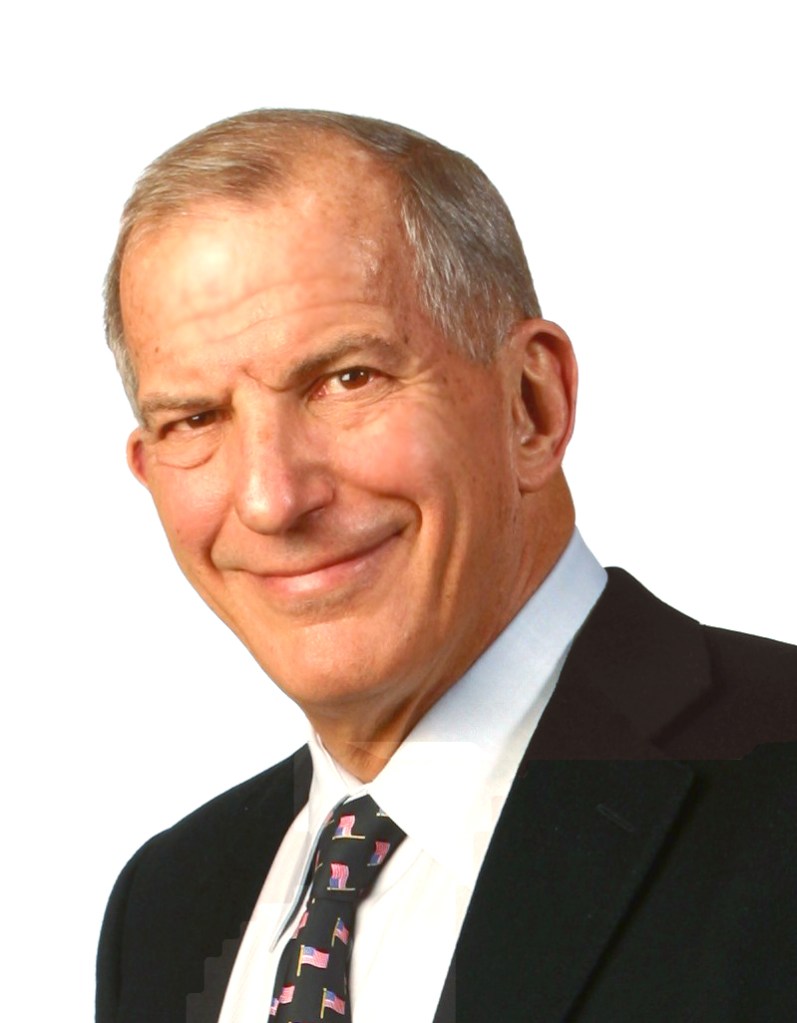
Harvard’s President to Mango Mussolini: Fuck You Very Much

Dear Members of the Harvard Community,

For three-quarters of a century, the federal government has awarded grants and contracts to Harvard and other universities to help pay for work that, along with investments by the universities themselves, has led to groundbreaking innovations across a wide range of medical, engineering, and scientific fields. These innovations have made countless people in our country and throughout the world healthier and safer. Over the last several weeks, the federal government has threatened its partnerships with several universities, including Harvard, over accusations of antisemitism on our campuses. These partnerships are among the most productive and beneficial in American history. New frontiers beckon us with the prospect of life-changing advances—from treatments for diseases such as Alzheimer’s, Parkinson’s, and diabetes, to breakthroughs in artificial intelligence, quantum science and engineering, and numerous other areas of possibility. For the government to retreat from these partnerships now risks not only the health and well-being of millions of individuals, but also the economic security and vitality of our nation.

Late Friday night, the administration issued an updated and expanded list of demands, warning that Harvard must comply if we intend to “maintain [our] financial relationship with the federal government.” It makes clear that the intention is not to work with us to address antisemitism in a cooperative and constructive manner. Although some of the demands outlined by the government are aimed at combating antisemitism, the majority represent direct governmental regulation of the “intellectual conditions” at Harvard.

I encourage you to read the letter to gain a fuller understanding of the unprecedented demands being made by the federal government to control the Harvard community. They include requirements to “audit” the viewpoints of our student body, faculty, staff, and to “reduc[e] the power” of certain students, faculty, and administrators targeted because of their ideological views. We have informed the administration through our legal counsel that we will not accept their proposed agreement. The University will not negotiate over its independence or its constitutional rights.

The administration’s prescription goes beyond the power of the federal government. It violates Harvard’s First Amendment rights and exceeds the statutory limits of the government’s authority under Title VI. And it threatens our values as a private institution devoted to the pursuit, production, and dissemination of knowledge. No government—regardless of which party is in power—should dictate what private universities can teach, whom they can admit and hire, and which areas of study and inquiry they can pursue.

Our motto—Veritas, or truth—guides us as we navigate the challenging path ahead. Seeking truth is a journey without end. It requires us to be open to new information and different perspectives, to subject our beliefs to ongoing scrutiny, and to be ready to change our minds. It compels us to take up the difficult work of acknowledging our flaws so that we might realize the full promise of the University, especially when that promise is threatened.

We have made it abundantly clear that we do not take lightly our moral duty to fight antisemitism. Over the past fifteen months, we have taken many steps to address antisemitism on our campus. We plan to do much more. As we defend Harvard, we will continue to:

  • nurture a thriving culture of open inquiry on our campus; develop the tools, skills, and practices needed to engage constructively with one another; and broaden the intellectual and viewpoint diversity within our community;
  • affirm the rights and responsibilities we share; respect free speech and dissent while also ensuring that protest occurs in a time, place, and manner that does not interfere with teaching, learning, and research; and enhance the consistency and fairness of disciplinary processes; and
  • work together to find ways, consistent with law, to foster and support a vibrant community that exemplifies, respects, and embraces difference. As we do, we will also continue to comply with Students For Fair Admissions v. Harvard, which ruled that Title VI of the Civil Rights Act makes it unlawful for universities to make decisions “on the basis of race.”

These ends will not be achieved by assertions of power, unmoored from the law, to control teaching and learning at Harvard and to dictate how we operate. The work of addressing our shortcomings, fulfilling our commitments, and embodying our values is ours to define and undertake as a community. Freedom of thought and inquiry, along with the government’s longstanding commitment to respect and protect it, has enabled universities to contribute in vital ways to a free society and to healthier, more prosperous lives for people everywhere. All of us share a stake in safeguarding that freedom. We proceed now, as always, with the conviction that the fearless and unfettered pursuit of truth liberates humanity—and with faith in the enduring promise that America’s colleges and universities hold for our country and our world.

Sincerely,
Alan M. Garber

Those Were the Days!

Andy Kessler (Wall Street Journal), Trump’s Protectionist Blunder: The U.S. prospers atop a horizontal empire, not as a vertical island.

Mr. Kessler writes,

“Mister, we could use a man like Herbert Hoover again,” goes the “All in the Family” theme song. Donald Trump, who grew up 15 minutes from Archie Bunker, took it seriously. “We’re bringing wealth back to America,” says tariff-happy Mr. Trump. “That’s a big thing.” Those in the Trump administration with Wall Street experience should know better.

Mr. Trump’s America-first policy, as hallucinated by trade adviser Peter Navarro, is this: Make in America. Invest in America. Everything done by Americans. A self-sufficient, stand-alone country. 

It’s more of a political agenda than an economic one—more about protectionism and isolationism. Trade? Globalization? Increased living standards? How quaint. 

Look, I’m all for America on top, but America first isn’t how you get there. America first is a vertical model: Do everything. But vertical always fails. Vertical IBM made chips, wrote software, assembled computers and wrapped plastic around them. Vertical AT&T provided phones, wires and both local and long-distance calls. 

Fortunately, vertical gave way to horizontal: industries organized into layers of expertise, sorted by value added. Intel and Microsoft owned layers in a horizontal stack that made up personal computers, leveling IBM mainframes. The internet became a horizontal stack of routers, servers and applications, upending AT&T’s network. Even the artificial-intelligence revolution is horizontal—Silicon Valley’s OpenAI uses Nvidia chips made by Taiwan’s TSMCusing Dutch ASML’s equipment.

“Didn’t need no welfare state, everybody pulled his weight,” the theme song goes. Globalism and trade also became a horizontal model, with the U.S. sitting on top of what I call a horizontal empire, sorted by value added. Apple designs iPhones in California but assembles them lower down the stack in China—now shifting toward Vietnam and India—where living standards also increased.

Sadly, this horizontal model causes freak-outs over U.S. trade deficits. But who cares? Forget actual trade numbers. Focus on the margin of the products flowing cross-border. Apple has 34% operating margins. Foxconn, which assembles trade-deficit-boosting iPhones, has operating margins of 3%. Which would you prefer?

TVs, cars, clothes, toys and lumber that we import are all low-margin and usually labor-intensive businesses. We export high-margin software, financial services, drugs and AI applications, all intelligence-intensive businesses. I like to say, “we think, they sweat.” Meanwhile, Commerce Secretary Howard Lutnick says, “Human beings screwing in little screws to make iPhones, that kind of thing is going to come to America.” You first, Howard.

Getting horizontal got society wealthy. Economists note that trade deficits have a flip side of capital-account surpluses, money that gets invested in the U.S. to offset those trade deficits. But where are they in our economic statistics? Hard to find. Economists can count foreign money that bought Treasury bonds (so Americans don’t have to). But when capital flows into stocks—foreigners own 18% of our equities—the numbers get fuzzy. A net $1,000 buying Google shares can drive its value up $2,000, or $5,000. Google is worth more than $2 trillion, but $2 trillion in cash didn’t get invested—productivity drove its value up.

Mr. Bessent says, “Data is on our side.” Is it? We’ve run cumulative trade deficits since 1999 of $15.4 trillion. Meanwhile, U.S. equity values rose $45 trillion between 1999 and 2024 (both market peaks). U.S. household net worth at the end of 1999: $41 trillion. End of 2024: $160 trillion. Let’s run bigger trade deficits! As long as we keep the margin. Trade and productivity pay. No wonder the market is a yo-yo.

“Gee, our old LaSalle ran great,” the song concludes. So why would you ever want to go back to a vertical, isolationist model for the U.S., leading to higher-rate mortgages and expensive cars? A margin surplus means we let low-margin jobs move overseas and become a high-margin nation. Living standards rose across the globe. Smartphones and autos everywhere. Why go back?

Note to Trump yes-men: Low-wage jobs aren’t the American dream either. Populist protectionism, worsened by tariffs, has been shown to destroy more jobs than it creates. Even the lower-valued jobs that the Trump administration hopes will return may not exist. Most machine and metalworking shops now use programmable machine tools. Factory jobs will require proficiency in operating robots. Fixing education is critical.

“Boo hoo,” one can almost hear, “collapsing stocks only hurt the rich.” Yeah, but it also severely limits access to capital for U.S. companies to fund growth and create better jobs—let alone build new factories. Do we really want that? America can stay first only by sitting on top of a horizontal empire, not by reconstructing a retro isolated vertical island. Going backward is a meathead move. Stop trying to bring back the “All in the Family” nostalgia: “Those were the days!”

Trump’s Poll Trajectory: Down, Down, and Down

For CNN’s take on the new polls, go here.

On March 31, I posted a video from the Bulwark posing the question “Want to Beat Trump?” and responding to its own rhetorical question like this: “Get him to 32%.”

And why 32 percent? Because that’s a good estimate of the proportion of Americans who are hard core MAGA nutjobs. A lot of those folks will stay with him to the bitter end. After all, he’s God’s Anointed, n’est-ce pas?

But when you strip his support down to the MAGA nutjobs, you’re going to flip Congress. 

And the latest polls show that we are indeed well on our way toward stripping down his support to the hard core MAGA nutjobs. 

Kinda shows why he’s already thinking so hard about how to steal the 2026 election, doesn’t it?

Trump Versus Susman Godfrey: Some Further Thoughts

On Friday, I wrote about l’affaire Susman Godfrey. Here, I revise and extend—I hope not too much—my remarks. 

If you have a bet-your-company problem, and if that problem can be addressed through litigation, and if you have the money, then, in all likelihood, you will give serious consideration to the Susman Godfrey firm—and you’ll probably hire them. Such was the situation in which Dominion Voting Systems found itself, when it retained the Susman firm to sue Fox News for defamation over lies told about its voting machines in the 2020 election. As you probably know, the outcome was that Fox settled for $787.5 million. 

Wednesday, April 9, 2025

The Susman firm also represents Dominion in its suit against One America News Network, its related suit against Patrick Byrne, former CEO of Overstock.com, and its suit against Newsmax. In the latter case, on April 9 the district judge ruled that Newsmax made false and defamatory statements about Dominion and its voting machines; the “actual malice” issue remains to be decided, presumably by a jury, after detailed inquiry into the state of mind of the honchos at Newsmax who decided to publish the lies. The smart money is predicting that Newsmax, just like Fox News, is going to have to pay a ton of money. 

Also on Wednesday, April 9, a Couple of Hours After the Newsmax Defamation Decision

By pure coincidence, Mango Mussolini decided this would be a good day to denounce Susman Godfrey as a “rogue law firm,” chiefly for defending the results of the 2020 election and for being too zealous in representing the interests of Dominion Voting. Along with the denouncing, he also imposed the customary draconian penalties on the firm, its lawyers, and its clients. 

To provide some context for these developments, check out this article from the Washington Post: Trump’s order seeks to force states to buy costly new voting machines: The edict [issued on March 25] could hurl elections into tumult, though lawsuits challenging the order mean it probably won’t be implemented anytime soon.

The logical inference: Trump plans to steal the 2026 election, just like he tried to steal the 2020 election. His plan is to issue an impractical and unenforceable order that the states should throw away their existing voting machines and buy new ones. This he did last month. Then, when his side loses bigly in 2026, he’ll lie about the Dominion voting machines to excuse his loss. 

But, to advance the lie, he needs help from liars with big megaphones. Like Fox. Like Newsmax.

But even if the liars are perfectly OK with lying, they may be chastened by the fear of big losses in defamation suits.

Hence, in President Lizard Brain’s reasoning, the need to screw the lawyers who are successfully pursuing defamation claims.

Two Days Later, Friday, April 11

Two days later, the Susman firm, represented by Munger, Tolles & Olson LLP, filed a 65-page complaint laying out ten constitutional violations committed by Orange Jesus.

For some reason—I assume it’s because of all the nonsense that has happened this week—the press has by and large missed the filing of this complaint. (I just read an article in the New York Times that should have mentioned it, but did not.)

This Coming Week

It is to be expected that, like Perkins Coie, like Jenner & Block, and like WilmerHale, the Susman firm will ask for a temporary restraining order and preliminary injunction, a district judge will instantly agree, and the judge will issue yet another opinion strongly suggesting that Donald J. Trump should take a long walk off a short pier. 

I have three questions.

1. Who the Hell is Giving Trump Legal Advice About the Law Firms, and are They Actively Trying to Sabotage Trump’s Legal Position?

The wording of the Trumpian “fact sheet” and executive order—especially when considered together with the timing of the two events on April 9—is tantamount to Trump’s having prefaced his remarks with “THIS EXECUTIVE ORDER IS UNCONSTITUTIONAL AND ENTIRELY LEGALLY INDEFENSIBLE.”

2. Does Trump Think for a New York Second that the Supreme Court is Going to Buy This Garbage?

And, if not, what game does he think he’s playing?

Is he just delusional? Well, I don’t know. But he acts delusional. And he speaks in a delusional way. 

And if it walks like a duck and talks like a duck, it’s probably a duck.

3. How is the Susman Firm Going to Play its Hand?

Susman Godfrey can win its case without relitigating the 2020 election, without talking much about its client Dominion Voting, and without going into exactly which lies Fox and Newsmax told and why they told them.

That said, Trump has gone out of its way to make his quarrel with Susman Godfrey all about 2020. 

In 2020, Team Trump brought 62 lawsuits to challenge the election. The result? Team Trump lost every single one. Their record was zero to 62. 

Now Trump declares that he has the authority to execute a business for being on the winning side in some of those 62 cases. 

Might the plaintiff want to call Trump to testify at a deposition, or a trial, as to the factual basis for his contention that he actually won in 2020? (The case law is that presidents do not enjoy absolute immunity from being called to testify.) 

And if Trump does testify against the Susman firm, what are the chances that he will perjure himself? 

Like a Modern Dante, Jon Corzine Gives a Comprehensive Guided Tour of Economic Hell

Jon Corzine is a former co-CEO of Goldman Sachs, former United States Senator, and former Governor of New Jersey. 

Look, especially, around the 13:40 point in the video, where Corzine explains what happens when the dollar is no longer the reserve currency. 

Fundamental Insights, Unwelcome News: For Trump, For the Rest of Us, Too

Steve Pearlstein (Washington Post), Trump’s tariffs were rash. But the reckoning was inevitable: And delaying that reckoning will only make things worse.

Prof. Pearlstein teaches public and international affairs at George Mason. According to him, that with which we must reckon is that “As a country, we live beyond our means, consuming more than we produce and investing more than we save.”

I urge you to read the article. Much of it, you probably won’t like. But that’s the very reason why you need to read it. 

But there is some sweet along with the bitter; you’ll like the multiple reasons why Trump’s tariffs are stupid. After expatiating on the multiple stupidities, Pearlstein ends this way:

That doesn’t mean we couldn’t benefit from raising tariffs on some imports until major trading partners lower tariff and nontariff barriers to American goods or stop subsidizing their exports. The dogmatic free traders were always wrong about that.

But tariffs are unlikely to alter the fundamental reality that, as a country, we collectively buy and invest more than we produce and save, which in broad terms is what the trade deficit represents. A simpler and more effective way to reduce that roughly $1 trillion annual trade deficit is to reduce our government’s $2 trillion annual budget deficit. Unfortunately, Trump is determined to do the opposite. For just as his new tariffs were unveiled, the president and his Republican allies in Congress were pushing through a budget plan to extend and expand tax cuts, increasing future budget deficits by hundreds of billions of dollars each year.

Put another way, by refusing to tax ourselves to pay for all the government services we demand — and borrowing the difference from the rest of the world — we are effectively giving households and businesses the money to buy more of the imports that the president is so determined to reduce.

For the past 50 years, America’s economic fantasy has been that another round of tax cuts or public investments will magically allow us to produce our way out of outsize budget and trade deficits. Instead, the twin deficits rose in tandem. In the real world, the only way to bring things back into balance is to begin living within our means and accept the painful adjustments that it entails. As we learned this week, there are better and worse ways to go about that rebalancing. But delaying that reckoning will only make things worse.

This Time, Trump REALLY Messed with the Wrong Bunch of Hombres

The Guardian, Trump signs order targeting law firm behind $787.5m Fox defamation suit: Order punishes Susman Godfrey, which helped Dominion Voting Systems get millions from Fox for 2020 election lies.

Susman Godfrey is possibly the best litigation law firm in the country. And they are being punished for successfully holding Fox News to account for its election lies.

If anybody can make Trump eat shit, these are the folks to do the job.

We shall see what we shall see. In the meantime, the firm had this to say:

In response to the executive order filed by the administration on April 9th, 2025, Susman Godfrey has issued the following statement:

“Anyone who knows Susman Godfrey knows we believe in the rule of law, and we take seriously our duty to uphold it. This principle guides us now. There is no question that we will fight this unconstitutional order.”

A point of personal privilege: I was among the late Steve Susman’s ten thousand closest friends. (Actually, it could have been more than ten thousand; I don’t rightly know.) And I am damn proud of it, too. 

From wherever he is in the bardo, Steve is urging his living partners to hang in—and whispering litigation tricks into their shelflike ears.