An alternative title might be, “Defense Intelligence Talks, Bullshit Walks.”
Mango Mussolini is fit to be tied:
White House press secretary Karoline Leavitt pushed back on the report’s conclusions, while not denying its existence. “This alleged ‘assessment’ is flat-out wrong and was classified as ‘top secret’ but was still leaked to CNN by an anonymous, low-level loser in the intelligence community,” Leavitt wrote on X.
“The leaking of this alleged assessment is a clear attempt to demean President Trump, and discredit the brave fighter pilots who conducted a perfectly executed mission to obliterate Iran’s nuclear program,” she wrote. “Everyone knows what happens when you drop fourteen 30,000 pound bombs perfectly on their targets: total obliteration.” …
Rep. Mike Quigley (D-Illinois), a member of the House Intelligence Committee, told The Washington Post there is widespread belief in Congress that the embarrassing content of the assessment is the reason why the Trump administration decided to delay the classified briefing. ““They don’t delay briefings that have good news,” Quigley said.
Quigley declined to discuss the contents of a classified briefing he received earlier this week. But he said that for years he’s been told by U.S. intelligence officials that any aerial attack on Iran’s nuclear facilities would not have a lasting impact.
“I’ve been briefed on the likelihoods of how this would play out for years, and I was always told you have to finish the job with troops on the ground,” he said. “Nothing has changed my mind on that.”
The vibe this Monday evening is of Iranian token retaliation and of a coming cease fire.
Maybe.
Or maybe not. Maybe whoever is running Iran tonight, or whoever will be running Iran tomorrow, is lulling President Numbnuts into unjustified complacency, turning around the trick he pulled on them. Meantime, The Economist takes a deep dive into what’s happening in Iranian politics.
On june23rd Iran’s regime ignored President Donald Trump’s warnings and attacked American military bases in Qatar and Iraq. Missiles could be seen over skyscrapers in Doha, Qatar’s capital. While the damage and casualties appear minimal, the war has reached the Gulf, whose glimmering cities offer an alternative vision of the Middle East and whose energy the world needs. The strikes outside Iran come alongside a sudden, ominous power shift inside it. Military hardliners are grabbing power from clerics. That could mean they try to extricate themselves from the war now in order to fight another day. But in the medium term it could signal that the regime becomes more extreme, not more pragmatic, under the pressure of a devastating military campaign.
One reason for this shift is that Iran’s elite fears it is in a struggle to preserve the country’s political system. Mr Trump has signalled he might approve the overthrow of the clerical-military order. “Why wouldn’t there be a regime change,” he asked on June 22nd. Strikes against non-nuclear targets have galvanised elements of an outraged Iranian public behind the regime. But most important of all, there has been a shift in who holds power at the top as a result of the war. The military men have gained ascendance over the religious clerics for the first time since Iran’s revolution in 1979. And they are not moderate.
Iran’s supreme leader, Ayatollah Ali Khamenei, is 86, and for years there has been speculation about succession, although who might gain the upper hand has been far from clear. The war is changing that, turbo-charging a power shift to the regime’s military arm, the Islamic Revolutionary Guard Corps (irgc). In the first days of the fighting Mr Khamenei, ageing and isolated for his own safety, disappeared from the scene like the Shias’ hidden Imam. He delegated decision-making to a new council, or shura, dominated by the irgc. “The country is in effect under martial law,” says an observer.
As the irgcgains control its elite is being transformed at speed by Israel’s assassinations. Gone are the veteran commanders who for years pursued “strategic patience”, limiting their fire when their totemic leader, Qassem Soleimani, was assassinated in 2020, and holding it when Israel battered their proxies, Hamas and Hizbullah, in 2024. Now a new generation, impatient and more dogmatic, has taken their place and is bent on redeeming national pride. “The maximalist position has been strengthened,” says an academic close to the reformist camp. He claims the decision-makers in place before the war were debating whether to ditch their anti-Israel stance. But “everyone is now a hardliner”.
Compounding the generational shift is a newfound cohesion in a military-industrial complex renowned for paranoia and scheming. A year ago the regime was rocked by infighting. Businessmen, military professionals and ideologues battled for supremacy inside the irgc. Hardliners chased pragmatists from state institutions. Rival factions blamed each other for the death of the country’s president in a mysterious helicopter crash in 2024. Now they appear to be coalescing against a common foreign enemy.
How much public support does this emerging new power configuration enjoy? Many Iranians rue the billions of dollars their generals squandered on two decades of pointless proxy wars and even now some in Iran are describing the Israeli-American strikes as chemotherapy to remove cancerous cells. Increasingly, Israeli bombardments seem designed to tap into this seam of dissent and destabilise the country. Recent targets in Tehran include the police headquarters and the entrance to Evin, Iran’s jail for its most prominent political prisoners.
Yet in parallel the war has triggered a nationalist surge and narrowed the gap between ruler and ruled. No one has responded to calls from Binyamin Netanyahu, the Israeli prime minister, or Reza Pahlavi, the royalist pretender, for a popular uprising. Early admiration for Israel’s military prowess has turned to outrage as its targets have widened and the death toll has mounted. Scorn for the irgc’s haplessness has turned to pride at the speed with which it has reconstituted. Iranians who fled the capital are coming back. Those who once championed Israel are now handing over suspected Israeli agents to the police. Female political prisoners, the mothers of executed protesters and exiled Iranian pop stars have all issued calls to rally to Iran’s defence. “It’s backfired on Bibi,” says a former official turned dissident, using the nickname of Mr Netanyahu.
The shift at the top could dramatically alter decision-making in Iran. Hardliners have always been against talks with America. They remember Muammar Qaddafi, the Libyan dictator, who surrendered weapons of mass destruction in exchange for a lifting of sanctions, and Saddam Hussein, who granted unmonitors unfettered access to Iraq. Both were toppled by Western interventions. Now even moderates feel burned: the last round of talks with America, set for June 15th, fooled them into lowering their guard just as Israel attacked.
More could be to come. Within hours of America’s strike, Iran’s foreign minister, Abbas Araghchi, warned of “everlasting consequences”. Iran’s parliament has voted to close the Strait of Hormuz, a chokepoint through which 30% of maritime oil supplies flow (its vote is not binding). It is also considering a bill requiring Iran to withdraw from the Nuclear Non-Proliferation Treaty and cut co-operation with the un’s nuclear watchdog, the International Atomic Energy Agency.
The big question is whether the regime now pauses or pursues something worse. Some had sought to downplay the fallout from America’s bunker-busting strikes on Fordow and two other sites, perhaps to buy time and a greater margin of manoeuvre in firing back. While Donald Trump celebrated the “monumental” obliteration of Iran’s main nuclear sites, Iran’s leaders initially pointed to the absence of radiation and questioned their efficacy. America’s bombs were only twice as big as those used by Israel to hit the bunker of Hizbullah’s leader in Beirut last year, and Fordow’s chambers lay 25 times deeper than that.
But without a trusted mediator and no obvious off-ramp the more sober-minded appear to have been pushed aside. Many generals are eager to maintain their strikes on Israel which, they argue, have punctured its aura of invincibility. Israel’s destruction of half their missile launchers has slowed the rate, they admit. But more advanced systems, perhaps launched from the sea, are to come, says Mohsen Rezaei, a former irgc commander.
A growing caucus advocates dashing for a bomb. In the run-up to the American attack, Iran removed stockpiles of enriched uranium, and perhaps centrifuges from the targeted sites, claims an insider. Satellite imagery from June 20th shows a queue of trucks at Fordow’s gate. Some are suggesting detonating a nuclear device to prove Iran’s capability. Others advocate dropping a warhead coated in weapons-grade uranium on Tel Aviv. “Sure as anything they will be going for a nuke. It’s absolutely disastrous,” laments a Gulf mediator.
The shift from religious to military authority has some advantages. Ayatollah Ruhollah Khomeini, the original leader of Iran’s revolution, warned against allowing the irgcinto politics, fearful they might dispense with his theocracy. With the clerics confined to their seminaries, there might be an easing of the regime’s religious strictures. In recent days state television has shown women with hair poking out from their headscarves. But the prospect of Iran being ruled by its new shuraindefinitely has other consequences, not least an even more militarised state hellbent on defiance and reprisals, and more ruthless in tamping down internal dissent. The outside world has often assumed that Iran’s regime exhibits reckless risk-taking and belligerence because it has been run by religious men. The danger is the military men are worse.
They say with Donald Trump that accusation is confession. Having warned during the 2024 campaign that Joe Biden, then Kamala Harris, would trigger “world war three”, Trump is now offering a perilous test of that proposition. In his statement on Saturday night, Trump pronounced his military strikes on Iran a success. America’s bunker-busting bombs had obliterated Iran’s nuclear capacity, he said. It could take a while to find out whether both Iran and Israel — the prime actors in a show that Trump did not script but in which he is now taking a starring role — will share the US president’s assessment. But Trump is hoping that his awesome display of power will bring the curtain down on the war. That is not his decision to make.
Whatever happens next, it is worth recalling how Trump got here. Ten days ago, Benjamin Netanyahu torpedoed Trump’s nuclear negotiations with Iran with a series of devastating missile strikes. Israel’s prime minister said that Iran was weaponising its nuclear programme and posed an existential threat. Most others, including the US intelligence community, do not share Netanyahu’s diagnosis. Having his desired deal scuppered by Israel’s move, Trump quickly associated himself with it. He demanded Iran’s unconditional surrender and said that he could take out the regime’s supreme leader, Ali Khamenei, at any point. Iran did not submit to Trump’s demand. His de facto declaration of war on Saturday night was the outcome.
It also bears stressing that nobody, including Trump, knows what will happen next. It is easy to start a war, especially if you command the most powerful military on Earth. But wars only end when one side gives up. That age-old warning about the fog of war is particularly relevant to today’s Middle East, in which there are often more than two warring parties. The enemy of your enemy can turn out also to be your enemy. Having once been lectured by a younger Netanyahu, Bill Clinton said to an aide, “Who’s the fucking superpower here?” Trump’s brief televised address following the strikes was meant to showcase his command of the situation. In reality, Netanyahu has been dictating events. But even he cannot predict how Iran will respond.
Netanyahu’s interests are not the same as Trump’s. Israel’s leader has made it clear he wants regime collapse in Iran. Trump wants Iran to surrender. The first would be precipitated by a strong Iranian response that left Trump no choice but to escalate — a prospect he threatened in his address. The second would involve a token Iranian retaliation that enabled Trump to declare mission accomplished. How this unfolds, and who gets to diagnose whether Iran’s actions are token or lethal, is largely out of Trump’s hands. This leaves him as the most powerful military actor in the Middle East but potentially a hollow one. Power is about the ability to shape events. Trump is largely their prisoner.
Whatever happens, Trump’s bombing of Iran has defined his presidency at home as well as abroad. This is Trump’s war now. Iran’s submission would reverberate to his advantage in many ways; a full-blown war could sink his presidency. Among the ironies, Trump’s Iran strikes are being cheered on by many of the “Never Trumpers” who had been warning so starkly of Trump’s autocratic impulses. They are prepared to risk the power-aggrandising opportunity that war will offer Trump. Another irony is Trump’s Maga allies, such as Steve Bannon, are among the biggest sceptics of this latest, and potentially most dramatic, chapter in the “forever wars” that Trump has vowed to end.
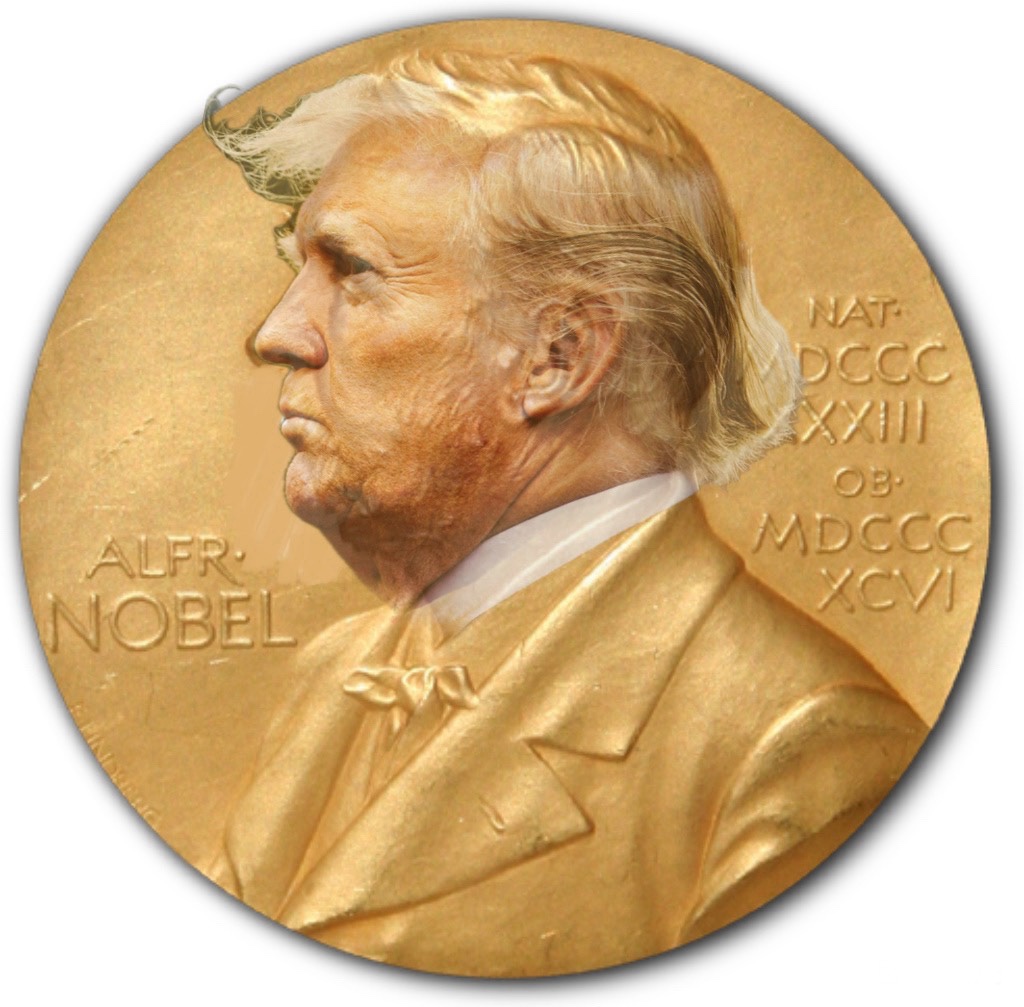
Only a fool would take Trump at his word, which he serially breaks. But it is safe to say that his ambition of winning the Nobel Peace Prize is unlikely to bear fruit. Without consulting Congress, and in probable contravention of international law, Trump has taken a fateful gamble. Whether he has fully digested this fact or not, he is now committed to seeing this through to the end. Iran and Israel will have at least as big a say as Trump in deciding when and how that happens.
It was a time of great and exalting excitement. The country was up in arms, the war was on, in every breast burned the holy fire of patriotism; the drums were beating, the bands playing, the toy pistols popping, the bunched firecrackers hissing and sputtering; on every hand and far down the receding and fading spreads of roofs and balconies a fluttering wilderness of flags flashed in the sun; daily the young volunteers marched down the wide avenue gay and fine in their new uniforms, the proud fathers and mothers and sisters and sweethearts cheering them with voices choked with happy emotion as they swung by; nightly the packed mass meetings listened, panting, to patriot oratory which stirred the deepest deeps of their hearts and which they interrupted at briefest intervals with cyclones of applause, the tears running down their cheeks the while; in the churches the pastors preached devotion to flag and country and invoked the God of Battles, beseeching His aid in our good cause in outpouring of fervid eloquence which moved every listener.
It was indeed a glad and gracious time, and the half dozen rash spirits that ventured to disapprove of the war and cast a doubt upon its righteousness straightway got such a stern and angry warning that for their personal safety’s sake they quickly shrank out of sight and offended no more in that way.
Sunday morning came-next day the battalions would leave for the front; the church was filled; the volunteers were there, their faces alight with material dreams-visions of a stern advance, the gathering momentum, the rushing charge, the flashing sabers, the flight of the foe, the tumult, the enveloping smoke, the fierce pursuit, the surrender!-then home from the war, bronzed heros, welcomed, adored, submerged in golden seas of glory! With the volunteers sat their dear ones, proud, happy, and envied by the neighbors and friends who had no sons and brothers to send forth to the field of honor, there to win for the flag or, failing, die the noblest of noble deaths. The service proceeded; a war chapter from the Old Testament was read; the first prayer was said; it was followed by an organ burst that shook the building, and with one impulse the house rose, with glowing eyes and beating hearts, and poured out that tremendous invocation—”God the all-terrible! Thou who ordainest, Thunder thy clarion and lightning thy sword!”
Then came the “long” prayer. None could remember the like of it for passionate pleading and moving and beautiful language. The burden of its supplication was that an ever—merciful and benignant Father of us all would watch over our noble young soldiers and aid, comfort, and encourage them in their patriotic work; bless them, shield them in His mighty hand, make them strong and confident, invincible in the bloody onset; help them to crush the foe, grant to them and to their flag and country imperishable honor and glory –
An aged stranger entered and moved with slow and noiseless step up the main aisle, his eyes fixed upon the minister, his long body clothed in a robe that reached to his feet, his head bare, his white hair descending in a frothy cataract to his shoulders, his seamy face unnaturally pale, pale even to ghastliness. With all eyes following him and wondering, he made his silent way; without pausing, he ascended to the preacher’s side and stood there, waiting. With shut lids the preacher, unconscious of his presence, continued his moving prayer, and at last finished it with the words, uttered in fervent appeal, “Bless our arms, grant us the victory, O Lord our God, Father and Protector of our land and flag!”
The stranger touched his arm, motioned him to step aside—which the startled minister did—and took his place. During some moments he surveyed the spellbound audience with solemn eyes in which burned an uncanny light; then in a deep voice he said
“I come from the Throne-bearing a message from Almighty God!” The words smote the house with a shock; if the stranger perceived it he gave no attention. “He has heard the prayer of His servant your shepherd and grant it if such shall be your desire after I, His messenger, shall have explained to you its import-that is to say, its full import. For it is like unto many of the prayers of men, in that it asks for more than he who utters it is aware of-except he pause and think. ”God’s servant and yours has prayed his prayer. Has he paused and taken thought? Is it one prayer? No, it is two– one uttered, the other not. Both have reached the ear of His Who hearth all supplications, the spoken and the unspoken. Ponder this-keep it in mind. If you beseech a blessing upon yourself, beware! lest without intent you invoke a curse upon a neighbor at the same time. If you pray for the blessing of rain upon your crop which needs it, by that act you are possibly praying for a curse upon some neighbor’s crop which may not need rain and can be injured by it. “You have heard your servant’s prayer-the uttered part of it. I am commissioned by God to put into words the other part of it-that part which the pastor, and also you in your hearts, fervently prayed silently. And ignorantly and unthinkingly? God grant that it was so! You heard these words: ‘Grant us the victory, O Lord our God!’ That is sufficient. The whole of the uttered prayer is compact into those pregnant words. Elaborations were not necessary. When you have prayed for victory you have prayed for many unmentioned results which follow victory-must follow it, cannot help but follow it. Upon the listening spirit of God the Father fell also the unspoken part of the prayer. He commandeth me to put it into words. Listen!
”O Lord our Father, our young patriots, idols of our hearts, go forth to battle-be Thou near them! With them, in spirit, we also go forth from the sweet peace of our beloved firesides to smite the foe. O Lord our God, help us to tear their soldiers to bloody shreds with our shells; help us to cover their smiling fields with the pale forms of their patriot dead; help us to drown the thunder of the guns with the shrieks of their wounded, writhing in pain; help us to lay waste their humble homes with a hurricane of fire; help us to wring the hearts of their unoffending widows with unavailing grief; help us to turn them out roofless with their little children to wander unfriended the wastes of their desolated land in rags and hunger and thirst, sports of the sun flames of summer and the icy winds of winter, broken in spirit, worn with travail, imploring Thee for the refuge of the grave and denied it-for our sakes who adore Thee, Lord, blast their hopes, blight their lives, protract their bitter pilgrimage, make heavy their steps, water their way with their tears, stain the white snow with the blood of their wounded feet! We ask it, in the spirit of love, of Him Who is the Source of Love, and Who is ever-faithful refuge and friend of all that are sore beset and seek His aid with humble and contrite hearts. Amen.
(After a pause)
“Ye have prayed it; if ye still desire it, speak! The messenger of the Most High waits.”
It was believed afterward that the man was a lunatic, because there was no sense in what he said.
** FILE ** President Bush declares the end of major combat in Iraq as he speaks aboard the aircraft carrier USS Abraham Lincoln off the California coast, in this May 1, 2003 file photo. Democratic congressional leaders on Tuesday, May 1, 2007 sent Iraq legislation setting timetables for U.S. troop withdrawals to President George W. Bush and a certain veto. On the fourth anniversary of the president’s “Mission Accomplished” speech, Senate Majority Democratic Leader Harry Reid said that Bush “has put our troops in the middle of a civil war. A change of course is needed.” (AP Photo/J. Scott Applewhite)
I apologize for sharing my speculation—because my speculation probably doesn’t add much to your knowledge. But I’ll say this: it is speculation based on past behavior and based on my logical extrapolation of past behavior.
Netanyahu set him up. Netanyahu played him like a fiddle. And he doesn’t like that.
He has said for a very long time that he hates getting involved in conflicts in the Middle East.
And attacking Iran looks like it’s going to lead to a very long conflict.




 Facing MAGA