Trump Wants to Run for a Third Term

With clear eyes, hard facts, critical thinking, new political strategy, empathy, and a soupçon of Schadenfreude

Earlier in the day, I wrote about the behavior of the big law firms vis-à-vis Trump, which looks like “cowardice.”
I followed up, with a post about the Wall Street Journal’s courageous condemnation of “moral relativism.”
Now for a little commentary of my own.
Molière is said to have taken great pains to find le mot juste. Confucius heavily emphasized the harm that can arise when elites don’t understand the situation they are in—and don’t use accurate language to talk about it. See Analects !3:3, which reads in part, “When a ruler doesn’t understand what he’s talking about, he should remain silent. When names aren’t correct, language doesn’t accord with the truth of things. When language doesn’t match reality, nothing can be carried out successfully.”
In the spirit of Confucius and Molière, I would like to suggest that our elites have not been afflicted with a bout of cowardice, nor has their thinking suddenly become infected by morally relativistic fallacious reasoning.
They aren’t cowards, and they aren’t irrational. Instead, their problem is that same problem that elites always have—their values.
What they value is acquiring wealth and exercising power. In pursuit of those values, they are both courageous and rational.
Gerard Baker, editor at large of the Wall Street Journal, writes Trump Accelerates Our Decline Into Moral Relativism: As is often true, he wasn’t the first but is the worst to use others’ wrongs as an excuse for his own:
Moral relativism is enticing. It enables me to establish the moral value of everything I do by reference to the behavior of others. It allows me to avoid censure by judging my intentions, choices and actions not on the basis of whether they are intrinsically right or wrong, but by the lesser standard of whether someone in a similar position might have done something similar.
Moral relativism is hardly new in public life. Self-exoneration through false moral equivalence by public figures is as old as time itself. But when it becomes the controlling ethical architecture of public behavior, we are in serious trouble. Its effect is to give leaders permission to do just about anything they want, unconstrained by guilt, shame or political sanction. Moral relativism and the ratchet effect will ensure that there is always some precedent close enough to persuade people to shrug even when confronted with some evidence of genuine turpitude on their own side.
We’ve been descending this spiral for a long time, but as with just about everything to do with the gargantuan figure of Donald Trump, his behavior has accelerated the descent.
His corrosive effect on norms of ethics, language and, for that matter, conservatism, has been amplified by the eager acquiescence of the Republican Party in the process.
The party that once liked to think of itself as committed to values and principles has become the most cynical exponent of the idea that everything is relative. A cheerleading chorus of so-called conservatives in the media eased the way. Every time they are confronted with evidence of some new infamy by their president, many on the right will choose to avoid the unrewarding path of moral consistency and opt instead for the tactics of least resistance: misdirection, “whataboutism,” or simply reaching for the blinders. All of these relativist tools have been on display in the last week.
Take the pardon for Changpeng Zhao, the Binance cryptocurrency exchange founder, convicted of money-laundering offenses. This after his firm had been involved in a lucrative financial partnership for the president and his family that helped contribute to the $4.5 billion in wealth they have generated this year alone. Morally equivalent precedents: Hunter Biden? The Clinton Foundation? Hardly on the same scale. What we have seen this year is new levels of graft and grift. We seem to be moving rapidly toward a justice system in which the president essentially gets to decide who should be in prison. If you’re a political enemy, we’ll come up with a crime to fit your punishment. If you’re a friend, we will annul your crimes.
Then there is Mr. Trump’s grandiose plan for the East Wing of the White House. There has been a lot of nonsense about this. I don’t doubt that the left’s hysteria is overdone. It seems certain that, legally and constitutionally, the president could, if he wanted, tear down the whole executive mansion and replace it with a giant casino—and there’s certainly plenty of presidential precedent. This much is grounds for legitimate moral equivalence.
But there is the legitimate question of how it’s paid for. Usage has by now dulled us to the question “What would we say if a Democrat did this?” But some of us remember when Bill Clinton had wealthy donors for sleepovers in the Lincoln Bedroom, and for weeks Republicans and their supporters in the media treated it as if he were selling the sacred space to the highest bidder. Now we have a president who is literally selling the place to the highest bidders, all justified on spurious comparisons with some changes Barack Obamamade on a much smaller scale.
Misdirection is a convenient tool of relativism. Look at the latest mind-numbing assault on sanity of the president’s new tariffs on Canada. The obvious legal, political, moral, diplomatic and economic monstrosity of a president unilaterally imposing a tax on imports because he was upset by something that a Canadian provincial government decided to show on television is literally without precedent. Yet a lot of people on the right have spent the last week explaining how Mr. Trump was essentially right to say Ronald Reagan “loved” tariffs more than those wicked Canadians claimed. (He didn’t, but truth is another casualty of moral relativism.)
And never mind that the president is making personal laws and dispensing arbitrary justice, have you seen the tattoo on the chest of that Democratic candidate for Senate in Maine? My God, the Democrats have a Nazi problem.
It should be possible—and it is essential to a well-ordered society—to call out morally reprehensible behavior by your own side as well as by your opponents. That it no longer seems to be leaves us all morally degenerate.

The Hill, Major medical organizations become resistance force under RFK Jr.
Politico, Doctors ‘fight like hell’ against a second Trump admin: ‘Elections do matter for your health’
AMA: Congress moves health care in wrong direction
AMA statement on Advisory Committee on Immunization Practices
The Guardian, RFK Jr to urge Americans to eat more saturated fats, alarming health experts
The majority of them are pissed, bigly, and upping their political contributions to Democrats.
On the other hand, RFK Jr.’s positions on food choice are popular in some quarters:
Above the Law, Democrats Cash In As Biglaw Lawyers & Staff Open Their Checkbooks
Washington Post, Nation’s biggest law firms back off from challenging Trump policies
I was a Big Law partner in the 1990s, and I would guess that some 60 percent of contributions at that time went to Republicans and 40 percent to Democrats. How things have changed!
Interestingly, according to the Washington Post, our nation’s largest law firms are most definitely not putting their mouth where their money is.
At least for the most part—with some major exceptions, like the good folks at Jenner & Block, and some others.
One important conclusion I draw—and your mileage may differ—is that any “support” from Trump among the elite in our society is pretty damn hollow and brittle.
When you put enough pressure on something that is hollow and brittle, it tends to break.
All of a sudden.

Michelle Goldberg (N.Y. Times), Trump Posted a Video of Himself Dumping Excrement on Our Cities. It’s a Glimpse of His Deepest Drives.
Ms. Goldberg writes,
This weekend, I was surprised to learn that Donald Trump seems to see himself in the same way I do: as a would-be monarch spraying the citizenry with excrement.
On Saturday, perhaps stung by the enormous nationwide “No Kings” protests, Trump posted an A.I.-generated video on Truth Social that inadvertently captured his approach to governing. In it the president, wearing a crown, flies a “Top Gun”-style fighter plane labeled “King Trump” above American cities crowded with demonstrators, dumping gargantuan loads of feces on them. Amplifying it on social media, the White House communications director Steven Cheung gleefully wrote that the president was defecating “all over these No Kings losers!”
It is not at this point surprising that Trump holds half the country in contempt, or that he treats urban America as a group of restive colonies to be brutally subdued. This is a man who told the military it should use our cities as “training grounds” for foreign operations, and who has sent both troops and federal agents to terrorize Los Angeles and other cities. The president’s attempts to demote the residents of blue America from citizens to subjects have become so routine they barely make headlines anymore.
What’s curious, then, is not Trump’s eagerness to degrade us, but his uncontrollable urge to defile himself and his office. Most national leaders, after all, do not willingly associate themselves with diarrhea. Scatological attacks are usually the province of outsiders trying to cut the powerful down to size. (French farmers, for example, have vented their fury at ruling authorities by dumping piles of manure in front of government buildings.) Rulers, by contrast, tend to jealously guard their dignity. But not Trump.
A perverse delight in defilement has always coursed through MAGA circles. Describing the profoundly cynical, curdled atmosphere in which 20th-century totalitarian movements took root, Hannah Arendt wrote, “It seemed revolutionary to admit cruelty, disregard of human values and general amorality, because this at least destroyed the duplicity upon which the existing society seemed to rest.” A similar giddy nihilism has long surrounded the president and his devotees, who often treat his unlikely ascension as a world-historical feat of trolling.
There’s a tension, however, when people in power adopt this oppositional stance. On the surface, Trump longs for grandeur. But on some subconscious level he and those around him have a deep instinct for degradation. The administration purports to venerate traditional aesthetics; an August executive order on federal architecture disavowed modernism and called for classical designs that convey “the dignity, enterprise, vigor and stability of America’s system of self-government.” At the same time, Trump paved over the lawn of the White House Rose Garden to make it look like the patio at Mar-a-Lago. On Monday, The Washington Post reported that his construction crews have begun demolishing the facade of the White House’s East Wing to build a ballroom.
The dominant aesthetic of the administration comes not from antiquity but from A.I. slop, the tackier and more juvenile the better. (Think of the White House’s image of a crying migrant rendered in the style of a Japanese Studio Ghibli animation.)

Last week, when HuffPost asked the White House who chose Hungary as the site of an upcoming meeting between Trump and President Vladimir Putin of Russia, the White House press secretary, Karoline Leavitt, responded, “Your mom did.” She was obviously trying to insult and delegitimize a representative of the liberal media. But the result was to reveal herself as a gross parody of a professional press secretary. The administration plans to mark America’s 250th anniversary with a UFC cage fight on the White House’s south lawn, an idea that seems ripped from the scabrous 2006 satire “Idiocracy.”
The Trump gang’s compulsion to debase and cheapen almost everything they touch is far more than a matter of style. Perhaps the most puzzling thing about the second Trump administration has been its attacks on pillars of American strength that pose no challenge to its ideology. It was predictable that the White House would gut support for the humanities, but not that it would defund pediatric cancer research. I expected it to try to eliminate the Department of Education, but not to deliberately wreck the Federal Emergency Management Agency, which helps communities in both red and blue states when they’re beset by disasters.
Some of this slashing and burning can be explained by the old-fashioned small-government fanaticism of administration personnel like Russell Vought, director of the White House Office of Management and Budget. But it also seems like a function of Trump’s abusive insecurity. Part of him wants to aggrandize the country to reflect his own inflated self-conception. And part of him seems to want to trash it out of rage at the limits of his dominance.
In “The Emergency,” an allegorical novel coming out next month, the writer George Packer captures some of the lust for desecration animating the Trumpist right. The book hinges on a conflict between self-righteous Burghers, who live in cities, and resentful, paranoid rural people known as Yeomen. In a narrative turn that appears, in light of Trump’s video, quite prescient, the Yeomen make plans to bombard the Burghers’ city with fecal cannons. It’s as if Packer managed, for a moment, to tune into the president’s wavelength.
“There was something so audacious about it, so inventive and barbaric, so low,” he writes, adding, “It would break through the final restraint, and there would be no going back.”
Fights over resources and beliefs can be settled. It’s much harder to imagine rapprochement with those who want, above all, to befoul us.








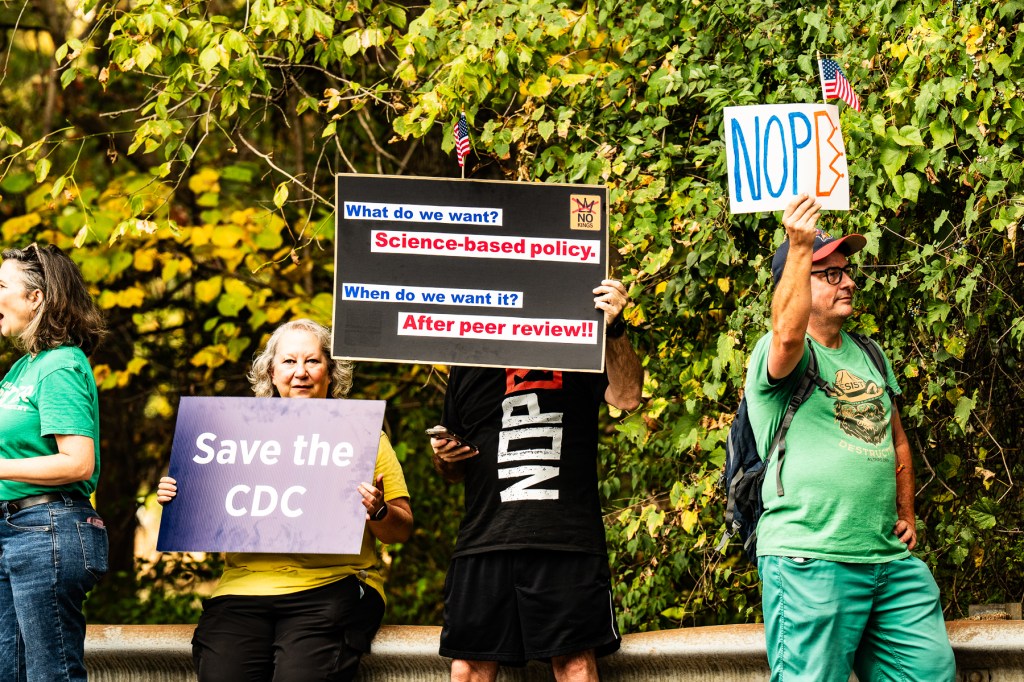




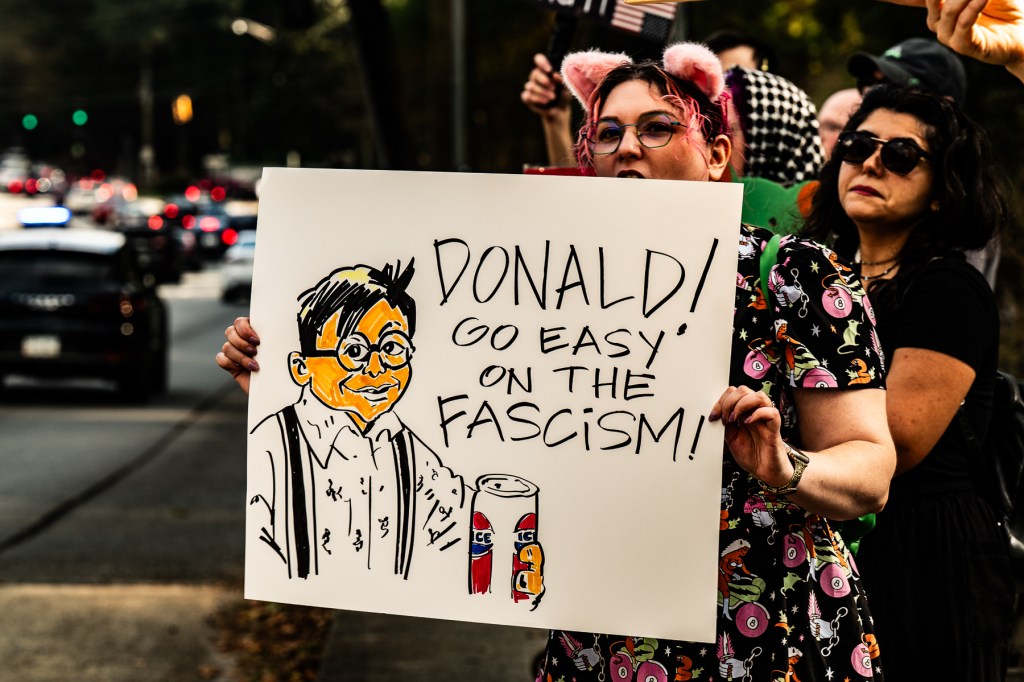


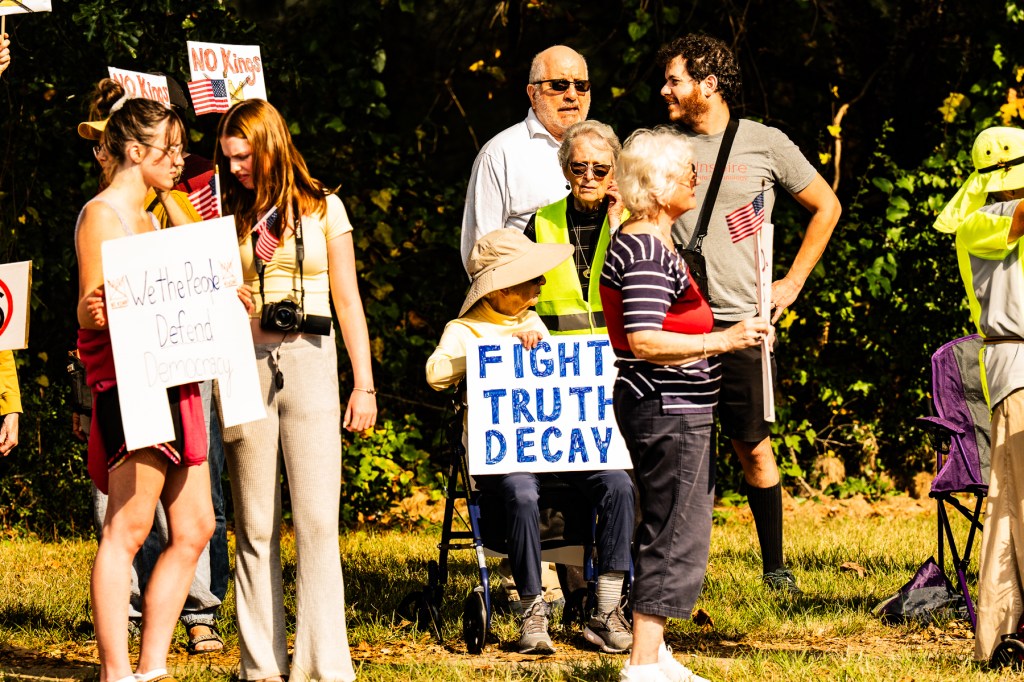






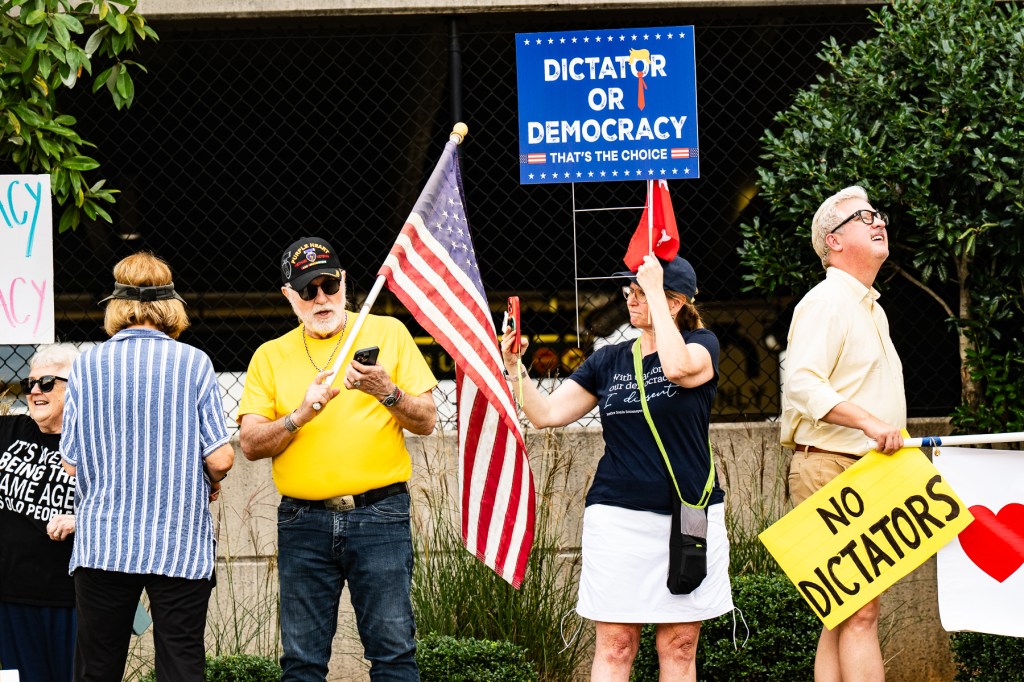


Click on an image to see it full size. Use the right and left arrows to scroll through the whole gallery.
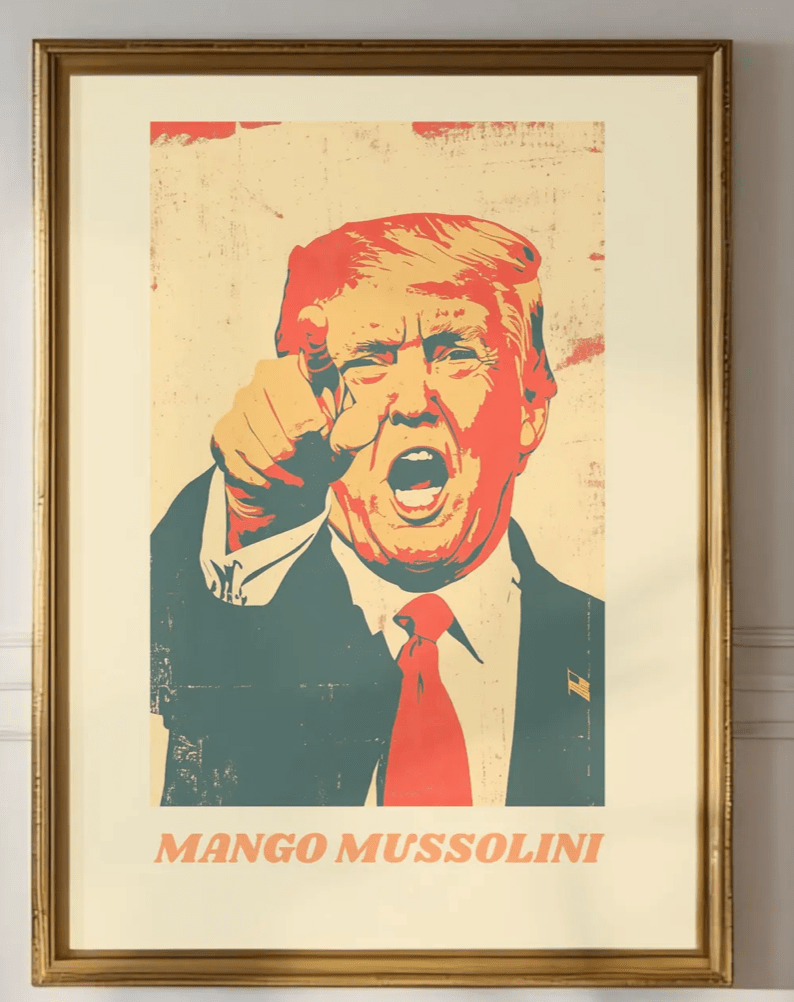
OK, just how popular is Mango Mussolini as of today? That would be good information to have, as we prepare to protest.
I perceive a significant—and surprising—information disconnect. Some, like the Politics Monday team on PBS Newshour, say his popularity remains stable. Others, like Heather Cox Richardson, and many others, say it’s tanking.
I can’t tell you who’s right and who’s wrong. But my guess would be that The Economist—which always features a column called “Tracking Donald Trump: The American president’s net approval rating”—is probably the most reliable source. Or, maybe, say the least unreliable source.
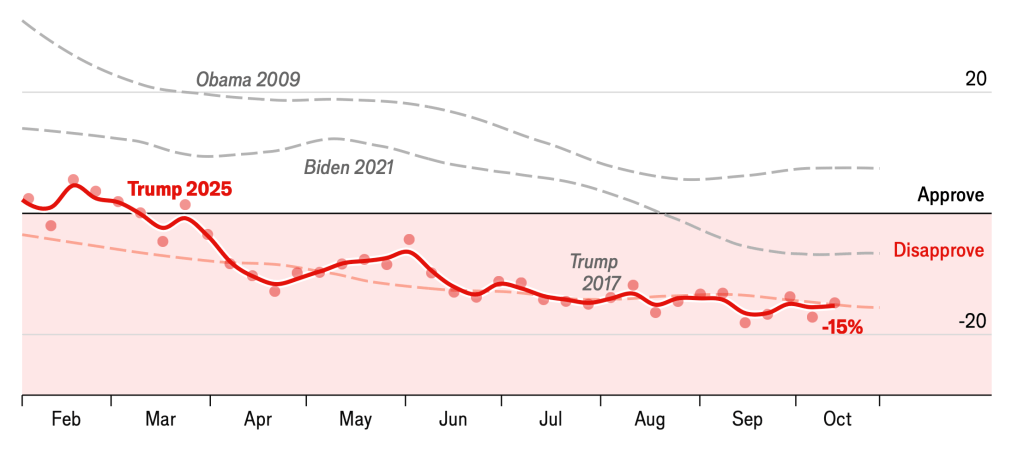
Today’s summary:

And a plot of the last 270 days:
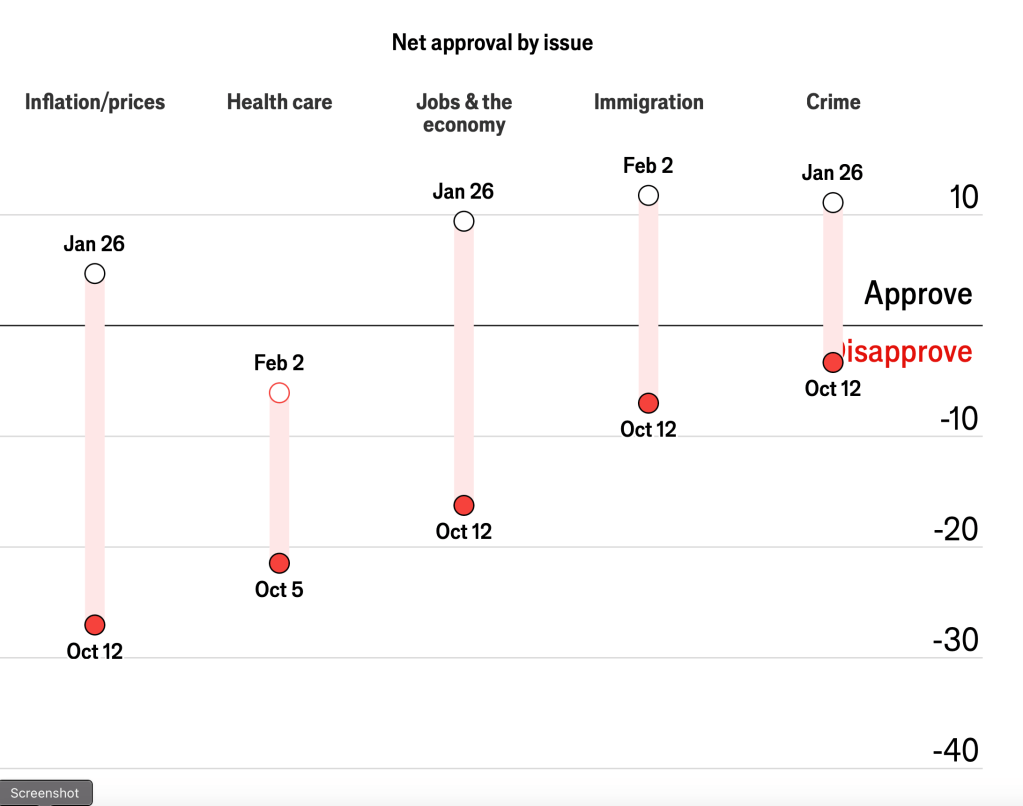
Net approval, over time, on five broad issues:
Current net approval, by state, all respondents:
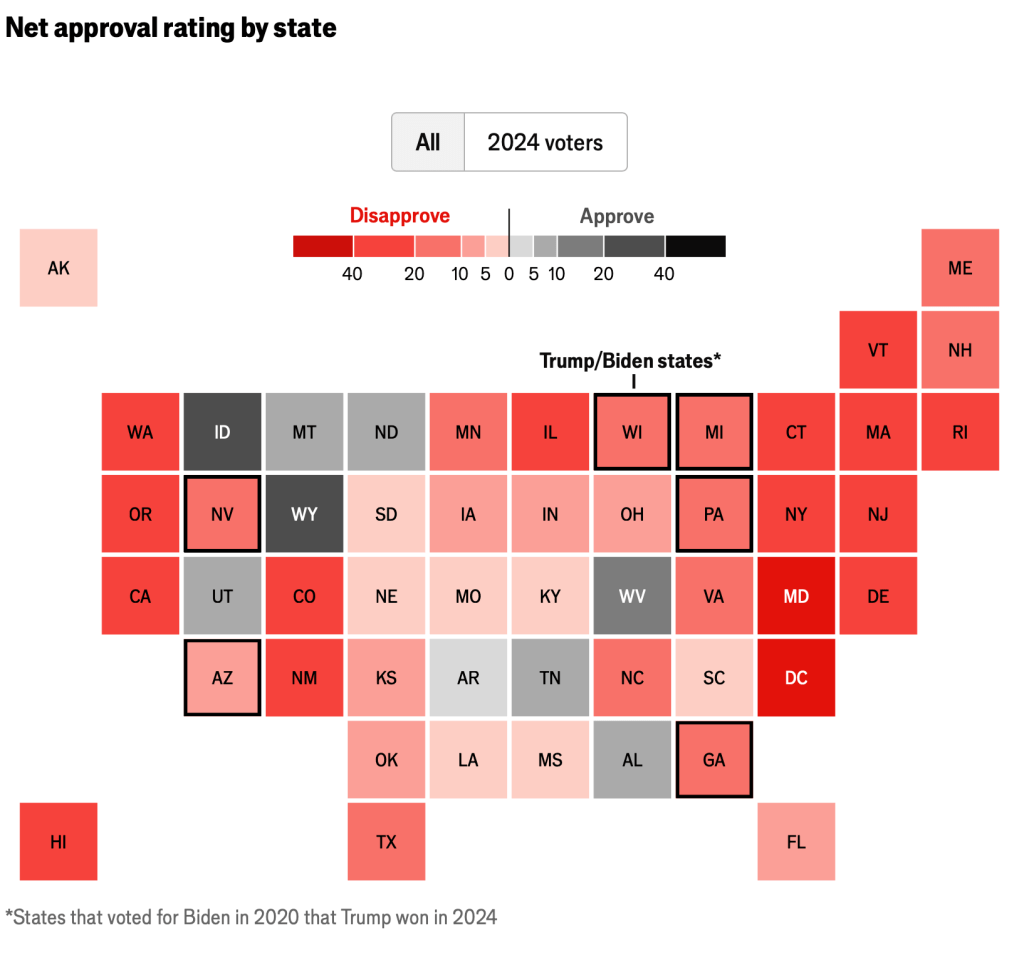
And last, but far from least, current net approval, by state, among those who actually voted in 2024:
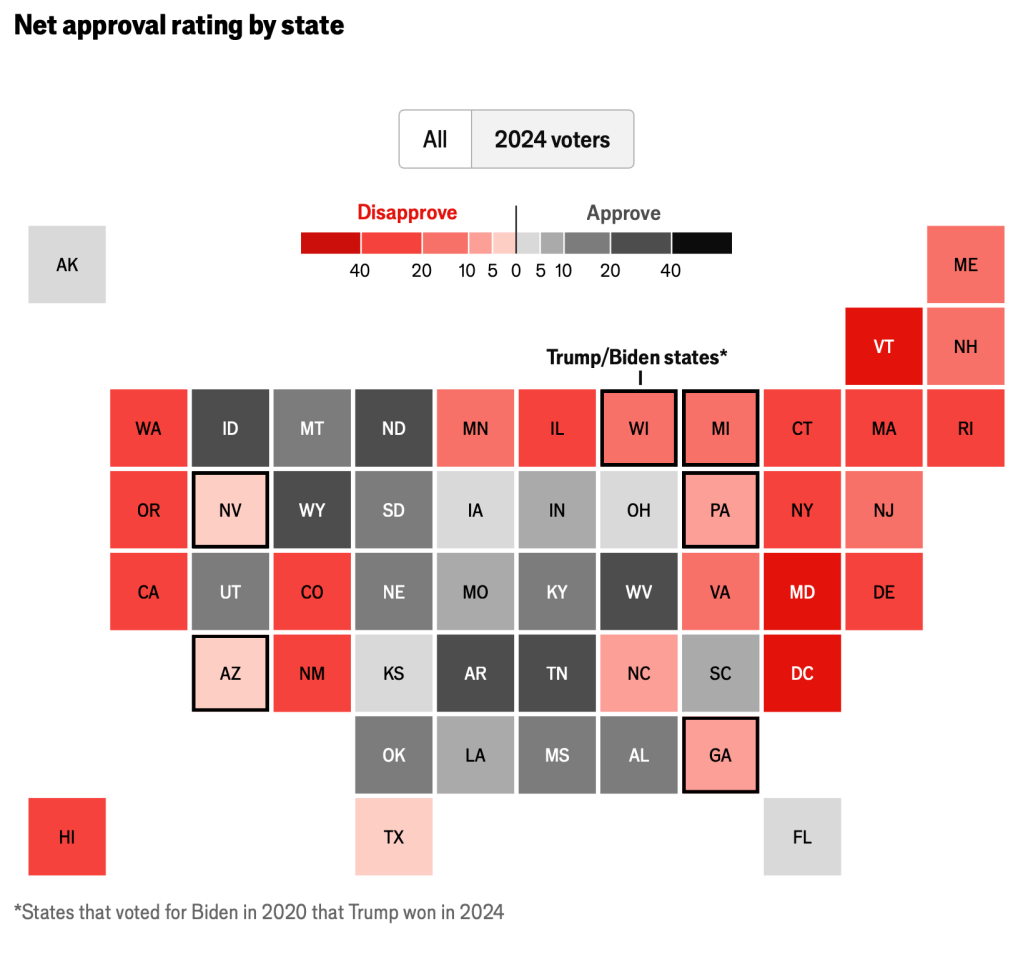
I found the difference between the “all respondents” and “those who actually voted in 2024” to be striking.
Also, on the latter chart, take a gander at the current approval rating in Arizona, Georgia, Michigan, Pennsylvania, and Wisconsin. Not to mention Texas!
And take heart.
 Facing MAGA