
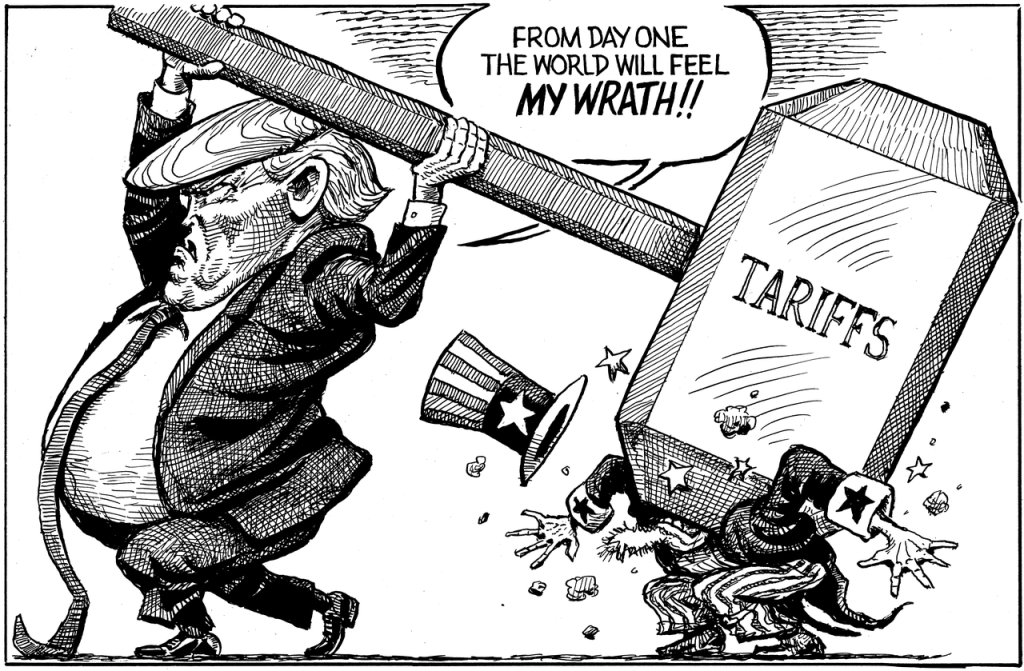
On November 5, the Court heard oral argument in Trump v. V.O.S. Selections (litigation sponsored by a libertarian foundation) and other cases challenging Trump’s attempted usurpation of tariff setting powers in purported reliance on the International Economic Emergency Powers Act. The decision should come soon. (There was a rumor that it would come yesterday, but that did not happen.
How to Predict the Outcome of a Case
For best results, you want to ask two big questions—one ruthlessly objective and the other relentlessly subjective.
Your first big question is, Which side should win the case? Gather the fact and take a rigorously objective view of them, study applicable legal principles, and ask how an intelligent, diligent, and utterly fair-minded court would apply the relevant principles to the relevant facts.
Your second big question is, Which side does the court want to win the case? Consider the judge’s (or judges’) political ideology, legal ideology, prior rulings, class interests, friends, and anything and everything else you know about the court’s leanings.
Obviously, if the party that should win the case is also the party that the court wants to win the case, then it’s easy to predict that that party is probably going to win the case.
What Factors Apply Here?
Here is how I see it.
1. This is a case of statutory interpretation. Pretty much all the traditional canons of statutory interpretation point toward the conclusion that Trump does not have the statutory power he claims to have.
2. Taking a textualist and originalist view of the matter, one reaches the same conclusion.
3. Prudential considerations go the same way: the tariffs are harming almost all segments of the economy.
4. Because the tariffs are creating broad economic harm, they are hurting Republicans politically, and will probably play an important role in the 2026 elections.
5. Trump will scream like a stuck pig when he loses the tariff cases, but, even if he doesn’t know it, a negative decision would tend to save him from his own misjudgment.
6. Liberals don’t like tariffs, and would applaud a decision against Trump.
6. Conservatives don’t like tariffs, and would applaud a decision against Trump.
Conclusion
A decision against Trump on the tariffs would be thoroughly unsurprising.
A decision the other way would mean that something very, very odd had happened.
 Facing MAGA