
Watch the cat at the bottom left. Check out what part of his anatomy he is grooming.
Rahm Emmanuel Analyzes the Manosphere—and Lays Out His Campaign Platform for a Presidential Run

Rahm Emmanuel (Washington Post), What’s really depressing America’s young men: The U.S. has two overlapping problems: the housing crisis and despondency in young men. Emmanuel writes,
The United States today is engaged in two conversations that appear, at first blush, to be entirely unconnected.
The first focuses on men and boys. As Richard Reeves, founder of the American Institute for Boys and Men, has highlighted, younger-generation American males are increasingly despondent. The stereotype is of young men perpetually playing video games in their parents’ basements, too depressed and shut in to ask women out. But such exaggeration shouldn’t eclipse the broader and more subtle reality. You don’t have to be an incel to believe that the “system” is fundamentally broken and rigged against your success.
Separately, city and state leaders everywhere are focused on the housing crisis — specifically homeownership. Rents are too high, and even the most ordinary houses are astronomically expensive. Zoning is exclusive, interest rates are too high, and the legacy of redlining lives on. Worse, new home construction has dropped to a five-year low. We’re not building enough homes to keep up with demand, and even if we were, those just starting off wouldn’t be able to comfortably afford them.
These patterns are two sides of the same coin. Just 30 years ago, the median age of first-time home buyers was 28. Today, it’s 38. In 2000, the typical price of a single-family home was three times a family’s annual income; today, it’s six times. The effects are clear: In Germany and Spain, where real estate prices have climbed more modestly over the past 30 years, the percentage of young adults who report regularly experiencing worry, sadness and anger has largely remained steady. In the United States, however, where home prices have risen 85 percent, one-third of young adults now report a sense of despondency.
This is, of course, a problem for all Americans — men and women alike. But, unpopular as it might be to say in some quarters of my party, the crisis affects one gender with particular potency. Like it or not, American men are still raised to believe that their role is to act as providers and protectors. And when men whose self-worth is tied up in that aspiration realize they’ll never be able to buy a home, they’re bound to feel shame and anger.
The American Dream can’t live up to its name when only a tenth of the population has a shot at it. The dream has become unaffordable and inaccessible in a way that Democrats should declare unacceptable. Democrats talk all the time about democracy being on the ballot. But the solution won’t be found only in registering more voters or making mail-in balloting universal. The problem is that real generation-over-generation prosperity is harder to achieve today. This shouldn’t be some mystery: American democracy became unstable at almost exactly the same time the American Dream became unaffordable. And because that’s not a coincidence, we need to tackle the homeownership challenge head-on.
This isn’t a marketing problem. It’s not just a matter of Democrats finding our own Joe Rogan, or making better use of TikTok, or using more “authentic” language. Of the necessities for which prices keep rising — gasoline, groceries, health care — housing is first among equals. And if Democrats want to save our democracy while simultaneously fighting against economic inequality, we need to address the primary source of half the country’s humiliation and anger.
This challenge didn’t emerge overnight. To understand its roots, look no further than the 2008 financial crisis. As the mortgage bubble burst, millions of families lost their homes explicitly because Wall Street had rigged the system. And yet the bankers who participated in the rigging demanded their annual bonuses — and in most cases received them.
As White House chief of staff under President Barack Obama, I advocated Old Testament justice. I wanted to hold the bankers who sold liar loans accountable. But my arguments on a Saturday afternoon in the Roosevelt Room were overruled, perhaps wisely, so that Democrats could first pursue health care reform. Though we later instituted the Dodd-Frank financial reforms, no one ever went to prison — adding insult to injury. You can draw a straight line from that outrage to the tea party and, eventually, to the candidacy of Donald Trump, who promised to be an instrument of “your justice [and] retribution.”
If there’s any silver lining to the housing crisis, it’s that, unlike so many of our national challenges, it’s solvable. Unlike the rise of China, or the specter of AI, or the scourge of global climate change, we don’t need a new batch of policy tools or institutions to help working-class families purchase their first homes. We’ve done this before.
A century ago, mortgages were unaffordable to the broad mass of potential buyers. President Franklin D. Roosevelt and the New Deal responded by engineering a system that made 30-year fixed-rate loans that amortized the principal accessible to most home buyers — an effort that then evolved to encompass Fannie Mae and Freddie Mac. Not long thereafter, the government enacted the GI Bill for World War II veterans. Details of the housing market are different today, but the fundamentals are the same. So let’s apply the lessons.
First, much as we treat veterans as a population apart when it comes to home-buying, we should treat first-time home buyers as their own class. To make it easier for them to reach that first crucial rung on the ladder to economic prosperity, we should reinstitute the Obama administration’s $8,000 homebuyer’s tax credit, triple it to reflect present market conditions and index the benefit to inflation. Second, we should explore ways to make it possible for first-time home buyers to take out mortgages at favorable interest rates.
Third, in learning from the recent successes Texas and California have had with state-level reforms making land cheaper and zoning more streamlined, we should champion federal policies that incentive housing production. Texas now allows housing on land zoned for commercial use statewide; California just enacted a bill making infill housing much easier to construct. As Sens. Elizabeth Warren (D-Massachusetts) and Tim Scott (R-South Carolina) have proposed, the federal government should be rewarding states and localities that embrace supply-side solutions.
Tackling homeownership head-on is poised to be the ultimate example of how good policy turns out to be good politics. As data expert David Shor found in his analysis of the 2024 presidential race, the best moment of Kamala Harris’s campaign coincided with the decision to air television spots focused on housing costs. Today, the stock market is near an all-time high, CEOs are paid nearly 300 times the wage of average workers, and the uber-rich are building personalized spaceships. Yet young couples can’t afford a down payment for their first home.
The vast majority of Americans once believed they could enter the middle class by working hard and playing by the rules. Now, a burgeoning percentage of young people feel as though they’re running in place and getting nowhere fast. The hope of owning a little slice of the future is woven deeply into our national psyche. And the Democratic Party’s success hinges on our ability to enable men in particular to realize that hope and ensure their own success.
Yesterday’s ACLU Update on Recent Developments, Along With Prognostications and a Pep Talk
Broadcast live yesterday afternoon for ACLU contributors.
If you are not an ACLU contributor, you should be.
From Gavin Newsom’s Lips to God’s Ears
From David Ignatius’ Lips to God’s Ears

David Ignatius (Washington Post), Democrats ignored border politics. Now the consequences are here: To fight Trump’s excesses on immigration, Democrats need to show they are credible on the issue:
Democrats have gotten the border issue so wrong, for so long, that it amounts to political malpractice. The latest chapter — in which violent protesters could be helping President Donald Trump create a military confrontation he’s almost begging for as a distraction from his other problems — may prove the most dangerous yet.
When I see activists carrying Mexican flags as they challenge ICE raids in Los Angeles this week, I think of two possibilities: These “protesters” are deliberately working to create visuals that will help Trump, or they are well-meaning but unwise dissenters who are inadvertently accomplishing the same goal.
Democrats’ mistake, over more than a decade, has been to behave as though border enforcement doesn’t matter. Pressured by immigrant rights activists, party leaders too often acted as if maintaining a well-controlled border was somehow morally wrong. Again and again, the short-term political interests of Democratic leaders in responding to a strong faction within the party won out over having a policy that could appeal to the country as a whole.
When red-state voters and elected officials complained that their states were being overwhelmed by uncontrolled immigration over the past decade, Democrats found those protests easy to ignore. They were happening somewhere else. But when red states’ governors pushed migrants toward blue-state cities over the past several years, protests from mayors and governors finally began to register. But still not enough to create coherent Democratic policies, alas.
It’s open season on former president Joe Biden these days, and he doesn’t deserve all the retrospective criticism he’s getting. But on immigration, he was anything but a profile in courage. Security advisers including Homeland Security Secretary Alejandro Mayorkaswanted tougher border policies starting in 2021. But political advisers such as Chief of Staff Ron Klain, who sought amity with immigration rights progressives in Congress and the party’s base, resisted strong measures. Though Biden was elected as a centrist, he leaned left — and waited until the last months of his presidency to take the strong enforcement measures recommended earlier.
Throughout the 2024 campaign, Trump played shamelessly on public anxieties about the border. Some of his arguments, such as claims that hungry migrants were eating pets, were grotesque. They were simply provocations. But Biden and Kamala Harris didn’t have good answers, other than indignation. They had straddled the issue through Biden’s term, talking about border security but failing to enact it, and the public knew it.
Democrats finally came up with a bipartisan border bill in 2024 that would have given the president more authority to expel migrants and deny asylum claims, and more money to secure the border. Republicans, led by Trump, were shameless opportunists in opposing the bill. They didn’t want Biden to have a win. In the end, Democrats didn’t have the votes — or, frankly, the credibility on the issue. Biden took executive action in June 2024, limiting entry into the United States. But it was too late. He could have taken that action in 2021.
Since Trump took office in January, he has been building toward this week’s confrontation in the streets. ICE raids have steadily increased in cities with large migrant populations, as have nationwide quotas for arrests and deportations. Trump declared a national emergency on Inauguration Day that gave him authority to send troops to the border to “assist” in controlling immigration. Homeland Security Secretary Kristi L. Noem seized every photo opportunity to convey a militarized approach to the coming clash. Over these months, the immigration issue has been a car crash skidding toward us in slow motion.
Since his first term, Trump has clearly wanted a military confrontation with the left over immigration or racial issues. Gen. Mark A. Milley, then chairman of the Joint Chiefs of Staff, helped talk Trump out of invoking the Insurrection Act in 2020 to contain the unrest that followed the death of George Floyd. But this time, Trump faces no opposition. He is surrounded by yes-men and -women.
The saddest part is that Democrats still have no clear policy. Some blue-state mayors and governors have pledged to provide “sanctuary” for migrants, but they don’t have good arguments to rebut Trump’s claim that they’re interfering with the enforcement of federal law. In some cases, sanctuary has meant refusing to hand over undocumented migrants convicted of violent crimes, former DHS officials tell me. That’s wrong. The courts have limited Trump’s most arbitrary policies and his defiance of due process, but not his authority to enforce immigration laws.
California Gov. Gavin Newsom (D) this week chose sensible ground to fight, filing a lawsuitchallenging Trump’s authority to override gubernatorial power by federalizing National Guard troops when there isn’t a “rebellion” or “invasion.” There is no evidence of such extreme danger — or that local law enforcement in Los Angeles can’t handle the problems.
But Newsom’s smart pushback doesn’t get Democrats out of addressing an issue they’ve been ducking for more than a decade: Do they have the courage to enforce the border themselves?
Over the long run, taking border issues seriously means more immigration courts and more border-control people and facilities — and a fair, legal way of deciding who stays and who goes. But right now, it means Democratic mayors and governors using state and local police to contain protests, so that troops aren’t necessary — and preventing extremists among the activists from fomenting the cataclysm in the streets that some of them seem to want as much as Trump.
Yes, of course, we need new bipartisan legislation to resolve the gut issue of how to protect the “dreamers” and other longtime residents who show every day that they want only to be good citizens. But on the way to that day of sweet reason, Democrats need to oppose violence, by anyone — and to help enforce immigration policies that begin with a recognition that it isn’t immoral to have a border.
Mango Mussolini’s Moronic Manufactured Mayhem
Today, many talking heads are talking about the events in Los Angeles as a step on the road to authoritarianism—and an attempt to distract from Team Trump’s many failures.
All true.
And yet there remains an elephant in the room for Team Blue.
As a movement, we do not yet have a coherent and politically viable answer about
- How to deal with the undocumented people currently present here,
or about
- What the rules and procedures for political asylum ought to be,
or about
- Apart from people with legitimate asylum claims, how many—and who—should be permitted to enter the United States.
Not to have coherent and politically viable answers to these questions is political malpractice.
The United States and China: Reflections on Prof. O’Neill’s Analysis
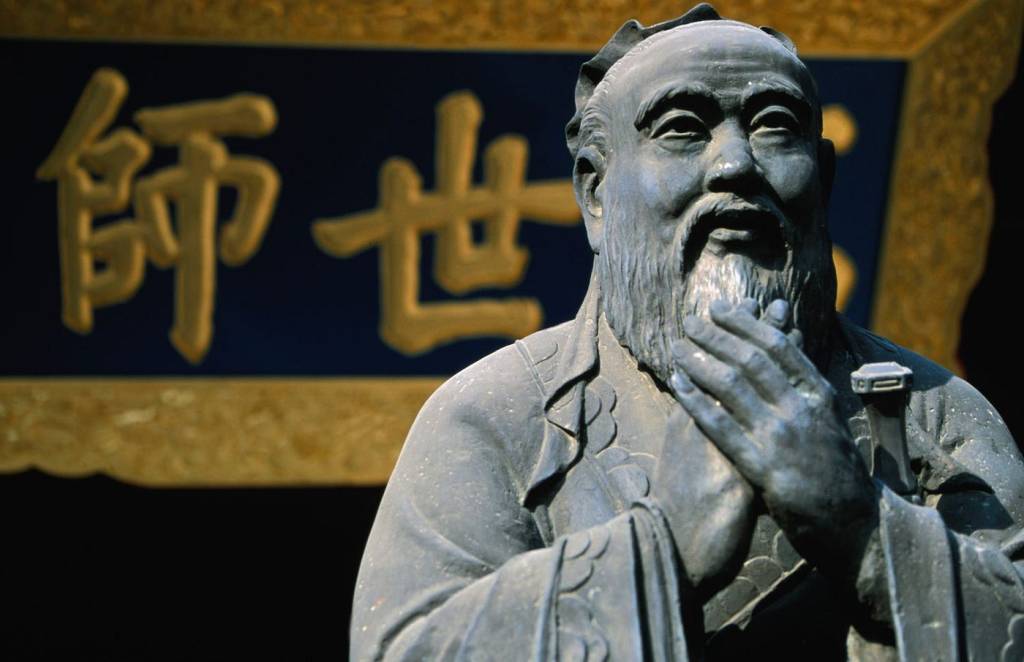
Relying on the fair use doctrine of copyright law, the immediately preceding post reproduces what, in my opinion, is an outstanding analysis of the nature of competition between China and the United States. Here are a few additional thoughts of my own.
They’re All Confucians
Throw a stone at the Politburo and you will not hit a Communist, you will instead hit a Confucian. That’s because they are all Confucians.
And what does it mean when I say that the Chinese political elite is uniformly Confucian? Mainly, it means two things. It means that the elite believes, down to the marrow of their bones, that the mass of common people—the lao bai xing—are morally and intellectually incapable of self-government.
The common people must be led. But by whom? By a moral and intellectual elite, who can guide society and government along the right path.
Confucianism became the state ideology of China in 136 BCE—the guiding framework for government, law, education, and social ethics. 2161 years later, Confucianism remains the state ideology of China.
These folks are never going to abandon Confucius and Mencius in favor of John Locke and James Madison. That’s not happening. And anyone who ever thought it was happening, or might happen, or would happen: that person does not know China.
Are You Saying, Then, That We Should Become Confucians, Too?
No, I’m not. But I am saying that our political elite and our economic elite badly needs to try to transform themselves into our intellectual and moral elite as well.
We need to be better Lockeans and Madisonians, and we need to draw our inspiration from Luke 12:48, remembering that where much is given, much is required.
And for the non-elites? They badly need to relearn how to be educated and responsible citizens of a democracy. And morally responsible folks among the elite need to do what they can to help. We could begin by restoring civics education to its rightful place in elementary and secondary schools.
Because if our political life keeps on consisting of performative nonsense, and if the American law bai xingkeep on getting their news from Russian propaganda they read on Facebook then Professor O’Neill tells us exactly where we are headed.
The United States and China: A Brilliant Analysis by a Retired CIA Executive and Current Georgia Tech Professor

Brian O’Neill (Atlanta Journal-Constitution), The China threat was always real. The American response never was: U.S. policy is reactive and performative, but China is disciplined, coordinated and strategically patient:
For decades, the United States engaged China less as it was and more as we imagined it could become. First as student, then partner and, eventually, reformer-in-waiting. We projected hopes of gradual liberalization — that exposure to global markets and Western institutions would, over time, turn China into a stakeholder in the U.S.-led order. In doing so, we cast ourselves as mentor and China as an ambitious apprentice.
It was our own geopolitical version of the Anakin Skywalker arc: We believed the student would follow the teacher’s path — until it became clear he had been blazing one of his own.
China was never waiting to be converted. It was never benign, and never blindly adversarial, either. It was a rising power studying the architecture of U.S. influence and quietly learning to apply the same tools: capital, leverage, alliances and time. The failure wasn’t that China changed. It’s that our assessment was always flawed.
We have not been outpaced by Beijing because it outmaneuvered us in some decisive moment. We’ve been falling behind for years — through bipartisan neglect, overreliance on market forces and the illusion that rhetorical consensus equaled strategic clarity.
Then-President Barack Obama bet on patient integration. President Donald Trump in his first term veered into impulsive confrontation. Neither built the foundation for enduring competition.
The Biden administration began to shift U.S. policy — reviving industrial policy through the CHIPS Act, the Inflation Reduction Act, and targeted investments in supply chains and green technology. But it was cautious, fragile and poorly explained to the public. No enduring doctrine was built around it. No political infrastructure was assembled to protect it. As a result, the effort proved vulnerable — reversible with a change of administration. And under Trump, that reversal came fast.
Trump’s impulsively imposed tariffs — framed as a necessary reckoning with China but levied broadly against 57 trading partners — became the clearest symbol of America’s collapse of strategic direction.
China was hit hard, but the real exposure was our own: a reactive, chaotic policy disconnected from any coherent plan for competing with Beijing or sustaining global leadership.
China, by contrast, achieved what we never organized: alignment between ambition and execution. It mapped where the global economy was headed, subsidized the industries that would define it and embedded itself in the infrastructure of other nations’ development. We warned about dependence. China constructed it.
While we rehearse cliches about China’s long game, Beijing continues to make the cliché true — by matching ambition with execution.
Beijing doesn’t win by being perfect. It wins by being consistent. It declares a goal, funds it, adapts along the way and recalibrates its institutions to deliver. It doesn’t always succeed. But it has internalized a lesson we’ve discarded: Long-term strength is built through continuity, coordination and patience.
China can direct capital to a strategic sector without waiting for a committee markup. It can fund five-year initiatives to dominate electric vehicle manufacturing or become indispensable in solar panel supply chains. Its leadership doesn’t worry about a change in control of the legislature halfway through an investment cycle. It mandates. It finances. It builds.
We announce initiatives, hold press events and promise resilience — while designing policies that expire with the next election.
The danger isn’t just that this administration pursues a strategy of grievance instead of a strategy of victory; it’s that we have allowed our politics to unlearn how to build at all.
Our weakness lies not in a single leader or party, but in a political culture that treats governance as performance and strategic patience as surrender. If we continue on this path, it won’t be because China outsmarted us. It will be because we dismantled the architecture of American strength ourselves — and did so without even bothering to notice.
Some will argue this is uniquely Trumpian. It’s not. The inability to turn bipartisan agreement into coherent strategy predates him. His second term hasn’t caused the collapse; it has exposed how hollow the structure already was.
When it mattered, we didn’t rebuild manufacturing. We didn’t reinforce the global structures we had built. We didn’t finalize a trade alternative to Belt and Road — China’s massive program of building ports, railways, and infrastructure across Asia, Africa and beyond. Efforts such as the Trans-Pacific Partnership never developed into a credible economic counterweight.
We didn’t redefine what global leadership should mean once the liberal order began to stall. Instead, we kept reacting — and mistaking performance for resilience.
On May 12, Trump walked backed his most extreme tariffs — not as part of a strategic recalibration, but under pressure, in exchange for a 90-day cooling-off period. The announcement, hailed as a breakthrough, masks what it really is: a negotiated timeout between two governments whose underlying strategies remain unchanged. Beijing, steady and methodical. Washington, reactive and performative.
Even if some semblance of a stable trade deal is eventually secured, the damage to America’s economic statesmanship is done. The lost trust, the stalled investment cycles, and the strategic drift of the past decade have already left scars that won’t be easily reversed.
China, too, will suffer costs. But it is structured for recovery — disciplined, coordinated, strategically patient. The United States is not. When the dust settles, Beijing will still have a plan. We will still be arguing over who to blame.
If America wants to compete, it doesn’t need another round of punitive measures. It needs a memory of how it used to build — and a political class willing to stop setting fire to the scaffolding of national strength just to prove they were here.
We don’t need to become China. But we do need to stop sabotaging ourselves.
U.S. influence isn’t lost; but it will need to be earned back. After World War II, we led the reconstruction of devastated allies through the Marshall Plan — not only to rebuild Europe, but to cement a democratic order rooted in trust and shared purpose. Today, that trust has eroded. Restoring it will require a new kind of reconstruction — not of cities, but of alliances. We must show our partners that American leadership still values cooperation over coercion and is willing to share influence, not hoard it.
Rebuilding strength also requires letting go of magical thinking. Tariffs, slogans and industrial nostalgia won’t outcompete China. Long-term leverage demands reinvestment in education, manufacturing, energy and research — protected from partisan sabotage and “short-termism.”
And we must stop pretending this is a second Cold War. China is a rival, not a monolith. We will compete — often bitterly — but on AI governance, climate stability, trade norms and crisis response, the world cannot afford economic decoupling. Managed interdependence, rooted in verifiable standards and shared risk, is the only way to prevent lasting fracture.
Finally, both political parties must stop mistaking partisan theatrics for strategy. Democrats cannot wait for a favorable electoral map in 2026 or 2028. They must begin governing through influence now — by articulating serious proposals on industrial renewal, alliance repair and global standard-setting.
Republicans, meanwhile, must accept that tariffs and televised bravado are not strategy — they are delayed tactics. They must offer a governing framework, not culture war sound bites. Congress cannot reverse course alone, but it can reassert relevance and slow the damage.
The next president won’t shape the rivalry. They’ll inherit its terms. And if we continue on this path, China won’t need to defeat us. We’ll have finished the job ourselves.
Brian O’Neill is a retired CIA executive who has served in such leadership roles as deputy director of analysis at the National Counterterrorism Center and as executive editor of the President’s Daily Brief. He now teaches national security at Georgia Tech and contributes to the journal “Just Security” and other outlets.
Not Lookin’ Great for the Trumpster
A Letter from 876 Yale University Faculty: “We Stand Together at a Crossroads”
April 2025
Dear President McInnis, Provost Strobel, and Members of the Yale Board of Trustees:
We stand together at a crossroads. American universities are facing extraordinary attacks that threaten the bedrock principles of a democratic society, including rights of free expression, association, and academic freedom. We write as one faculty, to ask you to stand with us now.
We urge you to:
- Defend the values and ideals of higher education, and Yale’s specific mission of “improving the world through outstanding research and scholarship, education, preservation, and practice.”
- Resist and legally challenge any unlawful demands that threaten academic freedom and university self-governance.
- Commit that no department, program, or structure of shared governance will be reorganized or eliminated in response to political threats.
- Protect science and other research at Yale from funding cutoffs, by providing legal and financial support to affected scholars and research units, mobilizing extraordinary resources as necessary.
- Defend the rights to free speech on campus recognized in the Woodward Report, including by assisting community members at risk of government infringement on this right, whether through immigration action or other means.
- Work purposefully and proactively with other colleges and universities in collective defense.
We stand united, asking for your courageous leadership. We look forward to standing alongside you in this work.
Signed,
[Yale faculty of all ranks can sign this letter here.]
 Facing MAGA