Thanks to international readers in January from Bahrain, Canada, Colombia, China, Germany, India, Indonesia, Iraq, Japan, New Zealand, Peru, Philippines, Singapore, Taiwan, Turkey, UAE, UK, and Vietnam.
We love you all, but we especially love Canada.
My message to you: yes, I know very well that we’re acting crazy over here. I know very well that Humpty Dumpty has fallen, and all the king’s horses and all the king’s men can’t put Humpty together again. I know that we Americans don’t really know where we’re going, and we don’t know how to get there. But I believe in the core of my being that we will ultimately survive, flourish once again, and once again act like good neighbors.
In the United States, WordPress is telling me that my readers come from Ashburn VA, Atlanta GA (no surprise there), Boston and Cambridge (maybe MA, but could be lots of others), Council Bluffs IO, Kansas City (don’t know which one), Jonesboro AR, Los Angeles CA, New York NY, North Bergen NJ, Quay (don’t know which one), Seattle WA, Tucker GA, and Tuscaloosa AL.
And now, my American brethren and sistern, please rise with me in body or in spirit and join in singing
Meanwhile, the New York Times explains in some detail how “a deep bench of conservative lawyers” are working for Harvard. I touched on this topic in an earlier post, but the Times has more resources to fill out the story in detail, as compared with one old guy like me sitting in his man cave with a computer and an internet connection.
For what it’s worth, I disagree with the last paragraph of the Times article, wherein someone is quoted as saying that judges might feel “manipulated” if someone hires lawyers with whom they agree ideologically and who are their friends. Well, I suppose that could happens. And I suppose there could come a time when God stops making little green apples and it stops raining in Indianapolis in the summertime.
In other news, also good, Abbe Lowell, Esquire, has left Winston & Strawn (a Big Law firm known as a business litigation powerhouse) and formed a new firm to represent people and institutions targeted by Trump. Some of the associates in his new firm, Lowell & Associates, come from big firms that have bowed the knee to Mango Mussolini.
A big news item on Friday evening was Judge Beryl Howell’s 100+ page opinion granting summary judgment to Perkins Coie in its suit to undo Trump’s executive order against it. Dog Bites Man: no, said the judge, to a Team Trump ignorant of the basic rules of constitutional law, it won’t do to retaliate against a person or an institution for exercising their constitutional rights, said the judge. And, she added, “If the founding history of this country is any guide, those who stood up in court to vindicate constitutional rights and, by so doing, served to promote the rule of law, will be the models lauded when this period of American history is written.”
I said I would let you know when we get to the Man Bites Dog news. We’re here. And that news is all good, too.
The American Civil Liberties Union represented the people about to be deported. I have not seen their brief, but I strongly suspect they argued their case in terms designed to appeal to the district judge, to the Fifth Circuit Court of Appeals, and to the majority of the Supreme Court.
Good for the ACLU. They’re arguing to win their case—not to make themselves popular in the faculty lounge at Harvard Law School or at the progressive table here at Happy Acres.
Finally, some will say it would have been better if Judge Rodriguez had enjoined Team Trump throughout the nation, not just in the Southern District of Texas. But the judge may have believed those who argue that he lacked jurisdiction to issue a nationwide injunction. Or, he may have just wanted to keep the issue really, really simple, as the case moves forward on appeal.
In any event, the case is ripe and ready for appeal, as is Judge Howell’s decision in the Perkins Coie litigation.
There is an error in the immediately preceding post. Contrary to my previous understanding, Paul Weiss did not promise $40 million in Trump-approved pro bono work over one year. Instead, it promised $10 million each over four years.
Even less chicken feed.
The Financial Times apparently got its hands on the supposedly confidential email to Paul Weiss employees spelling out the alleged rationale for the Trump deal. Based on that, the paper reports as follows:
The head of Paul Weiss defended his decision to strike a deal to end a dispute with US President Donald Trump on Sunday, arguing that the survival of the elite law firm was at risk.
Brad Karp, the chair of Paul Weiss, wrote in a note to colleagues that Trump’s executive order targeting the firm posed an existential threat and left him no choice but to negotiate.
“Only several days ago, our firm faced an existential crisis,” Karp wrote in the email on Sunday, which was circulated on social media. “The executive order could easily have destroyed our firm. It brought the full weight of the government down on our firm, our people and our clients.”
Paul Weiss is one of the most high-profile law firms to come under attack from the White House in recent weeks as Trump punishes perceived enemies. Other law firms including Perkins Coie and Covington & Burling have also been targeted through executive orders, with the former still fighting the administration in court.
About a dozen more are likely to be the subject of new executive orders, according to a White House official.
Without the deal, Karp said it was “very likely” the firm would not have been “able to survive” a drawn-out dispute with the White House. He also criticised rival law firms’ behaviour since the executive order, arguing that some of them had seen the fight as an opportunity to target Paul Weiss clients.
Paul Weiss initially prepared a lawsuit to fight the executive order in court, but decided to negotiate with Trump after it became clear the directive threatened to unravel the firm by scaring off existing clients and new business, Karp said.
The deal struck between the White House and Paul Weiss last week commits the law firm to providing $10mn worth of legal services on a pro bono basis annually over the next four years. That legal counsel will focus on issues important to the administration, including supporting veterans and fighting antisemitism.
In the email to colleagues, Karp denied that the administration was controlling which matters the law firm took on, insisting they were areas of “shared interest”.
In the initial executive order this month, Trump took issue with former Paul Weiss partner Mark Pomerantz, who in 2021 joined the Manhattan district attorney’s office where he investigated Trump and his businesses.
On Friday, Trump issued another statement outlining the agreement with Paul Weiss, writing that the law firm had “indicated that it will engage in a remarkable change of course”.
Karp, who was a prominent supporterof and fundraiser for Kamala Harris’s presidential campaign, added that his decision to negotiate with the White House was driven in part by a fiduciary duty to the firm’s employees.
“There was no right answer to the predicament in which we found ourselves,” he wrote.
“All of us have opinions about what is going on right now in America . . . But no one in the wider world can appreciate how stressful it is to confront an executive order like this until one is directed at you.”
A Brief Comment on the Article—and on Mr. Karp’s “Existential Threat”
The nature and extent of the “existential threat” would depend on which Paul Weiss clients threatened to bale, and how much of its billings were coming from the faint-hearted clients.
Barring further leaks—and there may well be further leaks—there’s no way to know for sure. But among the law firm’s biggest clients are ExxonMobil, Amazon, and Google.




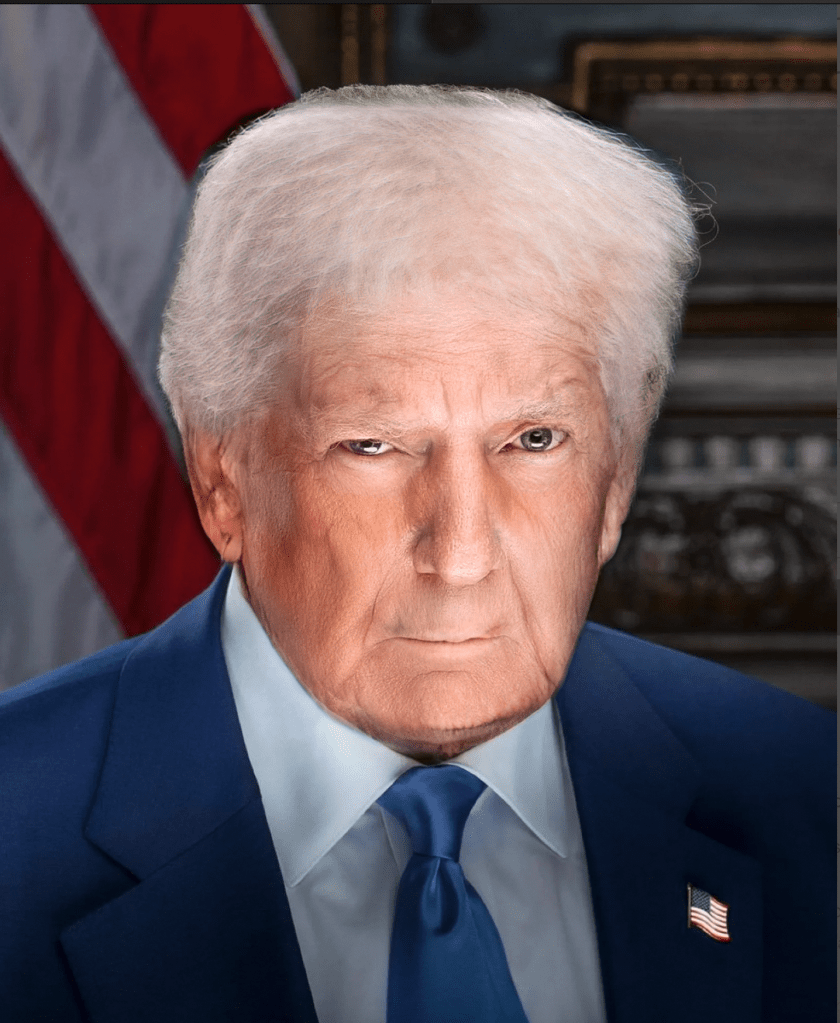

 Facing MAGA