The Wall Street Journal Editorial Board Would Like to Let You Know That the Trump Economy is Stumbling

The Journal’s Editorial Board writes, 

The Trump Economy Stumbles

The President has his new world tariff order in place, but jobs and growth don’t look so good.

President Trump has now imposed his new tariff regime on the world, and the triumphalism is palpable in MAGA land. But maybe hold the euphoria, as this week’s reports on jobs and the economy suggest the new golden age may take a while to appear. 

Friday’s labor report arrived with a particular jolt, with a mere 73,000 net new jobs in July. Even more bearish were the downward revisions of 258,000 jobs in May and June. Job gains over the last three months are barely more than 100,000.

The details in the report provide little solace. The jobless rate ticked up only to 4.25% from 4.1%, but that was in part because the labor force continued to shrink. The labor participation rate fell again to 62.2% and is now down half a percentage point in a year.

Employers aren’t laying off workers, but they have all but stopped new hiring. Notably, most of the new jobs are in healthcare and social assistance, which rely heavily on government spending. This continues the Biden-era trend that Trumponomics was supposed to change. Not so far.

The much-advertised rebirth of U.S. manufacturing also hasn’t arrived. The economy shed 11,000 manufacturing jobs in July, following a loss of 26,000 in May and June. The ISM Manufacturing Index fell again in July to 48, the fifth straight month below 50. 

One labor market problem may be the crackdown on migrant workers. The foreign-born workforce has fallen by about a million since Mr. Trump took office. The National Foundation for American Policy, a nonpartisan think tank, says immigrants accounted for over half of the labor force increase in each of the last three decades. Fewer workers means fewer new jobs as employers conclude they can’t fill them.

***

How much of this jobs and growth slowdown owes to Mr. Trump’s tariffs? It’s hard to say for sure. But it has occurred in the wake of Mr. Trump’s April 2 tariff shock, his rapid backtrack from the highest rates, and then his willy-nilly threats and deal-making with the world. The policy uncertainty has surely affected business hiring and investment. How can you hire or invest if you don’t know what your cost of goods will be, or from which supplier you will be able to buy at a competitive price?

On that score, Mr. Trump’s latest tariff blast this week hasn’t put an end to the uncertainty. Much of the world will now pay 15%, if Mr. Trump sticks to his deals. But some of the biggest U.S. trading partners—Mexico, Canada, China and India—remain in tariff limbo. Brazil will pay 50%, though it has a trade surplus with the U.S. And what did Switzerland ever do to Mr. Trump to deserve 39%? Charge too much for a watch?

Mr. Trump and his supporters are hailing the trade deals as the dawn of a new world trading order that will be better for American workers. And it’s true that the rest of the world has declined to retaliate, China excepted. The U.S. market is so large that these countries seem willing to absorb the 15% tariff hit rather than risk even higher tariffs from Mr. Trump if they did retaliate.

But what matters will be the economic results over time. The U.S. economy is resilient, and perhaps it can absorb a new average tariff rate from 15%-20%, up from 2.4% when he took office in January. There will also be a clamor for wide exceptions.

But the tariff tax increase in dollar terms at Mr. Trump’s current rates will be close to $360 billion a year. That’s among the largest tax increases in recent history. Republicans have spent decades building credibility as the antitax party, but now they’re going along with Mr. Trump’s tariffs on the fiction that only foreigners will pay them. Let’s see how well that plays when prices on tariffed goods increase.***

Mr. Trump seems to understand that the jobs report signals trouble because on Friday he ordered the firing of the head of the Bureau of Labor Statistics. He claims the numbers are being politically manipulated, but he offered no proof. BLS has its problems, but the timing suggests he’s shooting the messenger. There are bound to be monthly revisions when tariff and deportation policies are so volatile.

Mr. Trump’s other scapegoat is the Federal Reserve, which he says has been too late to cut interest rates. Maybe that will prove to be true, but the Fed also has to navigate Mr. Trump’s tariff uncertainty and the large fact that inflation is still above its 2% target. Every public opinion poll says voters remain unhappy about the price increases they’re paying.

A saving grace, we hope, is that the new tax law and deregulation will reduce business costs and lift investment. But Mr. Trump can help by stopping his trade war. If he won’t roll back his tariffs, at least he can declare that he’s content with where they are and has no plans for more.
Alternative Facts

Megan McArdle (Washington Post), Trump should heed, not hide, the jobs numbers: Firing the Bureau of Labor Statistics commissioner won’t improve the U.S. economy

Business owners use labor statistics in making decisions about planning, hiring, and setting wages. From now on, these kinds of decisions will be based on unreliable data—or, certainly, data that are perceived as unreliable.

Politicians, and everyone concerned with politics, relies on labor statistics to inform them about whether the economy is healthy, unhealthy, or mediocre and as an essential source of information for setting monetary and fiscal policy. From now on, they will lack an important source of reliable information on which to base their decisions.

Career counselors, students, job seekers, and workers use BLS data as a significant source of information about salaries and job prospects. From now on, their ability to plan will be materially diminished. 

The Manosphere Speaks—and So Does Mike Johnson

My Hot Take

Several people advised Nixon just to burn the Watergate tapes. Looking back after he left office, Nixon concluded that the “lesson of Watergate” is “burn the tapes.”

From the perspective of Mango Mussolini, the least bad alternative for him would be to have a bonfire on the White House lawn and burn all the Epstein files. It would be a terrible alternative for him, but it would nevertheless be the least bad alternative for him. 

Right now, he’s just flailing—bleating random bullshit and throwing spaghetti at the wall.

以夷制夷—“Use Barbarians to Control Barbarians”: It Worked Well 2500 Years Ago as a Fundamental Precept of Chinese Statecraft, and It’s Still Working Well Today!

More than two millennia ago, Chinese leaders discovered that, if barbarians want to engage in mutually destructive fights among themselves, the thing for China to do is to hold their beer and let them have at it.

Today, they are delighted to see us destroy ourselves. 

Washington Post, China’s strategy? Let Trump cook: As Donald Trump dismantles U.S. soft power and launches trade wars with allies, China is content to sit back and watch.

Ishaan Tharoor of the Post writes, a propos “China’s evolving view of President Donald Trump’s second term,”

Beijing sees Trump’s disruptive actions — his gutting of institutions of U.S. soft power, his launching of trade wars against adversaries and allies alike, his steady eroding of trust in the U.S. alliance system — as acts of self-sabotage that need no Chinese prompting. Better for now, as Gen Z would say, to let him cook.

After Trump moved to dismember the U.S. Agency for Global Media, which backed internationally oriented outlets such as Voice of America, Chinese state-made broadcasts took the place of U.S. programming on TV networks in countries as disparate as Indonesia and Nigeria. Trump, like a growing number of Republicans, viewed the media properties as suspicious fonts of “anti-American” liberalism. But Chinese propagandists exulted at the demise of these U.S.-funded news operations, which had, to varying extents, chronicled the state of pro-democracy movements around the world and provided space for dissident voices in countries where political freedoms are curtailed.

“The Chinese people are happy to see the U.S. anti-China ideological fortress breached from within,” cheered Hu Xijin, former chief editor of the Global Times, a Chinese state-run, English-language newspaper, this year on social media.

In a video circulating this month, Victor Gao, a former Chinese diplomat and vice president of the Beijing-based Center for China and Globalization, mused whether Trump may come to be remembered as an American Mikhail Gorbachev. The comparison to the late Soviet leader and famous author of glasnost and perestroika was not meant to be flattering: Gorbachev’s attempt at reforms, Gao said, precipitated the collapse of the Soviet empire and unleashed a “trauma” still being felt today.

Gao suggested that by the end of the decade, Trump’s own attempt at reforms will have “fundamentally changed” both the United States and NATO, likely for the worse. Trump would not have made America “bigger, stronger, greater,” Gao said, but rather may have “led it astray, like Gorbachev.”

The fall of the Soviet Union isn’t the only historical parallel alive in Chinese discourse about the U.S. A host of Chinese commentators see in MAGA a whiff of China’s own Cultural Revolution under Mao Zedong, which saw myriad purges and the defenestration of ranks of the intellectual classes and political elites. “Mao unleashed the Red Guards to ‘smash’ the police, prosecutors, and courts, so that loyal revolutionaries could seize control of state machinery,” Zhang Qianfan, a constitutional law professor in Beijing, recently told CNN. “Trump brought Elon Musk and six young Silicon Valley executives into the White House under the banner of eliminating corruption, waste, and inefficiency — akin to the ‘Cultural Revolution Leadership Group’ entering the party’s central leadership.” …

Various “initiatives” promulgated by Xion development, security and cultural harmony have put forward a rosy Chinese vision of global cooperation and prosperity stripped of liberal ideals around universal rights and democracy. China’s position is gaining ground thanks to the shifts in Washington. “Beijing’s assessment right now is that the United States is dismantling, fairly systematically, the sources of its strength,” Julian Gewirtz, a China scholar and former Biden administration official, said in a recent interview.

“The United States, in their view, is dismantling its alliance relationships and alienating much of the world,” Gewirtz told the Wire China. “It is dismantling aspects of the U.S. science and technology ecosystem, cutting funding to some of our great universities, and making it very unappealing, if not outright impossible, for foreign talent to come do research in those universities. And it is eliminating arms of U.S. influence around the world, from USAID to Voice of America. China’s view is that the United States is, in a sense, unilaterally disarming.”

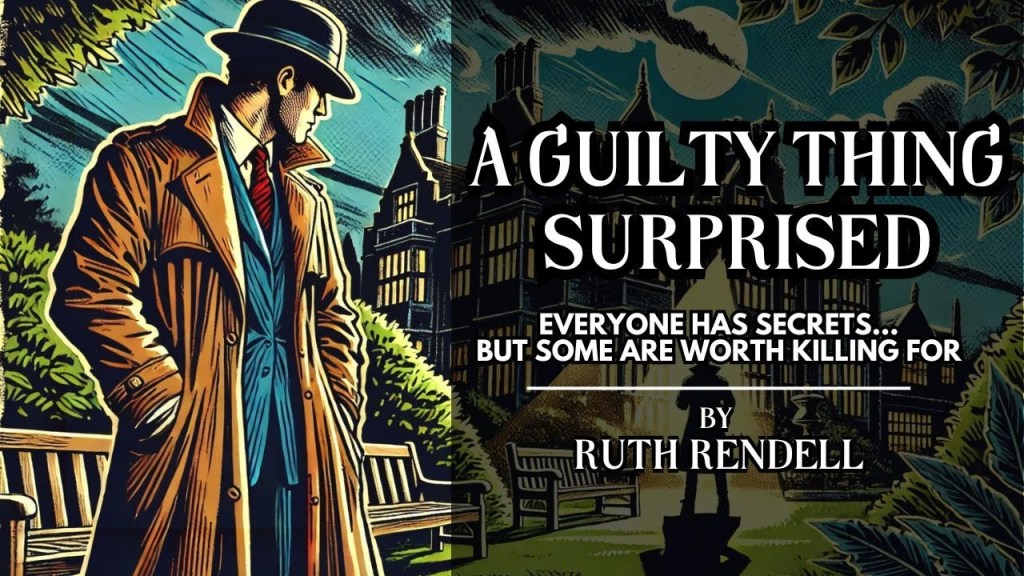
Like a Guilty Thing Surprised

Wall Street Journal, Justice Department Told Trump in May That His Name Is Among Many in the Epstein Files

N.Y. Times, Trump Administration Live Updates: Attorney General Alerted Trump His Name Appeared in Epstein Files

Jonathan Chait (The Atlantic), Trump’s Epstein Denials Are Ever So Slightly Unconvincing: The president is not behaving like an innocent man with nothing to hide

The two news articles are from this afternoon. The Chait opinion piece is from this morning. 

So, here’s my top list of things I’d like to know.

  1. I’d like to see the whole 2003 Epstein birthday book. By the way, someone almost surely has the original. Who has it, how can we get it, whose messages does it contain, and what do the messages say? (And if, perchance, the original has been misplaced, there are bound to be copies of the book.)
  2. There are said to be thousands of pages of investigative files. Do those thousands of pages enlighten us about who, if anyone, other than Jeffrey and Ghislaine were using the girls? And, were there blackmail materials on these other people, if there were other people? Was blackmail being paid, and, if so, by whom? 
  3. And was Trump among the customers, assuming there were any customers? (The FBI, we are told, has had a host of minions examine the files, marking references to Trump. What kind of work product did the minions produce? Just lists of references to specific documents and pages? Annotated lists? Memos? How can we get the work product, and what will we learn from it?)

In advance of knowing these things, I would like to know why, if Trump is not as guilty as homemade sin, why he is acting as if he were as guilty as homemade sin. Like a guilty thing surprised.

Jonathan Chait would like to know these things, too. He writes,

Imagine you were an elected official who discovered that an old friend had been running a sex-trafficking operation without your knowledge. You’d probably try very hard to make your innocence in the matter clear. You’d demand full transparency and answer any questions about your own involvement straightforwardly.

Donald Trump’s behavior regarding the Jeffrey Epstein case is … not that.

The latest cycle of frantic evasions began last week, after The Wall Street Journal reportedthat Trump had submitted a suggestive message and drawing to a scrapbook celebrating Jeffrey Epstein’s 50th birthday, in 2003. This fact alone added only incrementally to the public understanding of the two men’s friendship. Rather than brush the report off, however, Trump denied authorship. “I never wrote a picture in my life,” he told the Journal—an oddly narrow defense for a man reported to have written “may every day be another wonderful secret” to a criminal whose secret was systematically abusing girls, and one that was instantly falsified by Trump’s well-documented penchant for doodling.

On Truth Social, Trump complained that he had asked Rupert Murdoch, the Journal’s owner, to spike the story, and received an encouraging answer, only for the story to run. Under normal circumstances, a president confessing that he tried to kill an incriminating report would amount to a major scandal. But Trump has so deeply internalized his own critique of the media, according to which any organ beyond his control is “fake news,” that he believed the episode reflected badly on Murdoch’s ethics rather than his own.

Having failed to prevent the article from being published, Trump shifted into distraction mode. In a transparent attempt to offer his wavering loyalists the scent of fresh meat, Trump began to attack their standby list of enemies. On Friday, Tulsi Gabbard, the director of national intelligence, renewed charges that the Obama administration had ginned up the Russia scandal to damage Trump. None of the facts she provided supported this claim remotely. The entire sleight of hand relied on conflating the question of whether Russia had hacked into voting machines (the Obama administration said publicly and privately it hadn’t) with the very different question of whether Russia had attempted to influence voters by hacking and leaking Democratic emails (which the Obama administration, former Special Counsel Robert Mueller, and a subsequent bipartisan Senate-committee investigation all concluded it had done).

Why did Gabbard suddenly pick this moment to release and misconstrue 2016 intelligence comprising facts that the Obama administration had already acknowledged in public? Trump made the answer perfectly clear when he used a press availability with the president of the Philippines to deflect questions about Epstein into a rant about the need to arrest Obama.

“I don’t really follow that too much,” he said of the Epstein matter. “It’s sort of a witch hunt. Just a continuation of the witch hunt. The witch hunt you should be talking about is that they caught President Obama absolutely cold.” Trump has yet to specify why the “witch hunt” he’s been stewing over nonstop for nearly a decade remains fascinating, while the new “witch hunt” he just revealed to the world is too tedious to address.

In fact, Trump himself suggested that the two matters were related. He described the Epstein witch hunt as part of a continuous plot that culminated in Joe Biden stealing the 2020 presidential election. (“And by the way, it morphed into the 2020 race. And the 2020 race was rigged.”) You might think that this link would increase Trump’s curiosity about the Epstein matter, given his inexhaustible interest in vindicating his claim to have won in 2020. Not this time!

By invoking 2020, Trump managed to make the Epstein conspiracy theory sound moreworld-historically important—while attaching his protestations of innocence to claims that were hardly settled in his favor. Again, imagine you were in Trump’s position and were completely innocent of any involvement with Epstein’s crimes. You would probably not try to compare the Epstein case to the scandal in which eight of your associates were sentenced to prison, or to the other time when you tried to steal an election and then got impeached. Instead, Trump is leaning into the parallels between the Epstein case and his own long record of criminal associations and proven lies, arguing in essence that the Epstein witch hunt is as fake as the claim that Biden won the 2020 election (i.e., 100 percent real). …

Perhaps Trump is simply so habituated to lying that he has no playbook for handling a matter in which he has nothing to hide. Or maybe, as seems more plausible by the day, he is acting guilty because he is.