Harvard has two lawsuits pending against Team Trump. The first one challenges the draconian cuts in federal research grants—said by Team Trump to be justified by the university’s purported “antisemitism,” its purported discrimination against white people, and a hodgepodge of other bellyaches, some vague and hard to pin down. I wrote about it on April 22.
The Harvard legal team elected not to ask for a temporary restraining order and preliminary injunction, but instead to demand a highly, highly expedited summary judgment process. Judge Burroughs’ order of April 28 indicates that Team Trump agreed to the schedule, leading up to oral argument on July 21—and presumably a district court decision by the end of the summer.
That means that teams of lawyers are reviewing evidence that probably runs to hundreds of thousands of pages and distilling it into legal briefs and accompanying exhibits.
In a normal case, one could expect the process to take several years. Here, it is scheduled to take only several months.
I count 17 lawyers on the Harvard legal team. It’s a little top heavy, but, that said, there are a lot of spear carriers, too. They have been getting very little sleep these past few weeks.
Been there, done that.
And a related point: wholly apart from the fact that Team Trump’s legal position eats shit, I very strongly suspect that the government’s legal team is being outmanned, outthought, and outgunned by Team Harvard.
But we shall see.
The Lawsuit about Foreign Students
As you may know, this is a separate lawsuit. On May 22, Secretary Kristi Noem—that’s the person who doesn’t know what habeas corpus means—revoked Harvard ability to have any foreign students. Harvard obviously saw that one coming a mile away. The next day, May 23, it filed a new lawsuit, asked for a temporary restraining order, and received its TRO within just a few hours.
That was just a few days ago. I assume that a preliminary injunction will soon be granted, that the First Circuit Court of Appeals will rule promptly In Harvard’s favor, and that the case will reach the Supreme Court next fall.
In the meantime, though, it’s reasonable to expect that a fair number of the 6,800 foreign students normally to be found on campus—often as teaching assistants and lab assistants—will take flight.
A Change in the Harvard Legal Team
For the second case, Harvard modified its team. Once again, Steven Lehotsky, of Lehotsky Keller Cohn LLP—revered litigator for Federalist Society causes—signed the complaint and identified a number of his partners and associates as helpers in the case. Once again, one partner each from Quinn Emanuel and King & Spalding are on the case. But Ropes & Gray is out, in the new case, replaced by a team of very heavy hitters from Jenner & Block.
As far as I can tell, Ropes & Gray is still on the first case, the one about grants. I expect their lawyers are overwhelmed with that case. Also, the head of the Ropes & Gray team has an excellent reputation, but he seems to know a lot about white collar crime, not constitutional law.
With luck, the new folks on Team Harvard from Jenner & Block will well and truly give ‘em hell.
And Finally, a Few Random Facts
There are about 320,000 living alumni of Harvard University. They tend to be richer than average. An estimated 18,000 of them are believed to have more than $30 million in wealth. Of those 18,000 very wealthy alumni, the average net worth is said to exceed $300 million.
“Our great universities are the envy of the world and a crucial national asset. Look around you, and I urge you to take none of this for granted. When you look back in 50 years, you will want to know that you have done whatever it takes to preserve and strengthen our democracy.”
The Economist, Trump’s attack on science is growing fiercer and more indiscriminate: It started as a crackdown on DEI. Now all types of research are being cancelled:
Scientists in America are used to being the best. The country is home to the world’s foremost universities, hosts the lion’s share of scientific Nobel laureates and has long been among the top producers of influential research papers. Generous funding helps keep the system running. Counting both taxpayer and industrial dollars, America spends more on research than any other country. The federal government doles out around $120bn a year, $50bn or so of which goes towards tens of thousands of grants and contracts for higher-education institutions, with the rest going to public research bodies.
Now, however, many of America’s top scientific minds are troubled. In the space of a few months the Trump administration has upended well-established ways of funding and conducting research. Actions with the stated goal of cutting costs and stamping out diversity, equity and inclusion (dei) initiatives are taking a toll on scientific endeavour. And such actions are broadening. On May 15th it emerged that the administration had cancelled grants made to Harvard University for research on everything from Arctic geochemistry to quantum physics, following a similar move against Columbia. The consequences of these cuts for America’s scientific prowess could be profound.
Under the current system, which was established soon after the second world war, researchers apply to receive federal funding from grant-making agencies, namely the National Institutes of Health (NIH) and the National Science Foundation (NSF) as well as the Departments of Defence (DOD) and Energy (DOE). Once a proposal has been assessed by a panel of peers and approved by the agency, the agreed money is paid out for a set period.
This setup is facing tremendous upheaval. Since Mr Trump’s return to the White House, somewhere in the region of $8bn has been cancelled or withdrawn from scientists or their institutions, equivalent to nearly 16% of the yearly federal grant budget for higher education. A further $12.2bn was rescinded but has since been reinstated by courts. The NIH and the NSF have cancelled more than 3,000 already-approved grants, according to Grant Watch, a tracking website run by academics (see chart 1); an unknown number have been scrapped by the doe, the dod and others. Most cancellations have hit research that Mr Trump and his team do not like, including work that appears associated with dei and research on climate change, misinformation, covid-19 and vaccines. Other terminations have targeted work conducted at elite universities.
Much more is under threat. The president hopes to slash the NIH budget by 38%, or almost $18bn; cut the NSF budget by $4.7bn, more than 50%; and scrap nearly half of NASA’s Science Mission Directorate. All told, the proposed cuts to federal research agencies come to nearly $40bn. Many have already gone under the knife. In March the Department for Health and Human Services (HHS), which includes the NIH, announced it would scrap 20,000 jobs, or 25% of its workforce. According to news reports, about 1,300 jobs, or more than 10%, have been lost at the National Oceanic and Atmospheric Administration (NOAA), which carries out environmental and climate research. Staff cuts were reportedly also due to start at the NSF, but have been temporarily blocked by courts. To save more money, the NIH, the NSF, the DOE and the DOD have launched restrictive caps on so-called indirect grant costs, which help fund facilities and administration at universities. (These limits have also been partly blocked by courts.)
The administration says it has a plan. Mr Trump entered office on a mission to cut government waste, a problem from which the scientific establishment is not immune. On May 19th Michael Kratsios, his scientific adviser, stood up in front of the National Academies of Sciences and defended the administration’s vision. It wants to improve science by making it better and more efficient, he said—to “get more bang for America’s research bucks”. To do so, funding must better match the nation’s priorities, and researchers should be freed from groupthink, empowered to challenge each other more freely without fear of convention and dogma.
Shaking things up
He is right that science has a number of stubborn problems that can hardly be solved by a business-as-usual approach. Scientific papers are less disruptive and innovative than they used to be, and more money has not always translated into speedier progress. In the pharmaceutical sciences, new drug approvals have plateaued in recent years despite ever larger budgets. Researchers also spend much too long writing grant proposals and completing similar administrative tasks, which keeps them away from their laboratories.
Some of Mr Trump’s proposals are, in fact, overdue. Many NASA watchers, for example, would agree with his plan to find commercial alternatives for the Space Launch System, a giant rocket being built to take people to the Moon and beyond but which is years behind schedule and billions of dollars over budget.
It would be hard, if not impossible, to improve the science funding system without some disruption. The problem, however, is that the administration’s cuts are broader and deeper than they first appear, and its methods more chaotic. Take the focus on dei, which the administration bemoans as a dangerous left-wing ideology. The agencies are targeting it because of an executive order banning them from supporting such work. But dei is notoriously ill-defined. Programmes that are being cancelled are not just inclusive education schemes, but also projects that focus on the health of at-risk groups.
Though it is mostly unclear why specific projects have been cancelled, Grant Watch keeps track of words that could have landed researchers in trouble. “Latinx”, for example, is a term for Hispanic people flagged as a telltale sign of DEI by Ted Cruz, a Republican senator. The NIH has cancelled a project on anal-cancer risk factors, the abstract of which uses the word Latinx. Another cancelled project concerns oral and throat cancer, for which gay men are at higher risk. Its abstract uses the phrase “sexual and gender minority”. There are many such examples.
Other cuts may do more damage. Some NIH-funded research on vaccines has been cancelled, as have $11bn-worth of special funds from the Centres for Disease Control and Prevention (CDC) for pandemic-related research. In March Ralph Baric, an epidemiologist at the University of North Carolina at Chapel Hill who helped test the Moderna mrna vaccine for covid-19, had several vaccine grants terminated. One project aimed to develop broad-spectrum vaccines for the same family of viruses that sars-cov-2 comes from; scientists fear other strains might cross from animals to humans. Both the CDC and NIH justified such cuts by saying that the covid-19 pandemic is over. But this is short-sighted, argues Dr Baric, given the number of worrying viruses. “We’re in for multiple pandemics” in the future, he says. “I guess we’ll have to buy the drugs from the Chinese.”
Even for scientists who have not been affected by cuts, other changes have made conducting research more challenging. For example, the NIH and NSF have both delayed funding new grants. Jeremy Berg, a biophysicist at the University of Pittsburgh who is tracking the delay in grant approvals, wrote in his May report that the NIH has released about $2.9bn less funding since the start of the year, relative to 2023 and 2024. According to media reports, the NSF has stopped approving grants entirely until further notice.
At the NIH itself, the largest biomedical research centre in the country, lab supplies have become more difficult to procure. Department credit cards have been cut back and the administrative staff who would normally place orders and pay invoices have been fired. Scientists report shortages of reagents, lab animals and basic equipment like gloves. All these factors are destabilising for researchers—labs need a steady, predictable flow of cash and other resources to continue functioning.
If next year’s cuts to federal agencies are approved, more pain could be coming (see chart 2). The nsf’s budget cuts, for instance, will hit climate and clean energy research. And, according to leaked documents, the research arm of noaa would most probably cease to exist entirely. That would almost certainly mean defunding the Geophysical Fluid Dynamics Laboratory at Princeton University, “one of the best labs in the world for modelling the atmosphere”, says Adam Sobel, a professor at Columbia University’s Lamont-Doherty Earth Observatory. nasa’s Earth-observation satellites would likewise take a beating, potentially damaging the agency’s ability to keep track of wildfires, sea-level rises, surface-temperature trends and the health of Earth’s poles. Those effects would be felt by ordinary people both in America and abroad.
And as Mr Trump increasingly wields grant terminations as bludgeons against institutions he dislikes, even projects that his own administration might otherwise have found worthy of support are being cancelled. Take his feud with Columbia. His administration has accused the institution of inaction against antisemitism on campus after Hamas’s attack on October 7th 2023 and Israel’s subsequent war in Gaza. On March 10th the nih announced on X that it had terminated more than 400 grants to Columbia on orders from the administration, as a bargaining chip to get the university to take action. Some $400m of funding has been withheld, despite Columbia having laid out what it is doing to deal with the administration’s concerns. Those grants include fundamental research on Alzheimer’s disease, schizophrenia and HIV—topics that a spokesperson confirmed to The Economist represent priority areas for the NIH.
Columbia is not alone. The administration is withholding $2.7bn from Harvard University, which has responded with a lawsuit. Within hours of Harvard refusing the administration’s demands, scientists at some of the university’s world-leading labs received stop-work orders. The administration has since said that Harvard will be awarded no more federal grants. Letters from the nih, the nsf, the dod and the doesent to Harvard around May 12th seem to cancel existing grants as well.
While it is too soon to say exactly how many grants are involved, 188 newly terminated nsf grants from Harvard appeared in the Grant Watch database on May 15th, touching all scientific disciplines. A leaked internal communication from Harvard Medical School, the highest-ranked in the country, says that nearly all its federal grants have been cancelled. Cornell University says it too has received 75 stop-work orders for dod-sponsored research on new materials, superconductors, robotics and satellites. The administration has also frozen over $1.7bn destined for Brown, Northwestern and Princeton universities and the University of Pennsylvania.
As these efforts intensify, scientists are hoping that Congress and the courts will step in to limit the damage. Swingeing as the budget plan is, the administration’s proposals are routinely modified by Congress. During Mr Trump’s first term, similar proposals to squeeze scientific agencies were dismissed by Congress and he might meet opposition again.
Susan Collins, the Republican chairwoman of the Senate appropriations committee, which is responsible for modifying the president’s budget, has expressed concern that Mr Trump’s cuts will hurt America’s competitiveness in biotech and yield ground to China. Katie Britt, a Trump loyalist and senator for Alabama, has spoken to Robert F. Kennedy junior, the health secretary, about the the need for research to continue. (The University of Alabama at Birmingham is among the top recipients of NIH money.) When on May 14th Mr Kennedy appeared before lawmakers to defend the restructuring of the HHS, Bill Cassidy, the Republican chairman of the Senate health committee, asked him to reassure Americans that the reforms “will make their lives easier, not harder”.
Courts will have their say as well. On May 5th 13 universities sued the administration over the NSF’s new indirect-cost cap, and the American Association of University Professors has likewise sued Mr Trump over his treatment of Harvard and Columbia. Harvard’s suit is ongoing. Dr Baric is one researcher who has had his grant terminations reversed in this manner. His state of North Carolina, alongside 22 other states and the District of Columbia, sued the HHS over the revoked CDC funding for vaccine research. On May 16th the court ruled that the federal government had overstepped and not followed due process, and ordered the HHS to reinstate the funding.
Reversing more cuts will take time, however. And the uncertainty and chaos in the short term could have lasting effects. A country where approved grants can be terminated before work is finished and appealing against decisions is difficult becomes a less attractive place to do science. Some researchers may consider moving abroad. American science has long seen itself as the world’s best; today it faces its gravest moment ever.
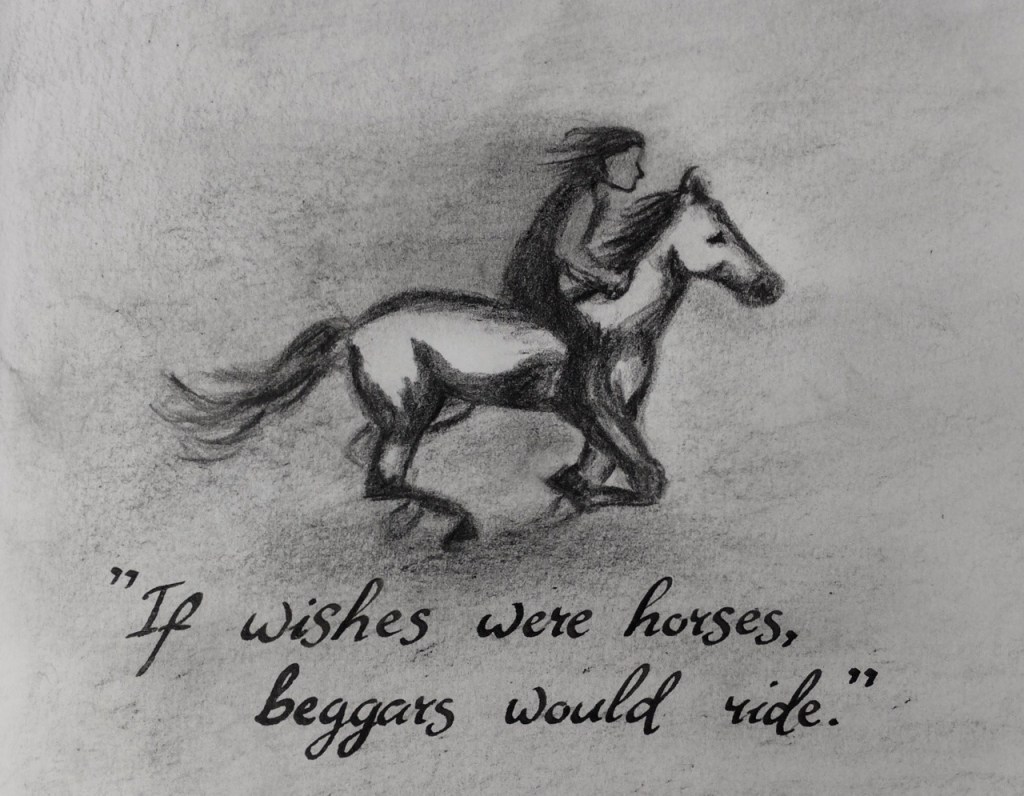
Four top litigation partners at Paul, Weiss have walked out the, together with their associates, their paralegals, their secretaries, and their book of business. In my experience, this sort of thing happens all the time at the big firms, even without cowardly deals capitulating to a would-be tinpot dictator. I wish I were persuaded that the walkout was over the Trump deal—and that it presages severe harm to the Cowardly Nine firm—but if wishes were horses, we’d all take a ride.
And if you don’t like my hot take on the matter, then ask perplexity.ai “Does the departure of four litigation partners at Paul Weiss mean anything?” Their AI chatbot’s opinion is quite different from mine.
How Many Federal Officials Can Trump Fire?
According to statutory law, a president cannot fire, without cause, a member of the National Labor Relations Board or of the Merit Systems Protection Board. Trump did it anyway. The lower courts told him to reinstate the two individuals, pending a final decision on the merits. Over the dissent of the three liberals, the rest of the court ordered that, until the case is decided on the merits, the two fired officials can stay fired.
The legal issues are a teense complex, and if you’re interested, check out this article from SCOTUSblog.
My hot take: A majority of the Supreme Court seems to be getting ready to shitcan a century of precedent, and to destroy the independent status of heretofore independent agencies like the Federal Trade Commission.
What Else Happened to Team Trump in the Courts Last Week?
Nothing good for Trump. Harvard filed a new lawsuit against Team Trump, challenging the Administration’s refusal to allow any foreign students next year. The judge granted Harvard a preliminary injunction so fast that he barely had time to read the papers.
Another judge granted Jenner & Block’s request for a preliminary injunction against Trump. And a third judge ruled that Trump had acted illegally against the United States Institute of Peace.
A Reminder About a Fundamental Rule of Constitutional Law
At a Senate hearing, Senator Maggie Hassan, Democrat of New Hampshire, asked Ms. Noem about the issue. “Secretary Noem,” she asked, “what is habeas corpus?”
“Well,” Ms. Noem said, “habeas corpus is a constitutional right that the president has to be able to remove people from this country and suspend their right to—”
Ms. Noem’s answer, which echoed the Trump administration’s expansive view of presidential power, flipped the legal right on its head, turning a constitutional shield against unlawful detention into broad presidential authority.
Some people react to Trump-related Supreme Court decisions the way they react to baseball games. This season Team Trump was down 4 to 2 to Team Resistance, but yesterday Team Trump won, so now he’s only down 4 to 3.
If this is the way you think, then I have two pieces of advice: First, stop thinking this way, and try to figure out what’s actually going on in these court cases.
Second, if you reject my first piece of advice, then don’t count this as a Team Trump loss, because this particular game is far from over.
Hint: Only Justice Jackson disagreed with yesterday’s order. The other two liberals went along with it.
This is a clue.
Here is what the controversy appears to be about. Current law affords any President discretion—and listen up, I said “discretion”—to grant temporary protected status to immigrants who cannot safely return to their country. Recently, Team Trump exercised that discretion to pull protected status from several hundred thousand Venezuelans. Team Trump cited no evidence that conditions in Venezuela had changed for the better. Instead, their discretionary decision was based on factually unsupported bullshit about Tren de Aragua, etc., etc., etc., etc.
Now, what is a court supposed to do with this shambolic mess? Should it rule that a president lacks legal power to exercise lawful discretion if his reasoning is bullshit and arrant nonsense? Or is that approach a bridge too far in terms of constitutional separation of powers?
Yesterday, the Supreme Court decided to kick the can down the road for a mile or two. In July, the Ninth Circuit Court of Appeals is going to hear the case “on the merits” (as we shysters say). And in the meanwhile, individual Venezuelans about to be deported are entitled to a judicial hearing. So observed the Supreme Court in passing.
I’m not a mind reader, but I assume that’s why Justices Kagan and Sotomayor went along with the majority.
So this particular game isn’t over—at least not yet. But I think that the interference-with-presidential-discretion argument may, in the end, carry the day. It’s always problematic to create a legal rule that says, “You are hereby forbidden to act like an asshole and a jerk.” The courts may deem in prudent to retreat to a rule that says “You are hereby forbidden to exercise legal authority that you clearly don’t have.”
And that would mean disaster for more than a million Venezuelans, Haitians, Nicaraguans, and Cubans now residing in the United States–people whose lives may be shattered on the alter of judicial restraint.
Relying on the fair use doctrine of copyright law, the immediately preceding post reproduces what, in my opinion, is an outstanding analysis of the nature of competition between China and the United States. Here are a few additional thoughts of my own.
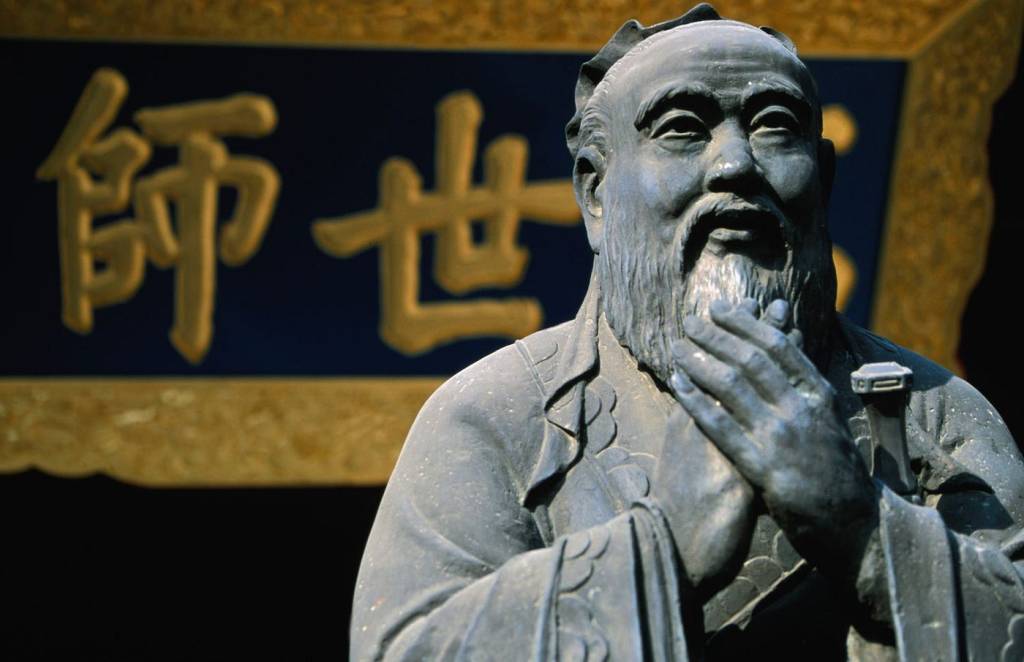
They’re All Confucians
Throw a stone at the Politburo and you will not hit a Communist, you will instead hit a Confucian. That’s because they are all Confucians.
And what does it mean when I say that the Chinese political elite is uniformly Confucian? Mainly, it means two things. It means that the elite believes, down to the marrow of their bones, that the mass of common people—the lao bai xing—are morally and intellectually incapable of self-government.
The common people must be led. But by whom? By a moral and intellectual elite, who can guide society and government along the right path.
Confucianism became the state ideology of China in 136 BCE—the guiding framework for government, law, education, and social ethics. 2161 years later, Confucianism remains the state ideology of China.
These folks are never going to abandon Confucius and Mencius in favor of John Locke and James Madison. That’s not happening. And anyone who ever thought it was happening, or might happen, or would happen: that person does not know China.
Are You Saying, Then, That We Should Become Confucians, Too?
No, I’m not. But I am saying that our political elite and our economic elite badly needs to try to transform themselves into our intellectual and moral elite as well.
We need to be better Lockeans and Madisonians, and we need to draw our inspiration from Luke 12:48, remembering that where much is given, much is required.
And for the non-elites? They badly need to relearn how to be educated and responsible citizens of a democracy. And morally responsible folks among the elite need to do what they can to help. We could begin by restoring civics education to its rightful place in elementary and secondary schools.
Because if our political life keeps on consisting of performative nonsense, and if the American law bai xingkeep on getting their news from Russian propaganda they read on Facebook then Professor O’Neill tells us exactly where we are headed.
 Facing MAGA