Donald Trump Can Be Stopped: Words of Great Wisdom from Jonathan Chait

Jonathan Chait (The Atlantic), Donald Trump Can Be Stopped: The president’s retreat in Minneapolis is a stinging defeat for the national conservatives:

Of the many lessons to be drawn from the administration’s retreat in Minneapolis, the most important is that Donald Trump can be stopped.

He spent his first year acting as though the 2024 election were the last time he would ever have to give a thought to public opinion. Now the myth that Trump is invincible has been exploded.

After federal agents killed Alex Pretti, Trump-administration figures including Secretary of Homeland Security Kristi Noem and Deputy Chief of Staff Stephen Miller described the victim as a terrorist, indicating their desire to ignore or intimidate all opposition. But other Republican sources signaled their discomfort, and some called for an investigation—a routine step for a normal presidency, but a daring breach of partisan discipline in an administration that shields itself from accountability and tries to put itself above the law.

During yesterday’s White House briefing, when a reporter asked if Trump shared Miller’s belief that Pretti was a domestic terrorist, Press Secretary Karoline Leavitt replied that she hadn’t heard him use that term. Trump also sent out conciliatory messages on social media indicating that he’d had productive talks with Minnesota Governor Tim Walz and Minneapolis Mayor Jacob Frey. And he dispatched Tom Homan, the border czar and a more traditional immigration hawk, to replace Gregory Bovino, the commander at large in Minnesota. Bovino has justified his agents’ misconduct with transparent lies.

Trump’s retreat in Minneapolis is a stinging defeat for the national conservatives, the Republican Party’s most nakedly authoritarian faction. The NatCons believe American liberalism cannot be dealt with through normal political methods such as persuasion and compromise. Speakers at the National Conservatism Conference have described the American left as “the enemy within” (Senator Rick Scott of Florida) and “wokeism” as “a cancer that must be eradicated” (Rachel Bovard of the Conservative Partnership Institute). NatCons also maintain that immigration poses a mortal threat to the United States. These two strands of thought are intertwined; NatCons consider immigration a weapon employed consciously by the left to assume permanent power, via manipulating elections and creating government dependency, a conspiracy that can only be reversed through the kind of ferocious operation on display in Minneapolis.

The NatCons, whose ranks include powerful administration figures such as Vice President Vance and Miller as well as members of Congress (such as Senator Eric Schmitt of Missouri) and activists (such as Heritage Foundation President Kevin Roberts), have wielded profound influence. They have rarely, if ever, lost important struggles to steer Trump’s strategy.

For the NatCons, the mass-deportation scheme overseen by Miller is an existential priority. Vance once claimed that immigration levels “would mean we never win, meaning Republicans would never win a national election in this country ever again.” Ten days ago, Miller explained on Fox News that Democrats were resisting ICE in Minneapolis because “this mass-migration scheme is the heart of the Democratic Party’s political power.” Miller sees his crusade not merely as a matter of relieving the burden on public services or raising wages, but as a final chance to stop permanent left-wing tyranny. Thus Miller’s immediate, fervent insistence that Pretti and the other Minnesotan recently killed by federal agents, Renee Good, both deserved their fates, a line the NatCons repeated vociferously through Monday.

The NatCons have attained their sway by positioning themselves as the vanguard of Trumpism in its purist form. Other conservative factions, such as social conservatives, libertarians, and foreign-policy hawks, supported Trump reluctantly in 2016, and backed away after the January 6 attack on the Capitol, hoping Florida Governor Ron DeSantis or some other rival could displace him. The NatCons never flinched in the face of Trump’s failed autogolpe, or any other actions that made other Republicans nervous. They won the loyalty contest—which, in the second Trump administration, is the only currency of influence.

Calls for Trump to stand firmly behind Miller had a desperate yet vague tone. “Leftist protestors who shut down streets, destroy property, refuse lawful orders, and physically assault federal officers cannot be rewarded with veto power over public policy,” beseeched the Manhattan Institute activist Chris Rufo, employing the passive voice. In response to a liberal observing yesterday afternoon on X that Trump was backing down, Will Chamberlain, a national conservative affiliated with numerous right-wing organizations, replied, “This isn’t happening, and it’s very important that it does not happen.”

Nevertheless, it was happening.

The reason it happened is that, although Trump listens to the NatCons, he has no deep grounding in their theories or, for that matter, any theories. The president’s despotism is not ideological but instinctive. He cannot tolerate criticism and he deems any process that embarrasses him, including a critical news story or an election, illegitimate, even criminal.

And while he has embraced a restrictionist immigration agenda, he has vacillated between endorsing mass deportation and allowing exceptions for categories of laborers he considers necessary. As Trump told The Wall Street Journal editorial page before the 2024 election, “I mean, there’s some human questions that get in the way of being perfect, and we have to have the heart, too.” If that has ever occurred to Miller, he has hidden it well.

Whether or not Trump’s intermittent expressions of human feeling for the immigrants his administration has abused is heartfelt, his desire to maintain his political standing most certainly is. Trump appreciates the power of imagery. It does not take a political genius to understand that, if Americans were repulsed by the sight of a Vietnamese man being executed in 1968, an American being shot in the back, facedown on a midwestern street, would not go over much better.

Trump’s capitulation would never have occurred if not for the heroic, disciplined resistance in Minneapolis. Faced with something like an occupying army that was systematicallyflouting the law, the people of Minneapolis thrust its abuse into the public eye, raising the political cost of Miller’s war until enough Republicans decided that they couldn’t bear to pay it.

Political theorists have long debated whether Trump and his movement should be described as fascist. On an intellectual level, the answer depends largely on which definition of fascism you choose (there are several). I have generally resisted the term because the definition I prefer, and the one most Americans probably think of when they hear the term, is not mere political oppression but a form of it so extreme that opposition becomes impossible.

That may be more or less Trump’s aspiration, and possibly our destiny. But this is not a fascist country, at least not yet.
Stable Genius Imposes Tariffs on Penguins

Jonathan Chait (The Atlantic), Trump Has Already Botched His Own Bad Tariff Plan: Once you’ve said you might negotiate, nobody is going to believe you when you change your mmind and say you’ll never negotiate.

To summarize: Trump has two alternative strategies. One is to “reshore” American manufacturing. But that would require, at a minimum, that investors believe that the draconian tariffs are going to last a long time. The other is to negotiate country-by-country deals resulting in more favorable terms for American exporters.

Each strategy is highly problematic in its own right.

But, in addition, the two strategies are mutually inconsistent.

Bottom line: Confusion worse confounded. Idiocy cubed.

Wall Street Journal, China Wanted to Negotiate With Trump. Now It’s Arming for Another Trade War.

The Journal knows a lot of the senior people in China. And it knows even more of the people who know the senior people in China. Long article. Deeply reported. 

Bottom line (for me): China expected negotiations, beginning with Trump’s inauguration. China wanted negotiations. China got stiff-armed by the Trump Administration. Xi had no real option but the retaliate. The standoff with China is going to last a long time. 

Politico Magazine, Why Trump May Get Away With His Tariff Trauma: Other countries encounter the ‘prisoner’s dilemma’ as they weigh how to respond.

Helpful article. Poor headline. Poor, because the actual topic of the article is why a lot of countries are not immediately retaliating, but are instead about reaching out to Trump to try to negotiate. 

There’s no paywall at Politico, so read it for yourself. My own take, for what it’s worth: Yeah, I get the “prisoner’s dilemma” issue. But I also suspect that a lot of foreign leaders are thinking that the tariffs are going to be so hard on American consumers and businesses of all sizes, and hence on Republican politicians, that, over the medium term, the tariffs are going to go away regardless of who does or does not negotiate.

Plus which: most foreign leaders actually studied economics back in college. So they know that imposing tit-for-tat tariffs harms their own economies. 

“Authoritarian Leaders are Most Dangerous When They’re Popular”

Jonathan Chait, The Good News About Trump’s Tariffs: Authoritarian leaders are most dangerous when they’re popular. Wrecking the economy is unlikely to broaden Trump’s support.

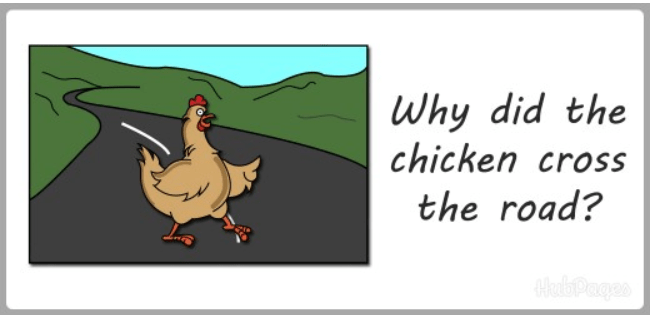
Jonathan Chait used to write for New York magazine and how he’s with The Atlantic. In my opinion, he’s often very good. I think his piece from yesterday afternoon is outstanding. Like the chicken who crossed to the middle of the street, he truly lays it on the line:

All Donald Trump had to do was start telling people the economy was good now. Take over in the middle of an economic expansion and then, without changing the underlying trend line, convince the country that you created prosperity. That’s what he did when he won his first term, and it is what Democrats expected and feared he would do this time.

But Trump couldn’t do the easy and obvious thing, apparently because he did not view his first term as a success. He considered it a failure, and blamed the failure on the coterie of aides, bureaucrats, and congressional allies who talked him out of his instincts, or ignored them. The second term has been Full Trump, as even his most delusional or abusive whims are translated immediately into policy without regard to democratic norms, the law, the Constitution, public opinion, or the hand-wringing of his party.

That is why Trump’s second term poses a far more dire threat to the republic than his first did. But it is also why his second term is at risk of catastrophic failure. Nothing illustrates this more clearly than Trump’s insistence on sabotaging the U.S. economy by imposing massive tariffs.

This afternoon, in an event the administration hyped as “Liberation Day,” Trump unveiled his long-teased plan to impose reciprocal trade restrictions on every country that puts up barriers to American exports. Although at least some economists would defend some kinds of tariff policies—such as those targeted at egregious trade-violating countries, or those designed to protect a handful of strategic industries—Trump has careened into an across-the-board version that will do little but raise prices and invite reprisal against American exports. As an indication of the mad-king dynamic at play, the new plan imposes a 20 percent tariff on the European Union, partly in retaliation against the bloc’s value-added tax system—even though the VAT applies equally to imports and domestic goods and is therefore not a trade barrier at all. U.S. stocks, which have fallen for weeks in anticipation of the tariffs, plunged even more sharply after Trump’s announcement.

Trump would not be the first president to encounter economic turbulence. But he might become the first one to kill off a healthy economy through an almost universally foreseeable unforced error. The best explanation for why Trump is intent on imposing tariffs is that he genuinely believes they are a source of free money supplied by residents of foreign countries, and nobody can tell him otherwise. (Tariffs are taxes on imports, which economists agree are paid mostly by domestic consumers in the form of higher prices.)

He has compounded the unavoidable damage to business confidence of any large tariff scheme by floating his intention for months while waffling over the details, paralyzing business investment. Even taken on its own terms, a successful version of Trump’s plan would require wrenching dislocations in the global economy. The United States would need to create new industries to replace the imports it is walling off, and this investment would require businesses to believe not only that Trump won’t reverse himself but also that the tariffs he imposes are likely to stay in place after January 20, 2029.

If businesses don’t believe that Trump will stick with his tariffs, the investment required to spur a domestic industrial revival won’t materialize. But if they do believe him, the markets will crash, because Trump’s tariff scheme will, by the estimation of the economists that investors listen to, produce substantially lower growth.

Probably the likeliest outcome is an in-between muddling through, with slower growth and higher inflation. Even Trump’s gestures toward sweeping tariffs have already made the economy wobble and lifted inflationary expectations. At this point, getting back to the steady growth and cooling inflation Trump inherited will require a great deal of luck.

Why didn’t anyone around Trump talk him out of this mistake? Because the second Trump administration has dedicated itself to filtering out the kinds of advisers who thwarted some of his most authoritarian first-term instincts, as well as his most economically dangerous ones. The current version of the national Republican Party, by contrast, is dedicated to the proposition recently articulated by one of Elon Musk’s baseball caps: Trump was right about everything.

In this atmosphere, questioning Trump’s instincts is seen as a form of disloyalty, and Trump has made painfully evident what awaits the disloyal. As The Washington Post reports, “Business leaders have been reluctant to publicly express concerns, say people familiar with discussions between the White House and leading companies, lest they lose their seats at the table or become a target for the president’s attacks.” Asked recently about the prospect of tariffs, House Speaker Mike Johnson revealingly said, “Look, you have to trust the president’s instincts on the economy”—a phrase containing the same kind of double meaning (have to) as Don Corleone’s offer he can’t refuse.

This dynamic allows Trump to do whatever he wants, no doubt to his delight. But the political consequences for his administration and his party could be ruinous. Public-opinion polling on Trump’s economic management, which has always been the floor that has held him up in the face of widespread public dislike for his character, has tumbled. This has happened without Americans feeling the full effects of his trade war. Once they start experiencing widespread higher prices and slower growth, the bottom could fall out.

A Fox News host recently lectured the audience that it should accept sacrifice for Trump’s tariffs just as the country would sacrifice to win a war. Hard-core Trump fanatics may subscribe to this reasoning, but the crucial bloc of persuadable voters who approved of Trump because they saw him as a business genius are unlikely to follow along. They don’t see a trade war as necessary. Two decades ago, public opinion was roughly balancedbetween seeing foreign trade as a threat and an opportunity. Today, more than four-fifths of Americans see foreign trade as an opportunity, against a mere 14 percent who see it, like Trump does, as a threat.

As the political scientists Steven Levitsky and Lucan Way point out, “Authoritarian leaders do the most damage when they enjoy broad public support.” Dictators such as Vladimir Putin and Hugo Chávez have shown that power grabs are easier to pull off when the public is behind your agenda. Trump’s support, however, is already teetering. The more unpopular he becomes, the less his allies and his targets believe he will keep his boot on the opposition’s neck forever, and the less likely they will be to comply with his demands.

The Republican Party’s descent into an authoritarian personality cult poses a mortal threat to American democracy. But it is also the thing that might save it.