D. John Sauer, Esquire, pursued a double major, philosophy and electrical engineering, at Duke. After college, he was a Rhodes Scholar at Oxford, where he earned a degree in theology, followed by a masters in philosophy at Notre Dame. At that point, he felt a call to the bar, prompting him to go to Harvard Law School, where he “made Law Review” and earned a degree magna cum laude. After Harvard Law, Judge Luttig of the Fourth Circuit gladly offered him a position as clerk, and from there he went on to provide his considerable intellectual talents as clerk to Justice Scalia.
No slouch is D. John Sauer, Esquire. As a consequence of his brilliance and prestigious education, Mr. Sauer knew exactly what to tell the judge who asked if it would be A-OK for a president to order Seal Team Six to assassinate a political enemy. “Yessiree bobtail,” readily responded D. John Sauer, Esquire, “that would be just hunky-dory.”
Having achieved victory in the presidential immunity case through the ministrations of D. John Sauer—electrical engineer, philosopher, theologian, and legal scholar—Mango Mussolini knew exactly whom to appoint as Solicitor General, the position Mr. Sauer currently graces.
Clearly, Trump and his Attorney General, Ms. Bondi, would like to shitcan all the normal lawyers from the Justice Department and replace every mother’s son and daughter of them with clones of D. John Sauer, Esquire.
Sadly, however, as the Washington Post reports today, the American bar is not populated by lots of Harvard trained Nazis, eager to replace the thousands of lawyers who have been fired or who have left the Justice Department. Nor are the law schools at Columbia and Harvard and Georgetown filled with eager young Fascist whipper-snappers, read to pour their hearts and souls into the struggle to establish authoritarianism. WaPo writes,
Current Justice Department prospective hires are more likely to have political backgrounds than have been typical in the past, coming from Republican congressional offices and advocacy groups, the people familiar with the hiring process said. Others are young attorneys with little relevant experience or mid- to late-career attorneys who have no background in prosecutions.
Indraneel Sur graduated from Yale, earned his law degree at the prestigious University of Pennsylvania Law School, worked as an associate at the prestigious law firm Gibson, Dunn & Crutcher, and then joined the Justice Department as an attorney. One source claims that he is a member of the Federalist Society. Yesterday, he appeared in court to defend the government’s response to the judge’s pending order to resume payments owed for supplies delivered to USAID.
The Washington Post reports that “During the contentious 90-minute hearing, Justice Department lawyer Indraneel Sur told [the judge] he was ‘not in a position to answer’ whether the Trump administration had taken needed steps to allow the assistance to begin moving.”
Politico writes about his day in court yesterday:
During a telephone hearing, U.S. District Judge Amir Ali grew impatient with a lack of clear responses from the administration’s lawyers to claims from aid contractors that they have seen no payments from the State Department or U.S. Agency for International Development since Ali issued an emergency orderFeb. 13 halting a broad freeze on aid-related programs.
“I don’t know why I can’t get a straight answer from you,” the judge lamented after Justice Department attorney Indraneel Sur repeatedly sidestepped a question about whether the Trump administration released any funds following the judge’s earlier order.
After Sur suggested that officials were holding up or canceling payments under the terms of individual contracts, Ali said he was baffled by the government’s view.
“I guess I’m not understanding where there is any confusion here,” the judge said. “It’s clear as day.”
What Seems to be Happening—and Some Friendly Advice from Your Dutch Uncle Ron
The picture will become clearer as this case proceeds—along with the many dozens of other cases involving the legality of the Trump administration’s acts. Right now, however, the picture that seems to be emerging is that someone in the administration is ordering its frontline lawyers to pull the wool over the eyes of the judges in these cases.
So here’s a friendly piece of advice. If you have drunk freely of the Trump Kool-Aid and want to defend its contentions about its dictatorial powers, then you can probably do so without being disbarred or sent to jail.
But do not lie to the court. If you do, you are going to be in a world of hurt.
And the day when your boss—or his boss—orders you to lie to the court is the day you need to walk off the job.
For your own protection, if for no other reason than to protect yourself.
Back in my day, it was officially The Association of the Bar of the City of New York, its original name from back in 1870, when it was formed to fight the judicial corruption promoted by the Tammany Hall machine. Now, it’s the New York City Bar Association. Its president is a partner in a global law firm with profits per partner of $2.5 million. Its leadership includes a number of the president’s peers in other global law firms (together with others too, like professors and legal aid attorneys).
Yesterday, the association issued this press release.
On United States v. Eric Adams
Since its founding in 1870, the New York City Bar Association has supported the rule of law as one of its core missions – regardless of politics or ideological persuasion. “The true administration of justice is the firmest pillar of good government” is not merely an aphorism engraved in stone on courthouses but, together with the rule of law, the essence of American democracy. This mission and these values necessitate voicing our concern about the events of recent days in the ongoing federal case of United States v. Eric Adams, 24-CRIM-556 (S.D.N.Y.).
Prosecutors have a duty to act in the public interest, to perform their duties with objectivity, and to analyze all the evidence when deciding whether to pursue criminal charges. This is especially true in the prosecution of crimes allegedly committed by public officials involving abuses of power or corruption.
While the City Bar takes no position on the substantive merits of the Adams case, the numerous resignations by prosecutors from the office of the United States Attorney for the Southern District of New York and the Public Integrity Section of the United States Department of Justice, and the flurry of letters from those who have resigned and from the Acting Deputy Attorney General, command the City Bar’s attention and expression of concern.
The events of recent days are reminiscent of the Saturday Night Massacre resignations of Attorney General Elliot Richardson and Deputy Attorney General William Ruckelshaus, which precipitated the crisis of public confidence when they were ordered by President Nixon to dismiss Special Prosecutor Archibald Cox to halt the Watergate investigation.
The direction of Acting Deputy Attorney General Emil Bove III to the Southern District prosecutors to prepare and file a motion to dismiss the case against the Mayor of New York City cuts to the heart of the rule of law. The unusual form of Mr. Bove’s direction via a public memorandum buttresses arguments that the direction is based on pretextual grounds.
The letter from Acting United States Attorney Danielle Sassoon and Mr. Bove’s response give every indication that the dismissal of Mayor Adams’ case, without prejudice, is predicated on his agreeing to increase New York City’s assistance in the Trump administration’s immigration enforcement efforts. When the proposed dismissal is made “without prejudice” to the charges possibly being reinstated at some future date, the entire proposal raises serious questions involving both the potential quid pro quoand prosecutorial weaponization of our justice system.
Indeed, the justification offered by Mr. Bove for his decision expressly avoids any consideration of the merits of the prosecution, instead resting on a rationale which is expressly political. In particular, Mr. Bove suggests that dismissal is predicated upon Mr. Adams’s continuing agreement to use the power of his office as mayor to facilitate the administration’s immigration enforcement policies. The policy choices of the government of New York City cannot be dependent on or appear to be dependent on the decision of the Justice Department to prosecute or withhold prosecution of corruption charges against the mayor.
Against such a backdrop, the City Bar commends Ms. Sassoon for her courageous decision to offer her resignation from a post she assumed a few short weeks ago. Whatever the merits of the underlying case against Mayor Adams, her letter reflects the proper course of conduct for a prosecutor seeking to adhere to her oath to pursue justice without fear or favor. Her letter reflects integrity and a principled commitment to the rule of law and democracy. The City Bar likewise applauds Assistant United States Attorney Hagan Scotten, Acting Chief of the Criminal Division Kevin Driscoll, Acting Chief of the Public Integrity Section John Keller, and the other attorneys at the Department of Justice who chose to resign rather than acquiesce to a decision raising profound questions of legality, morality, and legal ethics.
The interests of the public are best served by the continuation of the prosecution of Mr. Adams. In any event, the Department of Justice’s motion to dismiss the charges must be resolved on the basis of a complete record, which should include a searching inquiry into the nature of the bargain struck and a determination of its benefit to the public. If, as Mr. Bove contends, the prosecution of Mayor Adams was brought for improper political purposes, such an allegation can and should be adjudicated in the District Court. There is precedent for the District Court’s appointment of amicus curiae to obtain input from an independent counsel. See United States v. Flynn, No. 20-5143 (D.D.C.) (brief by former federal judge John Gleeson). In our view, the District Court should not dismiss the indictment against Mayor Adams without hearing from an independent lawyer, as neither the Mayor’s counsel nor the lawyers from the Department of Justice can fulfill that role.
Now it is for the United States District Court for the Southern District of New York to examine whether dismissal of the charges in United States v. Eric Adamsis “in the public interest” and is “not tainted by impropriety” or “bad faith.” All members of the public concerned about whether law enforcement agencies will protect the public rather than manipulate the criminal justice system for political means await the outcome. Whatever the outcome, this episode is a stark reminder of the dangers of political interference in our justice system and the potential such interference has to undermine the public’s trust and confidence in the rule of law.
About the Association The mission of the New York City Bar Association, which was founded in 1870 and has 23,000 members, is to equip and mobilize a diverse legal profession to practice with excellence, promote reform of the law, and uphold the rule of law and access to justice in support of a fair society and the public interest in our community, our nation, and throughout the world.www.nycbar.org
This afternoon, Hagan Scotten, who was Danielle Sassoon’s colleague and second in command, has followed her out the door. Mr. Scotten took his law degree at Harvard, was a clerk to Brett Kavanaugh and to Chief Justice Roberts, and prosecuted the case against Eric Adams.
On the way out, Scotten took out his undated resignation letter and fired it off. It reads as follows:
BY EMAIL
Re: United States v. Eric Adams, 24 Cr. 556 (DEH)
Mr. Bove,
I have received correspondence indicating that I refused your order to move to dismiss the indictment against Eric Adams without prejudice, subject to certain conditions, including the express possibility of reinstatement of the indictment. That is not exactly correct. The U.S. Attorney, Danielle R. Sassoon, never asked me to file such a motion,and I therefore never had an opportunity to refuse. But I am entirely in agreement with her decision not to do so, for thereasons stated in her February 12, 2025 letter to the Attorney General.
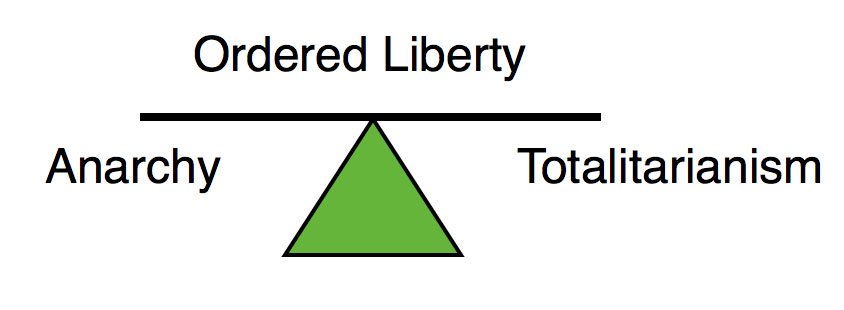
In short, the first justification for the motion—that Damian Williams’s role in the case somehow tainted a validindictment supported by ample evidence, and pursued under four differentU.S. attorneys—is so weak as to be transparently pretextual. The second justification is worse. No system of ordered liberty can allow the Government to use the carrot of dismissing charges, or the stick of threatening to bring them again, to induce an elected official to support its policy objectives.
There is a tradition in public service of resigning in a last-ditch effort to head off a serious mistake. Some will view the mistake you are committing here in the light of their generally negative views of the new Administration. I do not share those views. I can even understand how a Chief Executive whose background is in business and politics might see the contemplated dismissal-with-leverage as a good, if distasteful, deal. But any assistant U.S. attorneywould know that our laws and traditions do not allow using the prosecutorial power to influence other citizens, much less elected officials, in this way. If no lawyer within earshot of the President is willing to give him that advice, then I expect you will eventually find someone who is enough of a fool, or enough of a coward, to file your motion. But it was never going to be me.
Please consider this my resignation. It has been an honor to serve as a prosecutor in the Southern District of New York.
Yours truly, Hagan Scotten
Assistant United States Attorney Southern District ofNew York
Danielle Sassoon, Esq., a graduate of Harvard College and of Yale Law School, a former clerk for Justice Antonin Scalia, a continuing member in good standing of the Federalist Society, and—for a few weeks, following Trump’s inauguration—temporary chief federal prosecutor in Manhattan, has resigned. She took this action because she could not, in good conscience, obey her masters’ orders to go into court and ask for dismissal of the criminal case against Eric Adams, in circumstances where there was no proper legal basis for making such a request.
Her resignation letter of February 12, addressed to Attorney General Bondi, spends 7½ pages explaining the baselessness of the position she had been ordered to advocate to the courts. The letter concludes thusly,
I Cannot in Good Faith Request the Contemplated Dismissal
Because the law does not support a dismissal, and because I am confident that Adams has committed the crimes with which he is charged, I cannot agree to seek a dismissal driven by improper considerations. As Justice Robert Jackson explained, “the prosecutor at his best is one of the most beneficent forces in our society, when heacts from malice or other base motives, he is one of the worst.” The Federal Prosecutor, 24 J. Am. Jud. Soc’y 18 (“This authority has been granted by people who really wanted the right thing done—wanted crime eliminated—but also wanted the best in our American traditions preserved.”). I understand my duty as a prosecutor to mean enforcing the law impartially, and that includes prosecuting a validly returned indictment regardless whether its dismissal would be politically advantageous, to the defendant or to those who appointed me. A federal prosecutor “is the representative not of an ordinary party to a controversy, but of a sovereignty whose obligation to govern impartially is as compelling as its obligation to govern at all.” Berger v. United States, 295 U.S. 78, 88 (1935).
For the reasons explained above, I do not believe there are reasonable arguments in support of a Rule 48(a) motion to dismiss a case that is well supported by the evidence and the law. I understand that Mr. Bove disagrees,and I am mindful of your recent order reiterating prosecutors’ duty to make good-faith arguments in support of the Executive Branch’s positions. See Feb. 5, 2025 Mem. “General Policy Regarding Zealous Advocacy on Behalf of the United States.” But because I do not see any good-faith basis for the proposed position, I cannot make sucharguments consistent with my duty of candor. N.Y.R.P.C. 3.3; id. cmt. 2 (“A lawyer acting as an advocate in an adjudicative proceeding has an obligation to present the client’s case with persuasive force. Performance of thatduty while maintaining confidences of the client, however, is qualified by the advocate’s duty of candor to the tribunal.”).
In particular, the rationale given by Mr. Bove—an exchange between a criminal defendant and the Department of Justice akin to the Bout exchange with Russia—is, as explained above, a bargain that a prosecutor should not make. Moreover, dismissing without prejudice and with the express option of again indicting Adams in the future creates obvious ethical problems, by implicitly threatening future prosecution if Adams’s cooperation with enforcing the immigration laws proves unsatisfactory to the Department. See In re Christoff, 690 N.E.2d 1135 (Ind. 1997) (disciplining prosecutor for threatening to renew a dormant criminal investigation against a potentialcandidate for public office in order to dissuade the candidate from running); Bruce A.Green & Rebecca Roiphe, Who Should Police Politicization of the DOJ?, 35 Notre Dame J.L. Ethics & Pub. Pol’y671, 681 (2021) (noting that the Arizona Supreme Court disbarred the elected chief prosecutor of Maricopa County,Arizona, and his deputy, in part, for misusing their power to advance the chief prosecutor’s partisan political interests). Finally, given the highly generalized accusations of weaponization, weighed against the strength of theevidence against Adams, a court will likely question whether that basis is pretextual. See, e.g., United States v. Greater Blouse, Skirt & Neckwear Contractors, 228 F. Supp. 483, 487 (S.D.N.Y. 1964) (courts “should be satisfiedthat the reasons advanced for the proposed dismissal are substantial and the real grounds upon which the application is based”).
I remain baffled by the rushed and superficial process by which this decision was reached, in seemingcollaboration with Adams’s counsel and without my direct input on the ultimate stated rationales for dismissal. Mr. Bove admonished me to be mindful of my obligation to zealously defend the interests of the United States and to advance good-faith arguments on behalf of the Administration. I hope you share my view that soliciting andconsidering the concerns of the U.S. Attorney overseeing the case serves rather than hinders that goal, and that we can find time to meet.
In the event you are unwilling to meet or to reconsider the directive in light of the problems raised by Mr. Bove’s memo, I am prepared to offer my resignation. It has been, and continues to be, my honor to serve as a prosecutor in the Southern District of New York.
Very truly yours,
DANIELLE R. SASSOON
United States Attorney Southern District of NewYork


 Facing MAGA