The International Association of Chiefs of Police (IACP) and the Fraternal Order of Police (FOP) have had long standing and positive relationships with both President Trump and President Biden and have greatly appreciated their support of the policing profession. However, the IACP and FOP are deeply discouraged by the recent pardons and commutations granted by both the Biden and Trump Administrations to individuals convicted of killing or assaulting law enforcement officers. The IACP and FOP firmly believe that those convicted of such crimes should serve their full sentences.
Crimes against law enforcement are not just attacks on individuals or public safety — they are attacks on society and undermine the rule of law. Allowing those convicted of these crimes to be released early diminishes accountability and devalues the sacrifices made by courageous law enforcement officers and their families.
When perpetrators of crimes, especially serious crimes, are not held fully accountable, it sends a dangerous message that the consequences for attacking law enforcement are not severe, potentially emboldening others to commit similar acts of violence.
The IACP and FOP call on policymakers, judicial authorities, and community leaders to ensure that justice is upheld by enforcing full sentences, especially in cases involving violence against law enforcement. This approach reaffirms our commitment to the rule of law, public safety, and the protection of those who risk their lives for our communities.
The Virginia Statute for Religious Freedom, enacted by the Virginia Assembly, January 16, 1786, reads as follows:
An act for establishing religious Freedom.
Whereas, Almighty God hath created the mind free;
That all attempts to influence it by temporal punishments or burthens, or by civil incapacitations tend only to beget habits of hypocrisy and meanness, and therefore are a departure from the plan of the holy author of our religion, who being Lord, both of body and mind yet chose not to propagate it by coercions on either, as was in his Almighty power to do,
That the impious presumption of legislators and rulers, civil as well as ecclesiastical, who, being themselves but fallible and uninspired men have assumed dominion over the faith of others, setting up their own opinions and modes of thinking as the only true and infallible, and as such endeavouring to impose them on others, hath established and maintained false religions over the greatest part of the world and through all time;
That to compel a man to furnish contributions of money for the propagation of opinions, which he disbelieves is sinful and tyrannical;
That even the forcing him to support this or that teacher of his own religious persuasion is depriving him of the comfortable liberty of giving his contributions to the particular pastor, whose morals he would make his pattern, and whose powers he feels most persuasive to righteousness, and is withdrawing from the Ministry those temporary rewards, which, proceeding from an approbation of their personal conduct are an additional incitement to earnest and unremitting labours for the instruction of mankind;
That our civil rights have no dependence on our religious opinions any more than our opinions in physics or geometry,
That therefore the proscribing any citizen as unworthy the public confidence, by laying upon him an incapacity of being called to offices of trust and emolument, unless he profess or renounce this or that religious opinion, is depriving him injuriously of those privileges and advantages, to which, in common with his fellow citizens, he has a natural right,
That it tends only to corrupt the principles of that very Religion it is meant to encourage, by bribing with a monopoly of worldly honours and emoluments those who will externally profess and conform to it;
That though indeed, these are criminal who do not withstand such temptation, yet neither are those innocent who lay the bait in their way;
That to suffer the civil magistrate to intrude his powers into the field of opinion and to restrain the profession or propagation of principles on supposition of their ill tendency is a dangerous fallacy which at once destroys all religious liberty because he being of course judge of that tendency will make his opinions the rule of judgment and approve or condemn the sentiments of others only as they shall square with or differ from his own;
That it is time enough for the rightful purposes of civil government, for its officers to interfere when principles break out into overt acts against peace and good order;
And finally, that Truth is great, and will prevail if left to herself, that she is the proper and sufficient antagonist to error, and has nothing to fear from the conflict, unless by human interposition disarmed of her natural weapons free argument and debate, errors ceasing to be dangerous when it is permitted freely to contradict them:
Be it enacted by General Assembly that no man shall be compelled to frequent or support any religious worship, place, or ministry whatsoever, nor shall be enforced, restrained, molested, or burthened in his body or goods, nor shall otherwise suffer on account of his religious opinions or belief, but that all men shall be free to profess, and by argument to maintain, their opinions in matters of Religion, and that the same shall in no wise diminish, enlarge or affect their civil capacities. And though we well know that this Assembly elected by the people for the ordinary purposes of Legislation only, have no power to restrain the acts of succeeding Assemblies constituted with powers equal to our own, and that therefore to declare this act irrevocable would be of no effect in law; yet we are free to declare, and do declare that the rights hereby asserted, are of the natural rights of mankind, and that if any act shall be hereafter passed to repeal the present or to narrow its operation, such act will be an infringement of natural right.
You know what they say: You can always tell a Harvard man—but you can’t tell him much.
Michael Sandel, a political philosopher and the Anne T. and Robert M. Bass Professor of Government at Harvard, has a whole lot to say about the root causes of working class resentment in the United States.
I want to take issue with one implication found in the Guardian piece quoted in my most recent post, Rage in the Rust Belt.
The author implies that the good folks in the Rust Belt are thinking in zero sum terms: if Blacks or Gays are getting some benefit, that must mean that good old working class white people like me are being deprived of that benefit. In other words, there’s only so much to go around, and if your tribe is getting more, that necessarily means my tribe is getting less.
Now, I am sure that a lot of working class white folks do feel exactly that way. And I am sure that Orange Jesus and his supporters and enablers have done everything they can to whip up such zero sum thinking.
But … but … but …
As a matter of fact, and as a matter of logic, it’s entirely possible that you can legitimately complain of being “left behind” without thinking, fallaciously, that the reason you were “left behind” is that someone else got a benefit.
In other words, resentful thinking—a sense that you’re being treated unfairly—is not the same thing as zero sum thinking.
Zero sum thinkers are likely to be resentful, but not all resentful folks think in zero sum terms.
The last time Donald Trumpwas president, he travelled to Youngstown, Ohio, among the most depressed of America’s rust belt cities, and promised voters the impossible.
The high-paying steel, railroad and car industry jobs that once made Youngstown a hard-living, hard-drinking blue collar boom town were coming back, he said. “Don’t move. Don’t sell your house,” he crowed to a rapturous crowdin 2017. “We’re going to fill up those factories – or rip ”em down and build brand new ones.”
None of that happened. Indeed, within 18 months, General Motors (GM) announced that it was suspending operations at its one remaining manufacturing plant outside Youngstown, throwing 5,000 jobs into jeopardy in a community with little else to cling to. Trump’s reaction was to say the closure didn’t matter, because the jobs would be replaced “in, like, two minutes”.
That, too, did not happen. People moved away, marriages broke down, depression soared and, locals say, a handful of people took their own lives.
Ordinarily, politicians who promise the moon and fail to deliver get punished at the ballot box. But that did not happen to Trump either. Instead, he has steadily built up his popularity in Youngstown, a city that was once a well-oiled Democratic party machine but has now turned into one of his most remarkable bases of working-class support.
“Does [Trump] understand at all what you’re going through?” Joe Biden asked Ohio votersduring the 2020 presidential campaign, referring directly to the GM closure. “Does he see you where you are and where you want to be? Does he care?”
To which the answer, in Youngstown, has been an astonishing and vigorous “yes”.
Trump might have lost to Biden overall that year, but he became the first Republican presidential candidate in almost half a centuryto win in Youngstown and surrounding Mahoning County. This past November, he extended his margin there to a decisive 13 points, giving so much cover to local Republican party candidates that they won a majority of county-wide offices for the first time in 90 years.
Anyone seeking to understand the earthquake that has shaken US politics – to the point where a convicted felon, serial liarand twice-impeachedformer president can return to the White House in triumph, as Trump will do on 20 January – might learn a lot from the disillusioned working-class voters of northeast Ohio.
They tell blunt, profanity-laden stories of watching their city slump ever deeper into decline and express a real bleakness about the future. They see a political class corrupted by big-money donors who, they say, don’t care about communities like theirs. White voters point to conversations about justice – for racial minorities, for the children of immigrants, for women worried about losing their reproductive rights, for transgender teenagers – and question why nobody ever talks about justice for them.
Few expect Trump to fix everything or believe him when he says he will. What they do believe is that the system is broken and corrupt, just as Trump says it is, and that a candidate who promises to tear it down and start again might just be on to something. …
When Youngstown first sank into decline in the 1980s, voters turned to a populist congressman named Jim Traficant, a Democrat who had a Trump-like disregard for the ordinary rules of political decorum and was widely adored because he would stand up for his constituents in Washington and yell at his colleagues to stop ignoring them.
Traficant was also a crook, with long-standing ties to the Youngstown mob and a pattern of taking bribes and falsifying his taxes that eventually sent him to prison for seven years – but most of his working-class voters didn’t care. In their view, politics was corrupt and government authority fundamentally untrustworthy, but he at least was on their side. “We got the best politicians money can buy,” Joe the former railroad worker joked.
Now they see the same virtues – and the same flaws – in Trump. As Acierno explained: “The Democrats and the Republicansare all a den of crooks. Only one side lies about being crooks, and one doesn’t. If you’re going to be a crook, I’d rather know it than be lied to.”
Trump, in other words, comes across as someone who doesn’t pretend to be anything other than what he is, and that perceived authenticity counts for more with many Youngstown voters than his character flaws or even his policy positions. They’d rather have his gut instincts, ugly as they often are, over the carefully scripted messaging of a Democrat like Kamala Harris or even a mainstream Republican.
Tex Fischer, a Republican state representative who cut his teeth working on Mitt Romney’s doomed 2012 presidential campaign, said Trump had done the party a huge favour by ripping the old order apart because it chimed with voters’ anti-establishment instincts and gave them real hope for the change they thirst for.
“When Romney came to Youngstown,” Fischer recalled, “he wore blue jeans and rolled up his sleeves, and nobody bought it. Trump doesn’t pretend – here he comes in his suit and tie and gold jewellery, and people respect that.”
Local Democratsdon’t necessarily disagree. “American voters have a unique ability to smell bullshit, and they smell bullshit with the Democrats,” said Dave Betras, a former Democratic party county chair who believes his party’s brand has to be rebuilt from the ground up.
Betras said Trump’s success was a symptom of the Democrats’ failure to address the catastrophic impact of international trade agreements on manufacturing jobs in the US – a failure he pins on Bill Clinton and Barack Obama – and its further failure, under Obama, to take any meaningful action against Wall Street or the big banks after the housing collapse of 2007-08.
“Most Americans think the system is rigged. And Trump shuffled the deck on us,” Betras said. “Not only does Trump say this thing is rigged, but he says: ‘I know, because I rigged it. I was part of the rigging.’”
Trump, in other words, has exposed the Democrats as hollow and ineffectual as much as he has proposed any viable alternative. …
In contrast to other parts of the country, where political disagreements over Trump have ended lifelong friendships and split families apart, Youngstown is remarkable for the consensus between people of opposing views about the underlying problems and the frustrations that stem from them. They disagree only on the remedy.
Some Trump supporters are actually alarmed by parts of his platform – one cigarette shop patron said he was worried the future administration might make his kidney dialysis unaffordable – but their anger at the Democrats outweighs those concerns.
Some anti-Trump voters, conversely, agree that the Democrats have abandoned the working class but believe that backing Trump is the worst possible answer. “I never liked Trump even when he was only a builder in New York … because he stiffed union workers and he generally seemed like a douche bag,” said Tim O’Hara, a former president of the United Auto Workers (UAW) union at Lordstown. “One thing I wasn’t then and I’m not now is a racist, misogynistic, uninformed dipshit who enjoys supporting a rapist, felon, traitor … These people have no clue yet what they’ve done, but they will find out.”
Then there is a third group of voters who loathed both presidential candidates and wished they’d had some other choice. “We were screwed either way,” said Sonja Woods, one of the GM workers forced out in 2018 who is also an official with the UAW. “We’ve been lied to, let down. It’s disappointing.”
Woods’ personal story expresses much of the heartache and frustration felt across the community. After the closure of GM’s Lordstown plant – presented not as a closure at first, but as something more temporary – she was forced to commute to a GM job in Kentucky. Between the cost of renting an apartment and driving back and forth, she lost money over the next six years and had to rely on her husband’s salary to make ends meet. When she returned to Youngstown to work for a car battery company called Ultium, a new joint venture between GM and a South Korean firm, she was devastated to see that the old Lordstown plant, once a symbol of US industry, now belonged to Foxconn, a Chinese company. The job losses had gutted the community, including a number of schools and businesses that had shuttered in her absence.
“It was desolate, eerie,” she said.
Woods, like many in Youngstown, sympathises with Trump’s zero-sum view of the world – that if one group is benefitting, it is usually at the expense of another. Seeing Afghan refugees move into government-subsidised housing when she had to finance her move to Kentucky infuriated her. Reading about Biden’s plans to forgive student debt when she paid off her daughter’s student loans in full struck her as deeply unfair.
She was unwilling to give the Biden administration much credit for spurring clean-energy businesses like her current employer, and she was too angry at GM to place much, if any, blame on Trump for allowing the old plant to close. What she saw, rather, was a general indifference from the political class, especially now that Ohiois no longer regarded as a swing state. “Nobody showed up in Youngstown this time, not Trump or Kamala,” she observed. “There are a lot of bitter people, and I’m one of them.”
Conversation at the Struthers cigarette shop reflected many of these complex, contradictory feelings. The retired blue-collar workers offered hints of the misogyny O’Hara mentioned – they said they didn’t like Harris’s “Hollywood girlboss” energy – and clearly responded to the Trump campaign’s aggressive but unsubstantiated charge that the Democrats were more interested in subsidising gender reassignment surgery than in helping working people.
None, though, were Trump ideologues. They spoke with contempt of two Maga true believers who came into the cigarette shop and started swinging fists at anyone who disagreed with them. Their worries were about the cost of living and taking care of friends they’ve loved for decades and what it means to be working class in an era that has either outsourced or mechanised the work they used to do.
“They are waiting for us older white guys to just die and get out of the way,” Paul the retired aluminium worker said. He did not say it forlornly, though. He and his friends are tough people, and nobody in Youngstown is going down without a fight.
Everybody’s got their take on the “Gulf of America” and other babblings from the Trump “news conference” yesterday.
As per usual, some espouse the view that Trump is playing some kind of three-dimensional chess.
May I humbly suggest that Trump has, for a long time, suffered from malignant narcissistic personality disorder and related mental diseases; that, to his portfolio of afflictions, he has recently added early stage dementia; that his mental and physical health are worsening by the day; and that handing him power was a breathtakingly irresponsible act.
The Richie Richs did it because they loved them some tax cuts back in 2017—and here in 2025, they would love them some more tax cuts.
What with the confusion in their Republican legislative ranks, I don’t think they’re actually going to get their tax cuts.
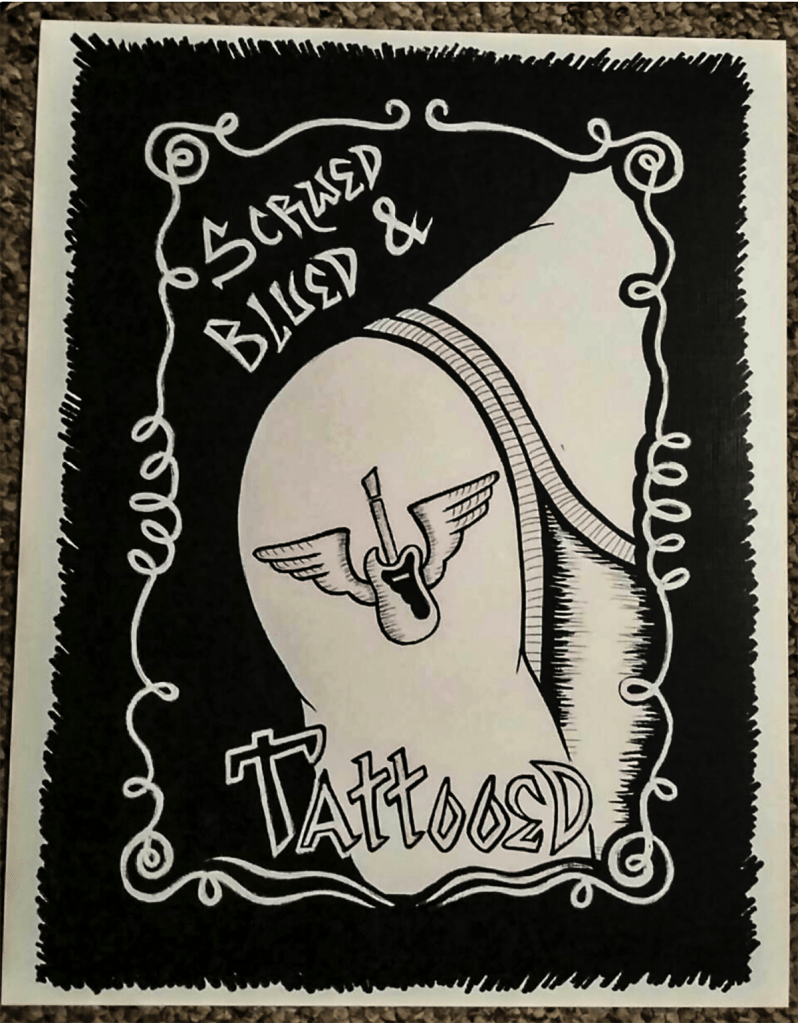
What with the tariffs, the deportations, and other reckless nonsense, I think the Richie Riches are going to wind up screwed, blued, and tattooed.
I found this three-year-old video from the Noo Yak Times insightful and profound.
Blue states—defined as those states, like California and Illinois, that have Democratic governors and Democrats in control of the Legislature—are not voting their stated values.
The presenter addresses housing, taxation, and education, and demonstrates how blue state governments are systematically screwing the lower and middle class.
Please understand the point I am trying to make, however imperfectly I am making the point. The point is NOT that anyone should lash himself with a whip for the sin of “hypocrisy.” (If you feel you have been hypocritical, and if you think that self-flagellation would do you good, then go ahead. Please don’t let me stop you. But that’s not the point here.)
The point IS that
we blue folk, collectively, are not (for whatever reason) acting and voting the values we claim to hold, and that
the situation is unsustainable, and that,
unless we are prepared to live in a fascist state, the economic concerns of the lower and middle class have got to be addressed, and that right soon.
After the episode shown above, Mika—obviously prompted by the back office—came on to clarify that Trump was not criminally convicted of rape, he was found civilly liable for “sexual abuse” as “sexual abuse” is defined in New York state law. Judge Lewis Kaplan noted that what the jury found that Trump did would be called “rape” in jurisdictions other than the state of New York.
This is the same issue involved in the infamous Trump v. ABC News settlement. Mika and her back office were right to make the clarification and avoid giving Trump a stick with which to beat her over the head. Debating the fine points about New York’s narrow definition of “rape” is not the hill to die on.


 Facing MAGA