Carville reaches the conclusion that so many others have reached, namely, that Democrats utterly failed to understand the level of economic anguish—and economic resentment—among the working class; that Democrats need a new program, a new message, and a new messenger; and that said new messenger had bloody well be someone who is comfortable speaking to podcasters.
All true. But Carville omits one key point. (I suspect the omission is conscious and deliberate, because of the delicacy of the subject. But no matter. For whatever reason, he left it out.)
What Carville leaves out if that, if a majority of us are now living in a siloed, curated reality based on selected YouTube videos and TikTok messages served by algorithms, then the good guys have got to find a way to burrow into those information silos and get the attention of the inattentive and the careless thinkers.
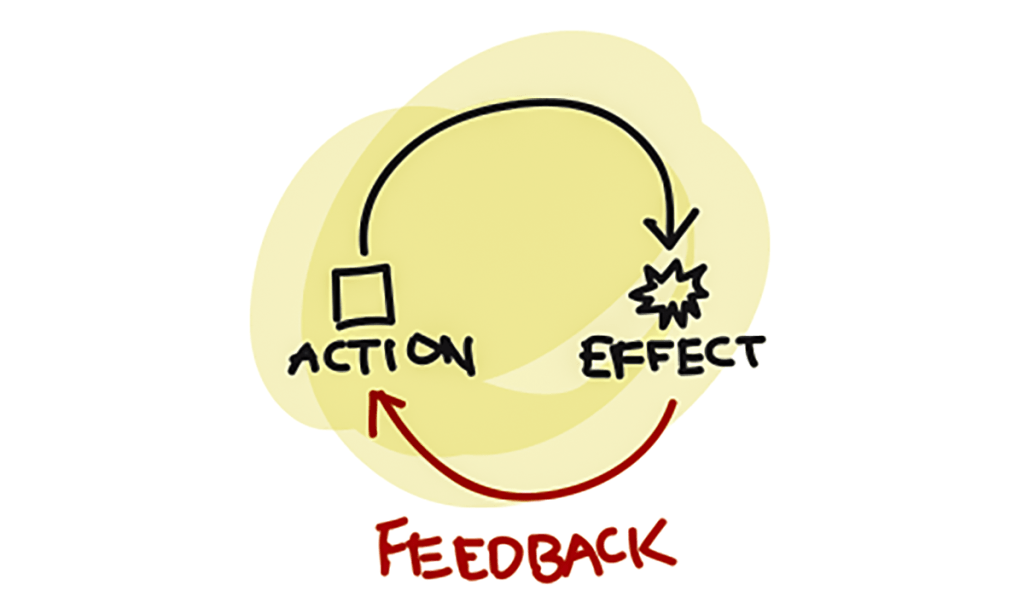
In other words, if the democratic accountability feedback loop is in trouble, as is surely the case, then the good guys need to restore it to a healthy state.
I am an old man, and I don’t personally know how to do TikTok and Instagram, but it surely can’t be all that hard for skilled, dedicated people to invade those information silos and begin to spread the message.
Instagram I don’t know, but here are a couple of things I do know. One is that when you put on your advocate’s hat—when your aim is to lead your audience in to see reality in a particular way—it is one hell of a lot easier to accomplish your goal if the picture you’re trying to paint is essentially an accurate view of that reality, as distinguished from a fairy tale and a tissue of lies.
I also know, to a high degree of confidence, that Trump will act in such a way as to immiserate his working class supporters.
Frank Bruni thinks that said working class supporters can be served a diet of shit sandwiches and be made to think they are eating filet mignon.
Maybe that will turn out to be the case. We’ll just have to see.
But if I were Mr. Bruni, I would not bet the ranch on it.
If Americans under Trump are demonstrably and undeniably hurting as much as they were under President Biden, he’ll weave stories and hurl accusations that absolve him of responsibility and assign it to his political foes. And he’ll find many more takers than he would have before we could all customize the reports we receive so that our designated heroes remain unblemished, our appointed villains irredeemable, our biases affirmed.
And before our entrenchments in such cinched corridors of pseudoreality zapped our powers of discernment. “We’re living in a world where facts instantly perish upon contact with human minds,” George Packer wrote in The Atlantic this month. “Local news is disappearing, and a much-depleted national press can barely compete with the media platforms of billionaires who control users algorithmically, with an endless stream of conspiracy theories and deepfakes. The internet, which promised to give everyone information and a voice, has consolidated in just a few hands the power to destroy the very notion of objective truth.” …
The next best thing to results is illusions. And a record of accomplishments isn’t necessary in a hall of mirrors, not if it’s big and blinding enough.
By contrast, Jerusalem Demsas, who writes for The Atlantic, writes,
[T[he Democratic Party’s performance in the 2024 presidential election has led some to doubt whether the feedback loops necessary for good policy—and a healthy democracy—even exist.
This episode of Good on Paper pushes back against the pessimists. Interpreting signals from voters is complicated, and so much is contingent on which issues are salient when they head to the ballot box. But the political scientist Hunter Rendleman’s research indicates that when states rolled out Earned Income Tax Credit programs—a benefit for working-class Americans—voters rewarded governors who implemented the policy with higher vote shares and approval ratings.
“I think I’m an optimist on sophistication,” Hunter told me. “I think a lot of times political scientists are a bit pessimistic on individuals’ capacities to actually know what’s going on to them because it is quite complicated. But we don’t often set up our analyses or studies in a way to give voters the benefit of the doubt.”
George Packer, also writing in The Atlantic, tries for a balanced view:
The Trump Reaction is more fragile than it now seems. Trump’s behavior in the last weeks of the campaign did not augur a coherent second presidency. He will surround himself with ideologues, opportunists, and crackpots, and because he has no interest in governing, they will try to fill the vacuum and turn on one another. The Trump administration, with a favorable Congress, will overreach on issues such as abortion and immigration, soon alienating important parts of its new coalition. It will enact economic policies that favor the party’s old allies among the rich at the expense of its new supporters among the less well-off. It’s quite possible that, approaching 80, Trump will find himself once more among the least popular presidents in the country’s history. But in the meantime, he will have enormous latitude to abuse his power for enrichment and revenge, and to shred the remaining ties that bind Americans to one another, and the country to democracies around the world.
The Trump Reaction will test opponents with a difficult balancing act, one that recalls F. Scott Fitzgerald’s famous line about a first-rate intelligence holding two opposed ideas in mind while still being able to function. The Democratic Party has to undertake the necessary self-scrutiny that starts with the errors of Biden, Harris, and their inner circle, but that extends to the party’s long drift away from the most pressing concerns of ordinary Americans, toward the eccentric obsessions of its donors and activists. But this examination can’t end in paralysis, because at the same time, the opposition will have to act. Much of this action will involve civil society and the private sector along with surviving government institutions—to prevent by legal means the mass internment and deportation of migrants from communities in which they’ve been peacefully living for years; to save women whose lives are threatened by laws that would punish them for trying to save themselves; to protect the public health from Robert F. Kennedy Jr., the nation’s security from Tulsi Gabbard, and its coffers from Elon Musk. …
A few weeks before the election, Representative Chris Deluzio, a first-term Democrat, was campaigning door-to-door in a closely divided district in western Pennsylvania. He’s a Navy veteran, a moderate on cultural issues, and a homegrown economic populist—critical of corporations, deep-pocketed donors, and the ideology that privileges capital over human beings and communities. At one house he spoke with a middle-aged white policeman named Mike, who had a Trump sign in his front yard. Without budging on his choice for president, Mike ended up voting for Deluzio. On Election Night, in a state carried by Trump, Deluzio outperformed Harris in his district, especially in the reddest areas, and won comfortably. What does this prove? Only that politics is best when it’s face-to-face and based on respect, that most people are complicated and even persuadable, and that—in the next line from the Fitzgerald quote—one can “see that things are hopeless and yet be determined to make them otherwise.”
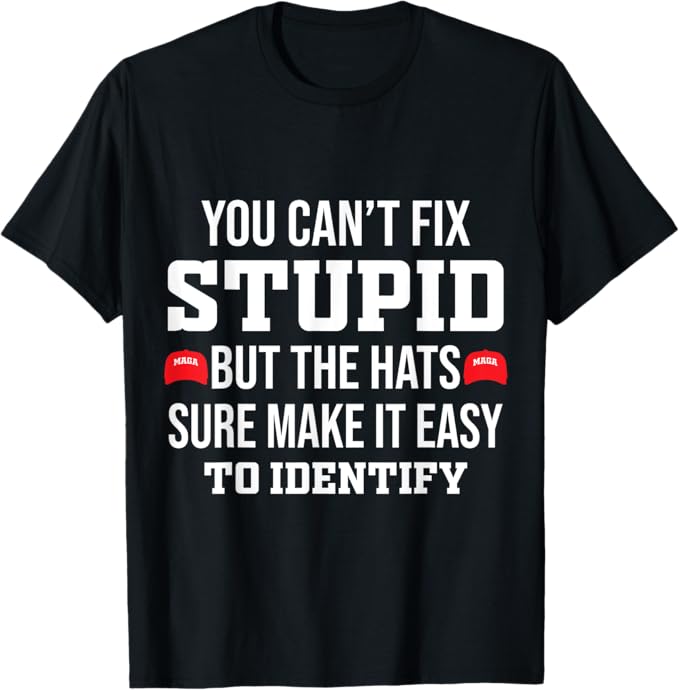
This is a companion to the post immediately below, What Word Best Describes Trump Suppporters?—wherein another blogger debates with herself about whether that word is “stupid” or something even worse.
Well, dear reader, if you are a person of some maturity, you have learned that there are many ways of being smart, and many ways of being stupid.
And if you are situationally self-aware you are aware that Trump managed to put together a plurality based on a portfolio of folks suffering from a very wide variety of ways of being stupid.
And if you are capable of strategic thinking, you will have figured out that the way forward is to bust open the Trump’s fragile coalition of racists, anti-vaxxers, Christianist nationalists, people in a moral panic over transgender rights, and the terminally illiterate and uninformed.
James Carville writes,
I thought Kamala Harris would win. I was wrong. While I’m sure we Democrats can argue that the loss wasn’t a landslide or take a little solace in our House performance, the most important thing for us now is to face that we were wrong and take action on the prevailing “why.”
I’ve been going over this in my head for the past two months, all the variables, all the what-ifs, all the questions about Joe Biden’s re-election decisions and what kind of Democrat or message might have worked against Donald Trump. I keep coming back to the same thing. We lost for one very simple reason: It was, it is and it always will be the economy, stupid. We have to begin 2025 with that truth as our political north star and not get distracted by anything else. …
Mr. Trump, for the first time in his political career, decisively won by seizing a swath of middle-class and low-income voters focused on the economy. Democrats have flat-out lost the economic narrative. The only path to electoral salvation is to take it back. Perception is everything in politics, and a lot of Americans perceive us as out to lunch on the economy — not feeling their pain or caring too much about other things instead.
To win back the economic narrative, we must focus on revving up a transformed messaging machine for the new political paradigm we now find ourselves living in. It’s about finding ways to talk to Americans about the economy that are persuasive. Repetitive. Memorable. And entirely focused on the issues that affect Americans’ everyday lives.
This starts with how we form our opposition. First of all, we have got to stop making Mr. Trump himself our main focus; he can’t be elected again. Furthermore, it’s clear many Americans do not give a rat’s tail about Mr. Trump’s indictments — even if they are justified — or about his antidemocratic impulses or about social issues if they cannot provide for themselves or their families.
Mr. Trump won the popular vote by putting the economic anger of Americans front and center. If we focus on anything else, we risk falling farther into the abyss. Our messaging machine must sharply focus on opposing the unpopular Republican economic agenda that will live on past him. Vocally oppose the party, not the person or the extremism of his movement. I don’t always agree with Wall Street, but Jamie Dimon was right when he saidthat Democrats’ railing against “ultra-MAGA” was insulting and politically tone-deaf. Denouncing other Americans or their leader as miscreants is not going to win elections; focusing on their economic pain will, as will contesting the Republican economic agenda. …
Let’s start by forcing [Republicans] to oppose a raise in the minimum wage to $15 an hour. Let’s make Roe v. Wade an economic messaging issue and force them to block our attempts to codify it into law. And let’s take back the immigration issue by making it an economic issue and force the G.O.P. to deny bipartisan reform that expedites entry for high-performing talentand for those who will bring business into our nation. This year the Democratic Party leadership must convene and publish a creative, popular and bold economic agenda and proactively take back our economic turf. Go big, go populist, stick to economic progress and force them to oppose what they cannot be for. In unison.
Finally, Democrats must trudge headfirst with this economic agenda into the new media paradigm we now live in. I am an 80-year-old man and can see clearly that we are barreling toward a nontraditional and decentralized media environment. Podcasts are the new print newspapers and magazines. Social platforms are a social conscience. And influencers are digital stewards of that conscience. Our economic message must be sharp, crisp, clear — and we must take it right to the people. To Democratic presidential hopefuls, your auditions for 2028 should be based on two things: 1) How authentic you are on the economy and 2) how well you deliver it on a podcast.
The road ahead will not be easy, but there are no two roads to choose from. The path forward could not be more certain: We live or die by winning public perception of the economy.
Thus it was, thus it is, and thus it forever shall be.
A good friend has called my attention to a recent post by Prof. Sheila Kennedy. In the post, Prof. Kennedy muses on the question “Why do liberals think Trump supporters are stupid?” and reposts this message that she received from a friend:
THE SERIOUS ANSWER: Here’s what the majority of anti-Trump voters honestly feel about Trump supporters en masse:
That when he made up stories about seeing Muslim-Americans in the thousands cheering the destruction of the World Trade Center, you said, “Not an issue.” (https://www.washingtonpost.com/…/donald-trumps…/)
That when you heard him relating a story of an elderly guest of his country club, an 80-year old man, who fell off a stage and hit his head, to which Trump replied: “‘Oh my God, that’s disgusting, and I turned away. I couldn’t—you know, he was right in front of me, and I turned away. I didn’t want to touch him. He was bleeding all over the place. And I felt terrible, because it was a beautiful white marble floor, and now it had changed color. Became very red.” You said, “That’s cool!” (https://www.gq.com/story/donald-trump-howard-stern-story)
That when the Central Park Five were compensated as innocent men convicted of a crime they didn’t commit, and he angrily said that they should still be in prison, you said, “That makes sense.” (https://www.usatoday.com/…/what-trump-has…/1501321001/)
That you have watched the parade of neo-Nazis and white supremacists with whom he curries favor, while refusing to condemn outright Nazis, and you have said, “Thumbs up!” (https://www.theatlantic.com/…/why-cant-trump…/567320/)
That you hear him unable to talk to foreign dignitaries without insulting their countries and demanding that they praise his electoral win, you said, “That’s the way I want my President to be.” (https://www.huffpost.com/…/trump-insult-foreign…)
That you have watched him remove expertise from all layers of government in favor of people who make money off of eliminating protections in the industries they’re supposed to be regulating and you have said, “What a genius!” (https://www.politico.com/…/138-trump-policy-changes…)
That you have heard him continue to profit from his businesses, in part by leveraging his position as President, to the point of overcharging the Secret Service for space in the properties he owns, and you have said, “That’s smart!” (https://www.usnews.com/…/how-is-donald-trump-profiting…)
That you have seen him start fights with every country from Canada to New Zealand while praising Russia and quote, “falling in love” with the dictator of North Korea, and you have said, “That’s statesmanship!” (https://www.cnn.com/…/donald-trump-dictators…/index.html)
That Trump separated children from their families and put them in cages, managed to lose track of 1500 kids, has opened a tent city incarceration camp in the desert in Texas – he explains that they’re just “animals” – and you say, “Well, OK then.” (https://www.nbcnews.com/…/more-5-400-children-split…)
That you have witnessed all the thousand and one other manifestations of corruption and low moral character and outright animalistic rudeness and contempt for you, the working American voter, and you still show up grinning and wearing your MAGA hats and threatening to beat up anybody who says otherwise. (https://www.americanprogress.org/…/confronting-cost…/)
What you don’t get, Trump supporters, is that our succumbing to frustration and shaking our heads, thinking of you as stupid, may very well be wrong and unhelpful, but it’s also…hear me…charitable.
Because if you’re NOT stupid, we must turn to other explanations, and most of them are less flattering.
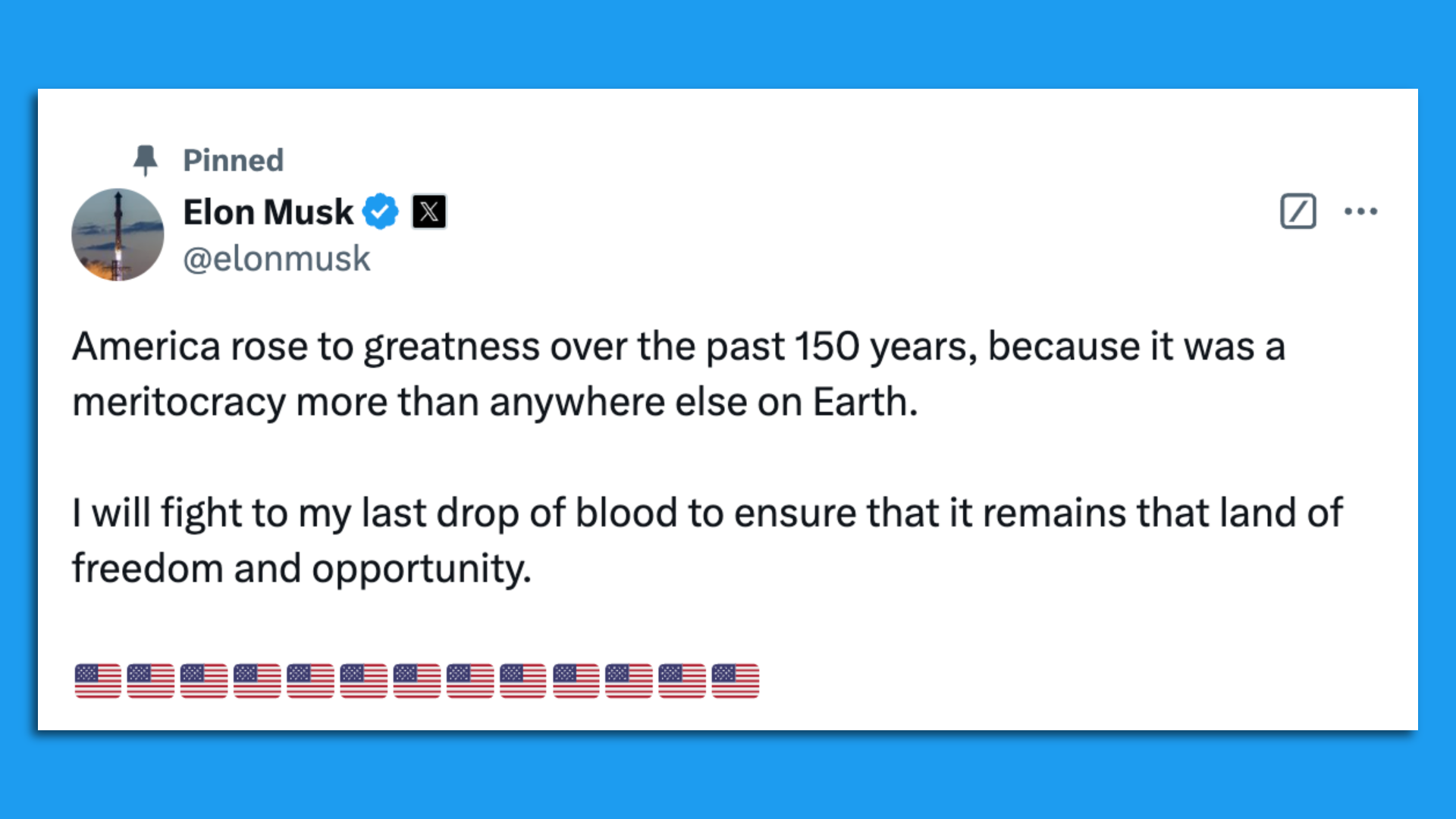
Nothing revs up MAGA like the chance to dunk on DEI — diversity, equity and inclusion. DEI-bashing is the core of the “anti-woke” theology. MAGA warriors want a true color/gender-blind meritocracy, they say. Why it matters: MAGA’s DEI unity has hit a big snag. Elon Musk — a MAGA fanboy and fav until this past week — and others on X are arguing forcefully that in a true meritocracy, you’d pick harder-working foreigners for high-skilled gigs over less-qualified Americans. Steve Bannon and many MAGA originals consider this apostasy —basically another high-end, rich-guy way to screw the working-class voters behind the Donald Trump movement. Welcome to the new frontier of the DEI. Musk tweeted last evening: “The point was not to replace DEI, which is one form of racism/sexism, with a different form of racism/sexism, but rather to be a meritocratic society!”🖼️ The big picture: N.Y. Times columnist David Brooks points out this isn’t a “discrete one-off dispute.”“This is the kind of core tension you get in your party when you do as Trump has done: taken a dynamic, free-market capitalist party and infused it with protective, backward-looking, reactionary philosophy,” Brooks writes.“We’re going to see this kind of dispute also when it comes to economic regulation, trade, technology policy, labor policy, housing policy and so on.”Lead story of today’s N.Y. Times, front-page story of today’s Washington Post💣 The latest: Musk vowed last night to “go to war” to defend the H-1B visa program for foreign tech workers, branding some Republican opponents as “hateful, unrepentant racists,” Axios’ Ben Berkowitz writes.Why it matters: The MAGA-DOGE civil war that erupted over the last 48 hours has hit a tipping point, with President-elect Trump’s new techno-libertarian coalition of billionaires taking full aim at his base.Trump faces a deepening conflict between rich, powerful advisers — and the people who swept him to office.Steve Bannon, one of the longest-tenured voices in Trump’s orbit, had multiple guests on his show this week to talk about his hardline anti-H-1B views. Bannon tells Axios he helped kick off the debate with a now-viral Gettr post calling out a lack of support for the Black and Hispanic communities in Big Tech.
A lot of the voters motivated by that particular grievance were family members or friends of the earlier undocumented community—the very people that Steven Miller and his ilk long to deport.
Surprisingly, it turns out that putting together a plurality of the inconsistently aggrieved was a winning strategy. Unsurprisingly, trying to govern based on a coalition of people with diametrically opposed views is going to be a big, big problem.
The video linked above—based on events of the last few days—illustrates the point very well.
A Note on the Midas Touch Network
During the election season, I watched them from time to time. As far as I can tell, they were earning viewers by continually making the case that the good guys were beating the bad guys—right up until the point when the bad guys won the election. Now, they may be trying to earn viewers by exaggerating the problems that Trump will have governing.
Be that as it may, I can tell you what I am, and am not, trying to do in these posts. I am not intentionally selecting facts just to make our side feel good. I am trying to be objective.
So go ahead and reach for that shaker of salt. Take a little. And then enjoy watching the video.
Recently, I have called attention to some scathing criticisms of Kamala Harris—and of the Democratic political class in general.
But, lest we forget, they damn near pulled it off.
Of those who voted, the latest data show that 50.2 percent voted for someone other than Trump. Specifically, Harris got 48.3 percent while 1.9 percent voted for Jill Stein or RFK Jr. or someone else.
And no, ladies and germs, I am not saying our side should be complacent because our margin of defeat could have been a lot worse.
I am saying: by all means, go on with the political autopsies, but keep a grip on.
The Politico piece appears to be mostly straightforward reporting of what people said in focus groups—the people in question being several categories of wishy-washy, definitely non-elite voters. Takeaway: “In a trio of focus groups, even voters whopreviously backed Democrats cast the party as weak and overly focused on diversity and elites, according to research by the progressive group Navigator Research.”
If you care about American democracy, the N.Y. Times article is most definitely worth a read. In it, Frank Bruni of the Times moderates an email conversation among himself, Tim Ryan, the former congressman, and two others. (“Ms. Shenker-Osorio is the host of the podcast “Words to Win By.” Ms. Smith was a senior adviser to Pete Buttigieg’s presidential campaign.”)
Some highlights:
Lis Smith: The Democratic brand is in the toilet. Many of the Democrats who succeeded this cycle — our best over-performers in House races, for instance — are people who ran against the Democratic Party brand. Trump tore down the blue wall in the industrial Midwest, but he also expanded his vote the most in our bluest and most urban areas. …
Tim Ryan: The Dems got pinned as the status quo party on inflation, instability, insecurity and every other issue facing working people. Trump was the change candidate in a year when 65 percent of people thought we are on the wrong track. And they failed to redefine themselves on the culture issues on which they were on the other side of 60 percent to 70 percent of Americans. …
Anat Shenker-Osorio: … Voters, outside of hard partisans, think most politicians lie at least some of the time. I know — we just asked them in a survey. Seventy-two percent of them said this of Republican leaders and 70 percent said this of Democrats. This is astonishingly good for authoritarians. What it means, and we hear this in nearly every focus group we do, is that they discount the threats of MAGA. It sounds like this: “Well, Trump’s just saying things. He doesn’t really mean them.” So, he gets to keep his base engaged and enraged, while also seeming like the guy who’s just going to give you a personally signed check.
Meanwhile, it’s absolutely detrimental to Democrats because their purported achievements, desirable agenda and dire warnings are all not credited as real. Nationally, extrapolating from AP VoteCast data, 19 million Biden 2020 voters sat it out this time. This was mainly a lurching couch-ward, not rightward. Why? Voters here and around the world are looking around at what there is on offer and saying: not this. …
Smith: We need to look to who succeeded and overperformed this cycle and why. Some of the top overperformers in House races couldn’t have had more disparate profiles — Pat Ryan, Jared Golden, Tom Suozzi, Marie Gluesenkamp Perez, Angie Craig. What they had in common was that they were willing to run against the party brand, they met voters where they are on their frustrations with the border and public safety issues, and they talked more about their vision for the future than how bad Donald Trump is. I’d also throw in another thing — these members largely were among the first to call for Joe Biden to step down as nominee. They weren’t in the crew of Democrats who told voters not to believe what they’d seen with their own eyes in that first debate.
Shenker-Osorio: If you want to look at successes that seem to defy “conventional wisdom,” to me that’s Gov. Andy Beshear of Kentucky. He has consistently run on, not from, his values, mixing economic populism with a clear and powerful explanation for the siren song of the right wing: scapegoating, hate peddling and fear mongering. Beshear creates the biggest possible “we” and then conveys why right-wing attacks on groups that have been intentionally “othered” are Trojan horses to enable widespread harms, from taking away our freedoms, to controlling our lives, to screwing over our livelihoods. …
The largest voting bloc in the United States is almost always voter-eligible nonvoters. Folks are opting out of participation for a reason — and it’s feeling as if neither party is actually focused on making life better for working people. Democrats cannot be running as the protectors of norms and institutions, and yes, that includes democracy, because democracy never bought anyone dinner.
Bruni: I’m encouraged, in a way, that I don’t sense Democrats spoiling to fight Trump on every initiative and at every turn. Democrats cannot live on a diet of sour grapes, and that kind of blanket resistance could look less like principle than like reflexive obstructionism and haughty dismissal of election results, and could doom Democrats to failure in the fights that count the very most. Which are those? Which of Trump’s proposals must Democrats do all in their power to defeat and — maybe just as important — are there proposals or general priorities of his that aren’t awful and that Democrats should try to find ways to work with him on?
Ryan: We should be all over the Robert F. Kennedy Jr. food reform initiative. We don’t have to agree with him on everything and we can fight him on other things. It is criminal what we have allowed to happen. We are basically poisoning our own people, driving up health care costs, lowering productivity while it’s all being subsidized by the taxpayer for American farmers to grow crops that go into fake food.
We should put forward a dozen recommendations on the “department of government efficiency” effort. Our federal government is so wasteful and bloated that we should be able to come up with major reforms to save money and help government provide better services.
Smith: We don’t actually know what Trump is serious about doing as president yet. Unlike Tim, I don’t think Kennedy was picked to take on Big Ag and Big Food — I think all of that is being used as a smokescreen for his truly dangerous views on things like vaccines. We should fight Trump and Kennedy tooth and nail if they sow doubt about lifesaving vaccines for polio and M.M.R., because that will actually have life-or-death consequences for Americans (see what Kennedy did in Samoa).
But broadly, we shouldn’t just oppose things because Trump supports them. If he really wants to build more American manufacturing or cut taxes for the middle class we should be for it.
Mr. Guastella works for the Center for Working Class Politics, an institution not previously within my radar screen, but one that probably should be within our awareness.
The article is published by the Guardian, so you can read if for free. Its message is broadly consistent with a theme that I have been pushing: that we progressives need to listen to the non-college-educated working class once again, hear their concerns, and form a coalition with them to advance our common interests, versus the ultra-wealthy business elites.
After damning the Democrats and Kamala Harris for not embracing the working class, Guastella writes,
OK, so Harris represented limousine liberals, that still doesn’t explain why blue-collar voters would choose an uber-wealthy playboy like Trump, not to mention his billionaire henchman Elon Musk, over her. And, according to analyses from the Center for Working Class Politics, working-class voters did prefer Trump. But we don’t need some description of “false consciousness” to understand why this might be. The fact is working-class people do not have a genuine political home in our new Gilded Age, they are forced to ally either with billionaires in the Republican party or Democratic liberal elites in hopes that someone will allay their concerns. Fixing this requires a politics that confronts both. …
Almost all of the content of American politics – the candidates, the policies, the priorities – concerns the top 20% of the income and wealth hierarchy. Remember, less than 2% of members of Congress come from working-class backgrounds. Working-class candidates face immense political obstacles because they have neither the money, nor the credentials – won in the halls of elite schools, conferences and institutions – needed to break into the fortress of American government. Many voted for Trump in the hopes that he could take a wrecking ball to the whole thing.
Having made these important points, Guastella then segs into the argument that Democrats must reverse course not only on economic issues but also on non-economic cultural and values issues:
Though, it will not be enough for the left to protest the billionaire economy. An honest assessment of progressive liabilities is in order. Those on the left must confront the cultural elite that has pushed the party away from workers on all sorts of non-economic issues. While Trump and his billionaires won’t be able to adequately represent the economic interests of the working class, liberals must recognize that their party doesn’t represent their values. The Democrats captured by highly credentialed clerics has led them to embrace the cultural values of an aristocratic elite. From crime, to climate, to gender politics, and the border, mainstream liberal opinion is much further from the views of workers than many liberals are willing to admit. And this too is a class story.
Well, Knock! Knock! I Have Two Important Things to Say About Embracing Alleged Working Class Culture and Values.
First important thing: Yes, yes, it’s high time to reconsider some issues. For example, lots of minority people feel that aggressively pushing DEI can make them look like “token hires”—not the accomplished, fully deserving people they are.
Second important thing: But while we’re doing all this cultural/value reconsidering, let’s insert a step: think carefully about what is the right thing to do, not the thing to do that might improve your messaging.
And here is why we need to actually consider the right thing to do: because, ladies and germs, the right thing to do will probably, at the end of the day, also be the politically expedient thing to dol.

 Lead story of today’s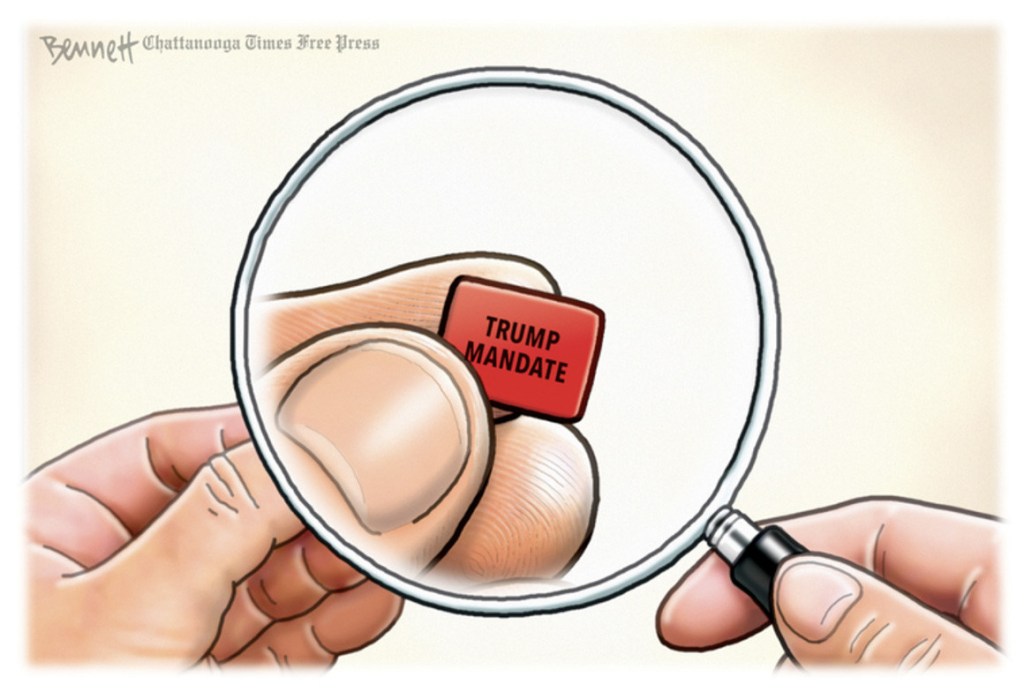
 Facing MAGA