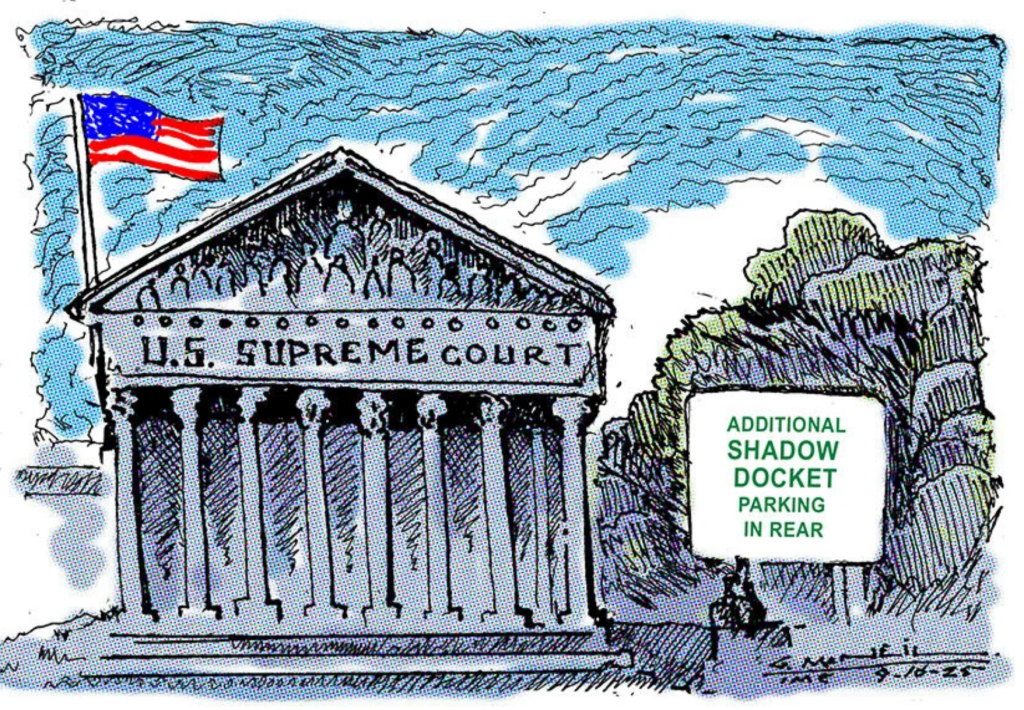

Supreme Court Bites Man: Trump v. Illinois. In Response, Man TACOs.

I recently shared some observations about the Supreme Courtโ€™s shadow docket (here and here). In brief, the Supreme Court has been catching serious flack for

  • ducking hard questions in its many shadow docket decisions involving the Trump Administration, and, generally,
  • letting the Administration get away with murder pending some final resolution of the legality of Trumpโ€™s usurpationsโ€”a resolution that, it appears, might come around the Twelfth of Never. 

But in Trump v. Illinois, in a short, unsigned 6-to-3 decision, the Court majority ruled that, pending trial and appeal, Trump had to get the National Guard the hell out of Illinois, because Trump had identified no proper legal authority to send them there in the first place. 

For a few days, people wondered whether Trump and his merry band of legal geniuses would either (i) tell the Supreme Court to go stick it where the sun donโ€™t shine or (ii) claim authority under the Insurrection Act, even though there was and is no insurrection. 

Trump did neither. Instead, he TACOed, surrendering in his legal attempts to keep federal troops in Los Angeles and announcing that he would withdraw the National Guard from Illinois, Los Angeles, and Portland. 

So โ€ฆ what does it all mean?

I donโ€™t know, and I wonโ€™t pretend to pretend that I know.

And yes, very assuredly, one swallow does not a summer make. But it cannot be a bad thing that โ€ฆ

โ€ฆ faced with a clear loss in the Supreme Court on one of his several signature issuesโ€”sending federal troops into the big citiesโ€”Trump has unambiguously backed down,

โ€ฆ Trump has elected, at least on this one occasion, not to put to the test whether โ€œhisโ€ troops would or would not obey illegal orders, and that โ€ฆ

โ€ฆ a six-person majority of the Supreme Court bit the bullet, dared Trump to defy them, and came away with a famous victory.

The bet paid off.

May that trend long continue.

And this final word of speculation: as Justice Holmes said so long ago, the Court reads the newspapers. I think Chief Justice Roberts, along with his sidekicks Justices Coney Barrett and Kavanaugh, probably read the newspapers, where they grasped, one, that Trump is circling the drain, and two, that people are getting sick and tired of the Supreme Courtโ€™s fecklessness.ย 

Trump, the Supreme Court, and the Shadow Docket: Whatโ€™s Going On?

A Trigger Warningโ€”and Some Disclaimers

The Trigger Warning: Some readers will be triggered by prose that, read superficially, might sound sympathetic to Chief Justice Roberts and to his sidekicks, Justices Coney Barret and Kavanaugh. Such readers may want to skip this post. In any event, they are requested not to throw food in my direction. Or, if they must, please pick the corn muffins weโ€™re getting tonight, and take a pass on the bean soup and the pistachio pudding. 

The Multiple Disclaimers: In this post, Iโ€™m not in the moralizing business, Iโ€™m not in the mind reading business, and Iโ€™m not in the prediction business. Not that moralizing, mind reading, and prediction are unimportant. Theyโ€™re just not what Iโ€™m trying to do here. Here, Iโ€™m in the hypothesizing business. Iโ€™m in the trying-to-understand business. 

The Three Court Factions

You can generally count on the three liberal justices to do the right thing. If you bet that Justices Thomas, Alito, and Gorsuch will do the wrong thingโ€”and that Justice Gorsuch will camouflage the wrong thing with extensive verbiage made to superficially resemble legal scholarshipโ€”then youโ€™re likely to win your bet. In the middle, that leaves the Chief Justice, along with Justices Coney Barrett and Kavanaugh. These three generally decide whoโ€™s going to win the case.

And, by the way, when I say โ€œmiddle faction,โ€ the word โ€œmiddleโ€ is not intended to be either favorable or pejorative. It just means theyโ€™re literally in the middle of the other two factions. 

The Supreme Court and Trumpโ€™s Multiple Power Grabs

It appears that the rubber will soon meet the road, and that the Supreme Court is going to make some definitive rulings on, among other things,

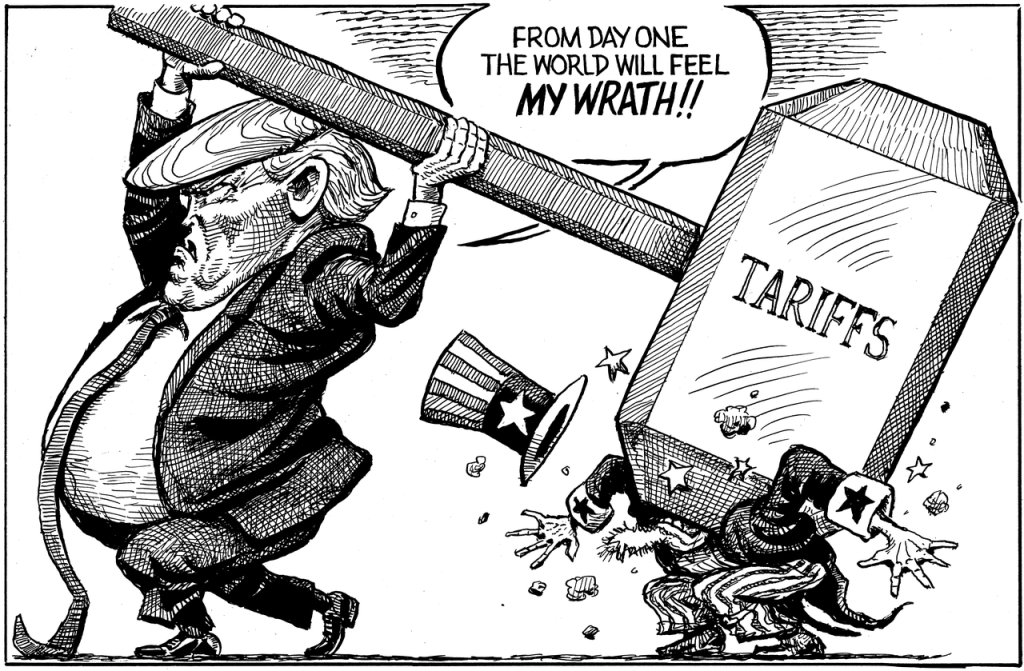
  • the proper construction of the emergency economic powers act that Trump has employed to justify his massive restructuring of American trade and world trade,ย 
  • Trumpโ€™s endeavor to rewrite the Constitution by fiat to eliminate birthright citizenship,
  • Trumpโ€™s many violations of statutory law and constitutional due process in connection with immigration roundups,
  • the Administrationโ€™s usurpation of the power of the purse, which, under the Constitution, belongs to Congress,
  • Trumpโ€™s attempt to destroy the United States Civil Service,
  • Trumpโ€™s attempts to use the National Guard and the military to take over big cities, and
  • Trumpโ€™s effort to do away with the independence of independent agencies like the Federal Trade Commission.

The Vexed Question of the Shadow Docket

In introduced this topic in the immediately preceding post, which you may wish to read now, before proceeding further. 

There are many reasons why itโ€™s a vexed question. In the first place, the Courtโ€™s behavior contradicts what we learned in civics classโ€”back when they taught civics in high school. We have checks and balances. When the president violates the law, the courts are supposed to check him. And indeed, lots of district courts and courts of appeal HAVE been checking Trumpโ€”but without a lot of support from the Supreme Court on its shadow docket.

Relatedly, the shadow docket is a vexed question from a technical legal standpoint. The Court is ruling on the validity of lower court decision on whether to grant a preliminary injunction pending trial and appeal, and that p.i. issue, in turn, is supposed to depend, in large measure, on โ€œlikelihood of success on the merits.โ€ If the district court grants a p.i. against some Trump outrage, and if the court of appeals affirms, and if the Supreme Court majority then reverses the ruling, so that Trump can go on engaging in whatever horseshit he wants, pending trial, does that mean that the Supreme Court thinks Trump is right on the law and all the lower court judges are wrong?

Does it mean that the Supreme Court majority doesnโ€™t give a tinkerโ€™s damn about checks and balances?

Does it mean that the majority wants to live in a country governed like Russia and Hungary?

Well, maybe it does mean some or all of those things. 

Orโ€”Possiblyโ€”Something Else is Going On

I continue to focus here on the middle faction of the Supreme Courtโ€”Justices Roberts, Coney Barrett, and Kavanaughโ€”not on the three wingnuts, and not on the three liberals. An alternative hypothesis to explain the middle factionโ€™s strange behavior would go something like this.

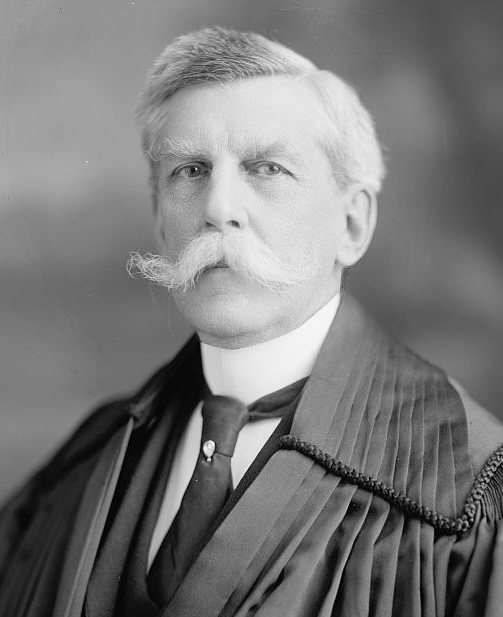
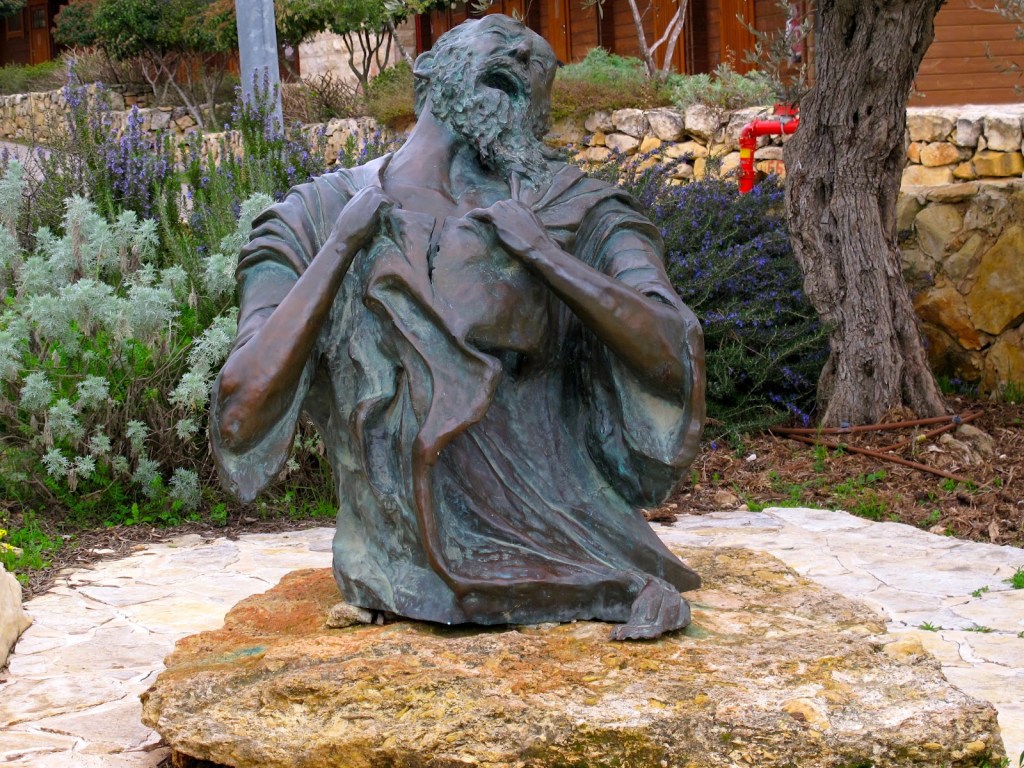
The middle faction would prefer to live in a constitutional republic governed under law, not in Hungary or Russia, but they are mindful that, to achieve that end, they have to preserve a certain level of public deference to court decisions. And, as Justice Oliver Wendell Holmes, Jr. (pictured above) said a century ago, the Court reads the newspapers. 

Having read the newspapers, the middle faction knew that a reelected, pumped up Trump was going to try to grab power in all sorts of ways. They knew that if the Supreme Court intervened immediately and forcefully, there would likely follow an immediate and grave constitutional crisis. 

The hypothesis continues: The middle faction reasoned that, instead of an immediate constitutional crisis, it would be better to wait a season; let the whole country, including the MAGA base, get a full taste of Trumpโ€™s policies; and let Trumpโ€™s political support dissipate. 

2026, not 2025, would be right year for strong action to preserve the rule of law. Or so they thought, in the hypothesis presented here.

Remember, Yโ€™all, Itโ€™s a Hypothesis

Remember, yโ€™all, itโ€™s a hypothesis. Thereโ€™s no mind reading, thereโ€™s no moralizing, and thereโ€™s no prediction about how the Court will actually decide all those issues I mentioned above. 

As far as predictions go, to quote the sage observation of President Eisenhower, โ€œThe future lies ahead.โ€

Trump, the Supreme Court, and the Shadow Docket: Setting the Table

Something weird is going on at the Supreme Court. In my next post, Iโ€™m going to lay out a hypothesis about what that might be. Here, I need to lay the predicate for that discussion.

What is the Shadow Docket (Also Known as the Emergency Docket)?

The shadow docket consists of cases where the Supreme Court reviews lower court decisions that have either granted or denied temporary relief, pending a trial, a decision on the merits, and appeal of the decision in the ordinary course. 

In most of these cases, the lower courts have either granted a preliminary injunction or they have denied a preliminary injunction. 

What is a Preliminary Injunction?

Trials take a long time, appeals take even longer, and in the meantime you may suffer a lot of harm due to behavior that you say is illegal. Your uncle may be departed to El Salvador. Trump may have fired you from the Federal Trade Commission because you are a Democrat. Your business may be going bankrupt because of high tariffs that Trump has illegally imposed. 

A preliminary injunction is intended to preserve the status quo, preventing that injury, pending a final resolution of the dispute. 

When Should a Preliminary Injunction be Granted? When Should it be Denied?

When a party to a case wants a preliminary injunction, the court is supposed to ask four questions.

1. Considering the facts and the law, which party is more likely to win the case, down the road?

2. If the preliminary injunction is denied, how much harm will be caused, and is that harm irreparable? 

3. And what about the potential harm to the other side, if the preliminary injunction is granted?

4. Finally, in this private dispute between two parties, where does the public interest lie?

Thatโ€™s the legal theory. In practice, the first factorโ€”often called โ€œlikelihood of success on the meritsโ€โ€”tends to predominate. 

In other words, if a district judge grants a preliminary injunction, that often means that she thinks the defendant is behaving illegally. If she denies the request, that usually implies that, in her view, the plaintiff doesnโ€™t have a good legal case. 

When She Rules on a P.I. Request, Is a District Judge Required to Explain Her Reasoning?

Yes. The Federal Rules of Civil Procedure provide that a federal district court is legally obligated to explain its reasoning in granting or denying a requested preliminary injunction. The main rationale for that rule is that, without a reasoned explanation, a court of appeals canโ€™t make an informed decision about whether the district judge was right or wrong.

When the Supreme Court Rules on a P.I., Is it Legally Required to Explain its Reasoning?

No, it is not. However, before Trump, the Court normally did explain, at least briefly, how it thought likelihood of success on the merits and the other three factors applied to the case at hand. 

Whatโ€™s Going on Now?

In a recent article, Erwin Chemerinsky, constitutional law expert and dean of the law school at U.C. Berkeley, explained, 

The Supreme Court always has had an emergency docket to hear requests such as those for last-minute stays of execution in death penalty cases. But it has grown greatly in recent years, and last year saw an exponential increase in orders from the shadow docket. In the October 2023 term, the court resolved 82 matters on its emergency docket. But in the October 2024 term, by June 27, 2025โ€”the last day opinions were handed downโ€”it had resolved 107 matters on its emergency docket. By the time the term officially ended when the new term began on Oct. 6, 2025, the court had decided 140 matters on its emergency docket.

Some of this increase is because of the many cases involving challenges to President Donald Trumpโ€™s administrationโ€™s initial actions that made it to the Supreme Court. But that does not explain all of the dramatic increase. I think that there is a simple explanation for why the shadow docket has grown: the courtโ€™s willingness to rule on matters on its emergency docket. The more the court is willing to give relief on an emergency basis, the more parties will go to the justices for stays of lower court decisions, such as of preliminary injunctions.

There is much to be concerned about in the growth of the shadow docket. Matters are decided without full briefing and without any oral argument. Yet in 2025, the Supreme Court indicated that lower courts were obligated to follow its shadow docket rulings. In several important cases, the court handed down orders without any written opinion, giving no guidance to the lower courts and making the decisions seem an arbitrary exercise of power since no reasons were given for the conclusions. In some cases, the court appeared to disregard detailed factual findings by lower courts and abandon the usual standard for emergency relief: the need for a showing of irreparable injury. โ€ฆ

There have been dozens of rulings by the court on its emergency docket concerning lower-court preliminary injunctions against Trump administration actions. In almost every case, the Supreme Courtโ€”virtually always in a 6-3 rulingโ€”has stayed the preliminary injunction and ruled in favor of President Trump. These decisions have included the Supreme Court staying lower court orders stopping the firing of agency officials, ordering the reinstatement of terminated federal grants, forbidding deportations to South Sudan of individuals with no contact with that country, preventing U.S. Immigration and Customs Enforcement agents from stopping people without reasonable suspicion, and keeping the State Department from requiring that passports list a personโ€™s birth sex rather than gender identity. โ€ฆ

In a ruling on the emergency docket, in United States v. Shilling, the court, once more 6-3, stayed a district courtโ€™s preliminary injunction and allowed President Trump to bar transgender individuals from serving in the military. Neither the majority nor the dissenting justices wrote an opinion.

Trump, the Supreme Court, and Government Employee Firings: Let Us Now Rend Our Garments and Clothe Ourselves in Sackcloth and Ashes!

Washington Post, White House preps for legal fight over firingsโ€”despite court victory: A Supreme Court ruling last week means planned reductions in force can continue, but unions and other groups will battle the administration at each step.

N.Y. Times, Supreme Court Keeps Ruling in Trumpโ€™s Favor, but Doesnโ€™t Say Why: In a series of terse, unsigned orders, the court has often been giving the green light to President Trumpโ€™s agenda without a murmur of explanation.

Iโ€™m Sorry, but to Understand Anything About Whatโ€™s Going On, You Need to Know a Little Something About Preliminary Injunctions

Smith sues Jones, and asks the court for a preliminary injunction, claiming that Jones is quickly, and illegally, creating โ€œfacts on the groundโ€ that cannot easily be reversed after a final decision finally arrives. How does the court decide whether to grant the preliminary injunction? Answer: by trying to answer four specific questions:

1. Which side is more likely to win the case, on the facts and the law?

2. If there is no injunction, and if the plaintiff, Smith, ultimately wins the case, can Smith still get justice, for example, by collecting damages? Or are Jonesโ€™s current actions doing harm to Smith that is โ€œirreparableโ€?

3. If Smith is going to suffer โ€œirreparable harm,โ€ is that harm nevertheless outweighed by the harm that Jones will suffer if the court forbids acts that may ultimately be found to be lawful?

4. Apart from Smithโ€™s interests, and apart from Jonesโ€™s interests, what is the public interest?

Whenever a legal rule requires a court to pour a bunch of factors into a pot, stir them around, and then see what the resulting brew tastes like, the process is likely to be somewhat messy and somewhat unpredictable. That said, most lawyers understand that the first factorโ€”we call it โ€œlikelihood of success on the meritsโ€โ€”tends to be dispositive.

Trump v. American Federation of Government Employees

In this case, decided a week ago, eight of the nine justices joined in a short opinion saying that the government employees union should not get a preliminary injunction, because it was unlikely, at the end of the day, to prevail on its claim that Team Trump was illegally planning to fire lots of workers. I wrote about the case last week

McMahon v. New York

The McMahon Supreme Court ruling came a few days later, on Monday of this week. As in the American Federation case, the Court ruled for Team Trump. (The case was about whether mass firings at the Department of Education could continue, while the courts were dealing with the case on the merits.) Unlike the American Federation case, this was a 6 to 3 decision, not an 8 to 1 decision. And, unlike the American Federation case, the majority offered no explanation whatsoever about how it applied the four factor test, and about why it reached the result that it reached. 

In many quarters, McMahon engendered a noisy wailing and gnashing of teeth, and a call for all law-abiding citizens to rend their garments and dress in sackcloth and ashesโ€”because the Supreme Court has gone over to Darth Vader. 

They may be right. But my view is that the catastrophists are a little premature. I shaved with Occamโ€™s razor this morning, and Occam and I both submit that, having explained their reasoning in the union case, the majority probably acted differently in McMahon because there were not six justices who were willing to say in black and white that they thought the government would be proven right on the merits. 

And, if Occam and I are speculating correctly, the assumed caution is a reason for cautious optimism. And the assumed caution would be fully justified. Certainly, as to the massive government firings, there is one hell of a lot of litigation yet to come. 

Justice Sotomayorโ€™s Dissent in McMahon (Joined by the Other Two Liberals)

I promised a friend that I would reproduce the dissent. So here it is.

Chicken Little Clucks Again: The Supreme Court and the Federal Employeesโ€™ Lawsuit

A couple of days ago, on July 8, the Supreme Court issued its ruling in Trump v. American Federation of Government Employees. There was a two-paragraph unsigned decision by eight of the nine justices, there was a short concurring opinion by Justice Sotomayor explaining why she went along with the conservatives on this one. (Justice Kagan, who also went along with the conservatives but didnโ€™t say anything on her own, presumably agreed with Justice Sotomayor.) And there was a lengthy and strong dissent by Justice Jackson.

The case involved Trump Executive Order 14210, dated February 11. You can read it hereโ€”and it might be a good idea to take a gander, because you will see that it orders the executive agencies to develop some plans, and to do so in accordance with applicable law. 

Now Team Trump has some pretty screwy notions about what applicable law requires and doesnโ€™t require. And the plans to be developedโ€”essentially, schemes for a massive reduction in the federal workforceโ€”would call for very unwise and very probably illegal actions to be taken.

Still, they were just plans. And the question before the Court was whether Trump was likely to win in his claim that the Constitution doesnโ€™t prevent him from making plansโ€”plans that he claims will be in accord with applicable law. 

As I said, eight justicesโ€”two liberals, three wingnuts, and the three judges in what passes these days for the middleโ€”all agreed that โ€œThe District Court enjoined further implementation or approval of the plans based on its view about the illegality of the Executive Order โ€ฆ, not on any assessment of the plans themselves. Those plans are not before this Court.โ€

In the Wake of the Decision

A number of lawsuits involving specific federal agencies remain ongoing. In a couple of cases, Trumpโ€™s plans have been blocked, and the validity of those injunctions was not before the Supreme Court this week. Much additional legal activity will surely follow. 

Meanwhile, a plethora of catastrophizing headlines scream that the Supreme Court has given Trump the green light to fire federal workers.

Trueโ€”but misleadingly incomplete. What they have actually done is to give Trump the green light to try to institute a massive reduction in force, and to do it as fast as they can, before litigation catches up with them.ย That said, there is also a green light for courts to enjoin the hell out of RIFs in specific agencies, if the RIFs don’t comply with a whole lot of legal rules, including the requirement that Congress be consulted on massive changes to the federal workforce.

The labor lawyers are going to have a good year.

โ€œNationwideโ€ Injunctions, Birthright Citizenship, andย the Supreme Court Decision in Trump v. CASA

The case is here. For a variety of takes from the commentators, see, e.g.,

Amy Howe (SCOTUSblog), Supreme Court sides with Trump administration on nationwide injunctions in birthright citizenship case

Washington Post Editorial Board, Justices need to own the consequences of their injunction ruling: the court has significantly weakened district courtsโ€™ ability to halt illegal presidential actions.

Jason Willick (Washington Post), Justice Kavanaugh explains what the injunctions ruling wonโ€™t change

Philip Rotner (The Bulwark), Ignoring Substance, SCOTUS Permits Lawlessness

Nicholas Bagley (The Atlantic), The Supreme Court put Nationwide Injunctions to the Torch: That isnโ€™t the disaster for birthright citizenship that some fear. 

N.Y. Times, Guest Essay, โ€˜Thereโ€™s Just Too Much Lawlessnessโ€™: Three Legal Experts on an Embattled Supreme Court

See also yesterdayโ€™s update from the ACLU

I discussed the executive order on birthright citizenship in the preceding post

What is a โ€œNationwide Injunctionโ€?

The term โ€œnationwide injunctionโ€ is inapt and misleading, but lots of people want to use it anyway. So letโ€™s define it for present purposes. For present purposes, a โ€œnationwide injunctionโ€ is an injunction issued in a case brought by one or more persons (either two-legged persons or juridical persons such as corporations) that protects not only the individual plaintiff(s) but also everyone else in a similar legal position, even though there is no certified โ€œclass actionโ€ in accordance with Rule 23 of the Federal Rules of Civil Procedure

As so defined, a nationwide injunction is an end run around the normal requirements for class certification under Rule 23.[1]

To illustrate and explain the point: Plaintiffs in the CASA case include four new mothers and their babies, one pregnant woman and her unborn child, and three undocumented immigrant women who might become pregnant. If the plaintiffs wanted to secure a ruling protecting not only their children but alsoย all children whom Trump threatened to deprive of citizenship, then the normal/traditional route would be to ask the district court to โ€œcertifyโ€ such a โ€œclassโ€ of similarly situated mothers. That class certification process involves a number of inquiries about whether it would be advisable for the litigation to go forward on a class basis, not an individual basis. But Liza, Andrea, and the other expectant mothers asked for nationwide/universal relief, without going through the certification exercise.

Before Trump v. CASA, Was There a Legitimate Legal Controversy about Whether Courts Could Issue โ€œNationwide Injunctionsโ€?

Yes. Long story. But yes. 

In fact, the Biden administration asked the Supreme Court to impose severe limitations on โ€œnationwide injunctions.โ€

Some Say it was Oddโ€”and Inadvisableโ€”for the Court to Rule on the โ€œNationwide Injunctionโ€ Question but Kick the Can Down the Road on the Substantive Issue of Birthright Citizenship. Do You Agree?

Yes, I do agree. And if anyone reading this post wants to delve deeper, many of the sources cited above will be useful.

But I think the much more interesting question is whether plaintiff can represent a class of similarly situated mothers, babies, and unborn children.

And whether, by so complying with Rule 23, they can find effective legal relief against Trumpโ€™s illegal position on birthright citizenship.

Whatโ€™s Going to Happen Next in the Birthright Citizenship Cases?

Iโ€™ll write about that in my next post, which will appear immediately above this one, because the posts on my blog appear in reverse chronological order.


[1] Related, but distinct, issues are raised by lawsuits with plaintiffs claiming to represent a category of other peopleโ€”for example, a suit brought by a state government on behalf of all its citizen or a suit brought by a trade association on behalf of all its members. Team Trump challenged the โ€œstandingโ€ of states and associations to bring such cases, but the Court decided to kick this can down the road. 

The Supreme Court and Temporary Protected Status

Amy Howe (scotusblog.com), Supreme Court allows Trump to end protected status for group of Venezuelan nationals

The headlineโ€”about yesterdayโ€™s short, unsigned Supreme Court order in Noem v. National TPS Allianceโ€”is accurate but misleadingly incomplete. 

Some people react to Trump-related Supreme Court decisions the way they react to baseball games. This season Team Trump was down 4 to 2 to Team Resistance, but yesterday Team Trump won, so now heโ€™s only down 4 to 3.

If this is the way you think, then I have two pieces of advice: First, stop thinking this way, and try to figure out whatโ€™s actually going on in these court cases.

Second, if you reject my first piece of advice, then donโ€™t count this as a Team Trump loss, because this particular game is far from over.

Hint: Only Justice Jackson disagreed with yesterdayโ€™s order. The other two liberals went along with it. 

This is a clue. 

Here is what the controversy appears to be about. Current law affords any President discretionโ€”and listen up, I said โ€œdiscretionโ€โ€”to grant temporary protected status to immigrants who cannot safely return to their country. Recently, Team Trump exercised that discretion to pull protected status from several hundred thousand Venezuelans. Team Trump cited no evidence that conditions in Venezuela had changed for the better. Instead, their discretionary decision was based on factually unsupported bullshit about Tren de Aragua, etc., etc., etc., etc.

Now, what is a court supposed to do with this shambolic mess? Should it rule that a president lacks legal power to exercise lawful discretion if his reasoning is bullshit and arrant nonsense? Or is that approach a bridge too far in terms of constitutional separation of powers?

Yesterday, the Supreme Court decided to kick the can down the road for a mile or two. In July, the Ninth Circuit Court of Appeals is going to hear the case โ€œon the meritsโ€ (as we shysters say). And in the meanwhile, individual Venezuelans about to be deported are entitled to a judicial hearing. So observed the Supreme Court in passing.

Iโ€™m not a mind reader, but I assume thatโ€™s why Justices Kagan and Sotomayor went along with the majority.

So this particular game isnโ€™t overโ€”at least not yet. But I think that the interference-with-presidential-discretion argument may, in the end, carry the day. It’s always problematic to create a legal rule that says, “You are hereby forbidden to act like an asshole and a jerk.” The courts may deem in prudent to retreat to a rule that says “You are hereby forbidden to exercise legal authority that you clearly don’t have.”

And that would mean disaster for more than a million Venezuelans, Haitians, Nicaraguans, and Cubans now residing in the United States–people whose lives may be shattered on the alter of judicial restraint.

Team Trump Responds to the Midnight Ruling

Version 1.0.0

I made a mistake. Amidst all the chaos of the previous weekend, I thought that the Trump Administration had not responded to the Supreme Courtโ€™s midnight ruling, and to the dissent to that ruling by Justice Alito, joined by Justice Thomas

In fact, the Solicitor General did file a brief, to which the ACLU responded

It is common ground that, on Friday night, the ACLU sounded the alarm, got the justices out of bed, told them that the Trump Administration had put a bunch of immigrants on buses, that the buses were headed to the airport, where a plane was headed for El Salvador, and that seven of the nine justices believed the ACLU and issued the Midnight Order.

The main issue, for purposes of the weekend, was whether the ACLU was just throwing sand in the Courtโ€™s eye, or whether the Administration really was trying to pull a fast one, tying the courts up in the niceties of their own procedures while a bunch of immigrants were headed to the gulag. 

Now, as I said, the Solicitor General filed a 15-page weekend brief. And what, pray tell, did the Solicitor General say about the main issue?

He said nothing whatsoever about the main issue. And that is because there was nothing he could say, without either lying through his teeth or expressing open contempt for the Supreme Court.

Ladies and gentlemen, when you are compelled to file a brief that says nothing at all about the key issue then you are indeed having a horrible, terrible, no good, very bad day. 

Part of the Solicitor General’s problem was that the Fake News Media had video of the immigrants on the buses – which passed by the exit to the Abilene, Texas, airport, turned around, and delivered the prisoners back to their Texas prison!

Unlike some in the Administration, the Solicitor General has enough sense to know that “who’re you gonna believe, me or your lying eyes?” is not an argument you should make to the Supreme Court.

And Meanwhile, What of Mango Mussolini?

His Most High Excellency has addressed the issueโ€”but only by saying that heโ€™s very frustrated. See The Hill, Trump blasts Supreme Court while arguing trials for migrants โ€˜not possibleโ€™

What Does This All Mean?

You never know what will happen tomorrow, or next week. But, for now, His Most High Excellency has backed off deporting people without due process. 

Alitoโ€™s Dissent to the Midnight Order

Read it here.

On April the 18th of 75โ€”that would be 1775โ€”Paul Revere took a midnight ride. Around midnight on April the 18th of 2025, seven justices of the Supreme Court issued an order. The order was addressed to His Most High Excellency, and it declared, in words or substance, โ€œYo! Numbnuts! Donโ€™t deport no more undocumented aliens without due process! And, by the way, weโ€™re telling you this at midnight on Good Friday, after unusual and truncated legal procedure, because we donโ€™t trust your fat ass any further than we can throw your fat ass. And that ainโ€™t very far. Have a nice day. Love and kisses, The Supreme Court.โ€

Justices Alito and Thomas dissented, and promised a written opinion. Two days later the written opinion has appeared over the transom. 

The First Question About the Dissent

Back on April 7, in Trump v. J.G.G., Justice Kavanagh wrote,

I agree with the Courts per curiam opinion. Importantly, as the Court stresses, the Courtโ€™s disagreement with the dissenters is not over whether the detainees receive judicial review of their transfersโ€”all nine Members of the Court agree that judicial review of their transfersโ€”all nine Members of the Court agree that judicial review is available. The only question is where that judicial review should occur. That venue question turns on โ€ฆ [yadda, yadda, yadda, yadda]. 

But was Justice Kavanagh telling the truth about the actual views of โ€œall nine Members of the Courtโ€? After all, Justices Alito and Thomas areโ€”how to put this?โ€”often idiosyncratic in their views. And their stated dissent to the Midnight Ruling left open the possibility that they might have dissented because they agreed with the Trump Administration on its dictatorial interpretation of the Alien Enemies Act.

The Answer to the First Question

Well, who knows what Alito and Thomas might do or say at some future time. But, as of this afternoon, we do know what they did not say. Their dissent offers no scintilla of support for Trumpโ€™s basic claim, or for any hint that Justice Kavanagh might have misdescribed their views of due process and judicial review. 

None. Zero. Not a smidgen. Not a soupรงon. Bupkis. Rien. Nada. 

The Second Question About the Dissent

The second question is: What are we to glean from the fact that the Alito/Thomas dissent goes on, and on, and on, about how the Supreme Courtโ€™s Midnight Ruling is inconsistent with a whole variety of arcane rules of civil procedure?

The Answer to the Second Question

The answer is that seven justices do not Trumpโ€™s fat ass any further than they can throw Trumpโ€™s fat ass.

And they bloody well want him to know that they donโ€™t trust his fat ass. 

And they want him to know that if he goes ahead and puts the next fifty Venzuelans on a plane for El Salvador, without notice and a hearing, then the long anticipated full blown constitutional crisis will be upon us.ย 

The Third Question About the Dissent

Well, then, why did Alito dissent?

The Answer to the Third Question

Alito writes, โ€œ I refused to join the Courtโ€™s order because we had no good reason to think that, under the circumstances, issuing an order at midnight was necessary or appropriate.โ€

Translation? Not entirely clear, but one supposes that it wasnโ€™t โ€œappropriateโ€ because it was in such tension with established procedural laws and precentsโ€”and it wasnโ€™t โ€œnecessaryโ€ because, surely, Trump wasnโ€™t going to play games and put those 50 guys on a plane before the Supreme Court could act.

Let me say that, if Justice Alito actually believes that Team Trump wasnโ€™t trying to make a mockery of the Supreme Court, then I have a very nice bridge in Brooklyn that I am prepared to sell, at a very reasonable price.

The Dissentโ€™s Addendum

The dissent ends thusly:

Both the Executive and the Judiciary have an obligation to follow the law. The Executive must proceed under the terms of our order in Trump v. J.G.G., 604 U.S. ___ (2025) (per curiam), and the Court should follow established procedures. 

And what, ladies and germs, is โ€œour order in Trump v. J.G.G.โ€โ€”the order that Justices Alito and Thomas so warmly embrace?

Why, it is, to quote the exact language of the Supreme Court decision, that detainees under the Alien Enemies Act โ€œmust receive notice โ€ฆ that they are subject to removal under the Act. The notice must be afforded within a reasonable time and in such a manner as will allow them to actually seek habeas relief in the proper venue before such removal occurs.โ€