
Happy Valentine’s Day, My Fellow Americans
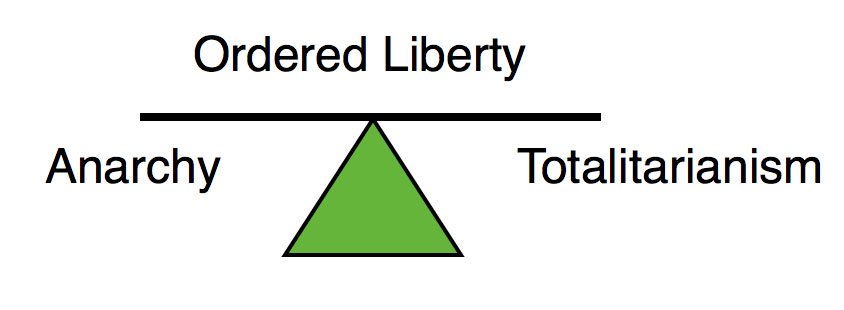
“No system of ordered liberty can allow the Government to use the carrot of dismissing charges, or the stick of threatening to bring them again, to induce an elected official to support its policy objectives.”
This afternoon, Hagan Scotten, who was Danielle Sassoon’s colleague and second in command, has followed her out the door. Mr. Scotten took his law degree at Harvard, was a clerk to Brett Kavanaugh and to Chief Justice Roberts, and prosecuted the case against Eric Adams.
On the way out, Scotten took out his undated resignation letter and fired it off. It reads as follows:
BY EMAIL
Re: United States v. Eric Adams, 24 Cr. 556 (DEH)
Mr. Bove,
I have received correspondence indicating that I refused your order to move to dismiss the indictment against Eric Adams without prejudice, subject to certain conditions, including the express possibility of reinstatement of the indictment. That is not exactly correct. The U.S. Attorney, Danielle R. Sassoon, never asked me to file such a motion,and I therefore never had an opportunity to refuse. But I am entirely in agreement with her decision not to do so, for thereasons stated in her February 12, 2025 letter to the Attorney General.
In short, the first justification for the motion—that Damian Williams’s role in the case somehow tainted a validindictment supported by ample evidence, and pursued under four different U.S. attorneys—is so weak as to be transparently pretextual. The second justification is worse. No system of ordered liberty can allow the Government to use the carrot of dismissing charges, or the stick of threatening to bring them again, to induce an elected official to support its policy objectives.
There is a tradition in public service of resigning in a last-ditch effort to head off a serious mistake. Some will view the mistake you are committing here in the light of their generally negative views of the new Administration. I do not share those views. I can even understand how a Chief Executive whose background is in business and politics might see the contemplated dismissal-with-leverage as a good, if distasteful, deal. But any assistant U.S. attorneywould know that our laws and traditions do not allow using the prosecutorial power to influence other citizens, much less elected officials, in this way. If no lawyer within earshot of the President is willing to give him that advice, then I expect you will eventually find someone who is enough of a fool, or enough of a coward, to file your motion. But it was never going to be me.
Please consider this my resignation. It has been an honor to serve as a prosecutor in the Southern District of New York.
Yours truly, Hagan Scotten
Assistant United States Attorney Southern District ofNew York
Take This Job and Shove It
Danielle Sassoon, Esq., a graduate of Harvard College and of Yale Law School, a former clerk for Justice Antonin Scalia, a continuing member in good standing of the Federalist Society, and—for a few weeks, following Trump’s inauguration—temporary chief federal prosecutor in Manhattan, has resigned. She took this action because she could not, in good conscience, obey her masters’ orders to go into court and ask for dismissal of the criminal case against Eric Adams, in circumstances where there was no proper legal basis for making such a request.
Her resignation letter of February 12, addressed to Attorney General Bondi, spends 7½ pages explaining the baselessness of the position she had been ordered to advocate to the courts. The letter concludes thusly,
I Cannot in Good Faith Request the Contemplated Dismissal
Because the law does not support a dismissal, and because I am confident that Adams has committed the crimes with which he is charged, I cannot agree to seek a dismissal driven by improper considerations. As Justice Robert Jackson explained, “the prosecutor at his best is one of the most beneficent forces in our society, when heacts from malice or other base motives, he is one of the worst.” The Federal Prosecutor, 24 J. Am. Jud. Soc’y 18 (“This authority has been granted by people who really wanted the right thing done—wanted crime eliminated—but also wanted the best in our American traditions preserved.”). I understand my duty as a prosecutor to mean enforcing the law impartially, and that includes prosecuting a validly returned indictment regardless whether its dismissal would be politically advantageous, to the defendant or to those who appointed me. A federal prosecutor “is the representative not of an ordinary party to a controversy, but of a sovereignty whose obligation to govern impartially is as compelling as its obligation to govern at all.” Berger v. United States, 295 U.S. 78, 88 (1935).
For the reasons explained above, I do not believe there are reasonable arguments in support of a Rule 48(a) motion to dismiss a case that is well supported by the evidence and the law. I understand that Mr. Bove disagrees,and I am mindful of your recent order reiterating prosecutors’ duty to make good-faith arguments in support of the Executive Branch’s positions. See Feb. 5, 2025 Mem. “General Policy Regarding Zealous Advocacy on Behalf of the United States.” But because I do not see any good-faith basis for the proposed position, I cannot make sucharguments consistent with my duty of candor. N.Y.R.P.C. 3.3; id. cmt. 2 (“A lawyer acting as an advocate in an adjudicative proceeding has an obligation to present the client’s case with persuasive force. Performance of thatduty while maintaining confidences of the client, however, is qualified by the advocate’s duty of candor to the tribunal.”).
In particular, the rationale given by Mr. Bove—an exchange between a criminal defendant and the Department of Justice akin to the Bout exchange with Russia—is, as explained above, a bargain that a prosecutor should not make. Moreover, dismissing without prejudice and with the express option of again indicting Adams in the future creates obvious ethical problems, by implicitly threatening future prosecution if Adams’s cooperation with enforcing the immigration laws proves unsatisfactory to the Department. See In re Christoff, 690 N.E.2d 1135 (Ind. 1997) (disciplining prosecutor for threatening to renew a dormant criminal investigation against a potentialcandidate for public office in order to dissuade the candidate from running); Bruce A. Green & Rebecca Roiphe, Who Should Police Politicization of the DOJ?, 35 Notre Dame J.L. Ethics & Pub. Pol’y671, 681 (2021) (noting that the Arizona Supreme Court disbarred the elected chief prosecutor of Maricopa County,Arizona, and his deputy, in part, for misusing their power to advance the chief prosecutor’s partisan political interests). Finally, given the highly generalized accusations of weaponization, weighed against the strength of theevidence against Adams, a court will likely question whether that basis is pretextual. See, e.g., United States v. Greater Blouse, Skirt & Neckwear Contractors, 228 F. Supp. 483, 487 (S.D.N.Y. 1964) (courts “should be satisfiedthat the reasons advanced for the proposed dismissal are substantial and the real grounds upon which the application is based”).
I remain baffled by the rushed and superficial process by which this decision was reached, in seemingcollaboration with Adams’s counsel and without my direct input on the ultimate stated rationales for dismissal. Mr. Bove admonished me to be mindful of my obligation to zealously defend the interests of the United States and to advance good-faith arguments on behalf of the Administration. I hope you share my view that soliciting andconsidering the concerns of the U.S. Attorney overseeing the case serves rather than hinders that goal, and that we can find time to meet.
In the event you are unwilling to meet or to reconsider the directive in light of the problems raised by Mr. Bove’s memo, I am prepared to offer my resignation. It has been, and continues to be, my honor to serve as a prosecutor in the Southern District of New York.
Very truly yours,
DANIELLE R. SASSOON
United States Attorney Southern District of NewYork
Actually, It’s Not Just Misunderstand and It’s Not Just Poor Strategery—It’s Magical Thinking

The two posts immediately below deal with Trump’s fundamental misunderstanding of how money and interest rates work. One quotes in full a Wall Street Journal Editorial Board piece published late yesterday. The other gives some context: it explains why the fact that these truths are now coming from the WSJ Editorial Board, not some other publication, is a man bites dog story, not a mere dog bites man piece of news.
This is correct as far as it goes, but it does not go far enough. There are all manner of things that I do not understand. But that does not mean that I engage in magical thinking. I do not fancy myself the God of Genesis 1—who just says things, and then they are so.
King Canute knew that he could not make the tide turn back just by telling the tide to turn back.
Trump thinks that King Canute was wrong.
We have elected someone with severe mental illness.
Those who voted for him are getting the president they richly deserve.
Trump’s Brain
The WSJ Editorial Board Tells Donald That He Doesn’t Know Shit From Shinola, and That His Approval Rating is About to Sink Like a Stone

The Wall Street Journal Editorial Board writes,
Trumponomics and Rising Inflation
The President calls for easier money even though consumer prices keep rising. Does he want even higher prices?
The Editorial BoardFeb. 12, 2025 at 5:33 pm
“Interest Rates should be lowered, something which would go hand in hand with upcoming Tariffs!!!” Mr. Trump posted on his social-media site. The layers of intellectual confusion here are hard to parse, especially since higher tariffs will mean higher prices on the affected goods. But perhaps the President wants the public to look elsewhere when assigning blame for rising prices.
Yet if he’s trying to blame the Federal Reserve, which controls short-term interest rates, he has the analysis backward. Rising inflation means the Fed must be more cautious in cutting rates. This is how financial markets read the news that the consumer-price index (CPI) rose 0.5% in January. Long bond rates rose sharply, with the 10-year Treasury note popping to 4.63% from 4.53%. This reflects market worry over inflation.
The concern is warranted based on the trend in CPI, which has risen each month since a 0.2% increase in October. The 12-month increase in CPI is now back to 3%, up from a recent trough of 2.4% in September. So-called core prices, less food and energy, rose 0.4% for the month and are now up 3.3% over the last 12 months.
The price increases were broad-based, hitting insurance, used cars and trucks, airline fares, medical care, haircuts, day care, sporting events, cable television, and more.
Mr. Trump isn’t responsible for this after only three weeks in office. But someone should tell him that the mistake goes back to the Fed’s premature interest-rate cut of 50 basis points in September. Long bond rates shot up immediately and have stayed higher, but the Fed still cut another 25 points in November.
Fed Chair Jerome Powell seems to recognize that mistake because he has been saying for weeks that the central bank is in no rush to cut further. The last thing Mr. Trump should be doing now is demanding that Mr. Powell cut rates further and faster—unless the President wants inflation to resume its Biden-era climb.
The Powell Fed is likely to ignore Mr. Trump, and well it should. But the President’s demand illustrates another risk of Trumponomics. As a real-estate investor, Mr. Trump has long been an easy-money guy. He likes low rates and a weak dollar, which could lead to higher prices, all other things being equal.
As a political matter, an inflation revival may be the biggest threat to the Trump Presidency. Mr. Trump was elected as voters reacted to inflation and falling real incomes under Joe Biden. Real average earnings are flat over the last three months as inflation has bounced up. If this persists, Mr. Trump won’t have a 53% job approval rating for long.
“The Mirage That Led Democrats Astray in 2024”

Distracted and heart sick as we are by the shit show that is the second Trump presidency, we must remember that we lost the election because of immigration and the border, and, more importantly because of the misery of the working class. Misery to which affluent center-left people like me were blind. Misery that was ruthlessly exploited by the MAGA noise machine.
For a deep dive, please check out Eugene Ludwig, Voters Were Right About the Economy. The Data Was Wrong. Here’s why unemployment is higher, wages are lower and growth less robust than government statistics suggest (Politico, Feb. 11, 2025).
Mr. Ludwig writes,
What we uncovered shocked us. The bottom line is that, for 20 years or more, including the months prior to the election, voter perception was more reflective of reality than the incumbent statistics. Our research revealed that the data collected by the various agencies is largely accurate. Moreover, the people staffing those agencies are talented and well-intentioned. But the filters used to compute the headline statistics are flawed. As a result, they paint a much rosier picture of reality than bears out on the ground.
Take, as a particularly egregious example, what is perhaps the most widely reported economic indicator: unemployment. Known to experts as the U-3, the number misleads in several ways. First, it counts as employed the millions of people who are unwillingly under-employed — that is, people who, for example, work only a few hours each week while searching for a full-time job. Second, it does not take into account many Americans who have been so discouraged that they are no longer trying to get a job. Finally, the prevailing statistic does not account for the meagerness of any individual’s income. Thus you could be homeless on the streets, making an intermittent income and functionally incapable of keeping your family fed, and the government would still count you as “employed.”
I don’t believe those who went into this past election taking pride in the unemployment numbers understood that the near-record low unemployment figures — the figure was a mere 4.2 percent in November — counted homeless people doing occasional work as “employed.” But the implications are powerful. If you filter the statistic to include as unemployed people who can’t find anything but part-time work or who make a poverty wage (roughly $25,000), the percentage is actually 23.7 percent. In other words, nearly one of every four workers is functionally unemployed in America today — hardly something to celebrate.
Ludwig goes on to analyze the flaws in other indicia, including earnings averages, inflation measures. “The resources required simply to maintain the same working class lifestyle over the last two decades,” he writes, “have risen much more dramatically than we’ve been led to believe.” Moreover,
the aggregate measure of GDP has hidden the reality that a more modest societal split has grown into an economic chasm. Since 2013, Americans with bachelor’s or more advanced degrees have, in the aggregate, seen their material well-being improve — by the Federal Reserve’s estimate, an additional tenth of adults have risen to comfort. Those without high school degrees, by contrast, have seen no real improvement. And geographic disparities have widened along similar lines, with places ranging from San Francisco to Boston seeing big jumps in income and prosperity, but places ranging from Youngstown, Ohio, to Port Arthur, Texas, falling further behind. The crucial point, even before digging into the nuances, is clear: America’s GDP has grown, and yet we remain largely blind to these disparities.
Take all of these statistical discrepancies together. What we have here is a collection of economic indicators that all point in the same misleading direction. They all shroud the reality faced by middle- and lower-income households. The problem isn’t that some Americans didn’t come out ahead after four years of Bidenomics. Some did. It’s that, for the most part, those living in more modest circumstances have endured at least 20 years of setbacks, and the last four years did not turn things around enough for the lower 60 percent of American income earners. …
In an age where faith in institutions of all sorts is in free fall, Americans are perpetually told, per a classic quote from former Sen. Daniel Patrick Moynihan, that while we may be entitled to our own opinions, we aren’t entitled to our own facts. That should be right, at least in the realm of economics. But the reality is that, if the prevailing indicators remain misleading, the facts don’t apply. We have it in our grasp to cut through the mirage that led Democrats astray in 2024. The question now is whether we will correct course.
“The American Bar Association Supports the Rule of Law”

A Statement by the President of the ABA: Every Lawyer’s Duty
It has been three weeks since Inauguration Day. Most Americans recognize that newly elected leaders bring change. That is expected. But most Americans also expect that changes will take place in accordance with the rule of law and in an orderly manner that respects the lives of affected individuals and the work they have been asked to perform.
Instead, we see wide-scale affronts to the rule of law itself, such as attacks on constitutionally protected birthright citizenship, the dismantling of USAID and the attempts to criminalize those who support lawful programs to eliminate bias and enhance diversity.
We have seen attempts at wholesale dismantling of departments and entities created by Congress without seeking the required congressional approval to change the law. There are efforts to dismiss employees with little regard for the law and protections they merit, and social media announcements that disparage and appear to be motivated by a desire to inflame without any stated factual basis. This is chaotic. It may appeal to a few. But it is wrong. And most Americans recognize it is wrong. It is also contrary to the rule of law.
The American Bar Association supports the rule of law. That means holding governments, including our own, accountable under law. We stand for a legal process that is orderly and fair. We have consistently urged the administrations of both parties to adhere to the rule of law. We stand in that familiar place again today. And we do not stand alone. Our courts stand for the rule of law as well.
Just last week, in rejecting citizenship challenges, the U.S. District Judge John Coughenour said that the rule of law is, according to this administration, something to navigate around or simply ignore. “Nevertheless,” he said, “in this courtroom and under my watch, the rule of law is a bright beacon which I intend to follow.” He is correct. The rule of law is a bright beacon for our country.
In the last 21 days, more than a dozen lawsuits have been filed alleging that the administration’s actions violate the rule of law and are contrary to the Constitution or laws of the United States. The list grows longer every day.
These actions have forced affected parties to seek relief in the courts, which stand as a bulwark against these violations. We support our courts who are treating these cases with the urgency they require. Americans know there is a right way and a wrong way to proceed. What is being done is not the right way to pursue the change that is sought in our system of government.
These actions do not make America stronger. They make us weaker. Many Americans are rightly concerned about how leaders who are elected, confirmed or appointed are proceeding to make changes. The goals of eliminating departments and entire functions do not justify the means when the means are not in accordance with the law. Americans expect better. Even among those who want change, no one wants their neighbor or their family to be treated this way. Yet that is exactly what is happening.
These actions have real-world consequences. Recently hired employees fear they will lose their jobs because of some matter they were assigned to in the Justice Department or some training they attended in their agency. USAID employees assigned to build programs that benefit foreign countries are being doxed, harassed with name-calling and receiving conflicting information about their employment status. These stories should concern all Americans because they are our family members, neighbors and friends. No American can be proud of a government that carries out change in this way. Neither can these actions be rationalized by discussion of past grievances or appeals to efficiency. Everything can be more efficient, but adherence to the rule of law is paramount. We must be cognizant of the harm being done by these methods. No American can be proud of a government that carries out change in this way. Neither can these actions be rationalized by discussion of past grievances or appeals to efficiency. Everything can be more efficient, but adherence to the rule of law is paramount. We must be cognizant of the harm being done by these methods.
These stories should concern all Americans because they are our family members, neighbors and friends. No American can be proud of a government that carries out change in this way.
Moreover, refusing to spend money appropriated by Congress under the euphemism of a pause is a violation of the rule of law and suggests that the executive branch can overrule the other two co-equal branches of government. This is contrary to the constitutional framework and not the way our democracy works. The money appropriated by Congress must be spent in accordance with what Congress has said. It cannot be changed or paused because a newly elected administration desires it. Our elected representatives know this. The lawyers of this country know this. It must stop.
There is much that Americans disagree on, but all of us expect our government to follow the rule of law, protect due process and treat individuals in a way that we would treat others in our homes and workplaces. The ABA does not oppose any administration. Instead, we remain steadfast in our support for the rule of law.
We call upon our elected representatives to stand with us and to insist upon adherence to the rule of law and the legal processes and procedures that ensure orderly change. The administration cannot choose which law it will follow or ignore. These are not partisan or political issues. These are rule of law and process issues. We cannot afford to remain silent. We must stand up for the values we hold dear. The ABA will do its part and act to protect the rule of law.
We urge every attorney to join us and insist that our government, a government of the people, follow the law. It is part of the oath we took when we became lawyers. Whatever your political party or your views, change must be made in the right way. Americans expect no less.
 Facing MAGA