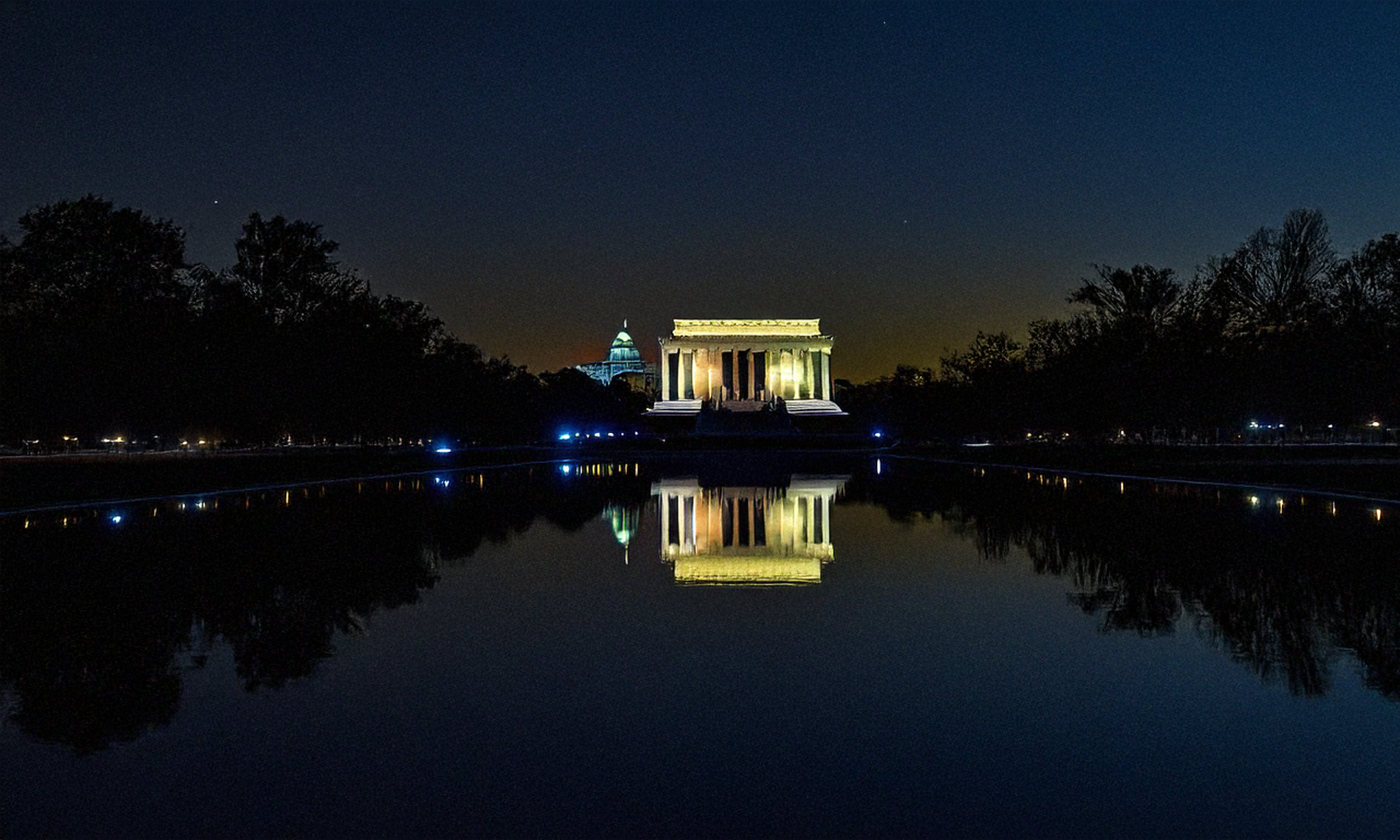
Thanks to Susan, who called the speech profound and thought provoking. She is right. Every sentence is chock full of wisdom.
The Eternal Truth of Gandhi and Martin Luther King, Jr.: The Power of Responding to Violence with Non-Violence
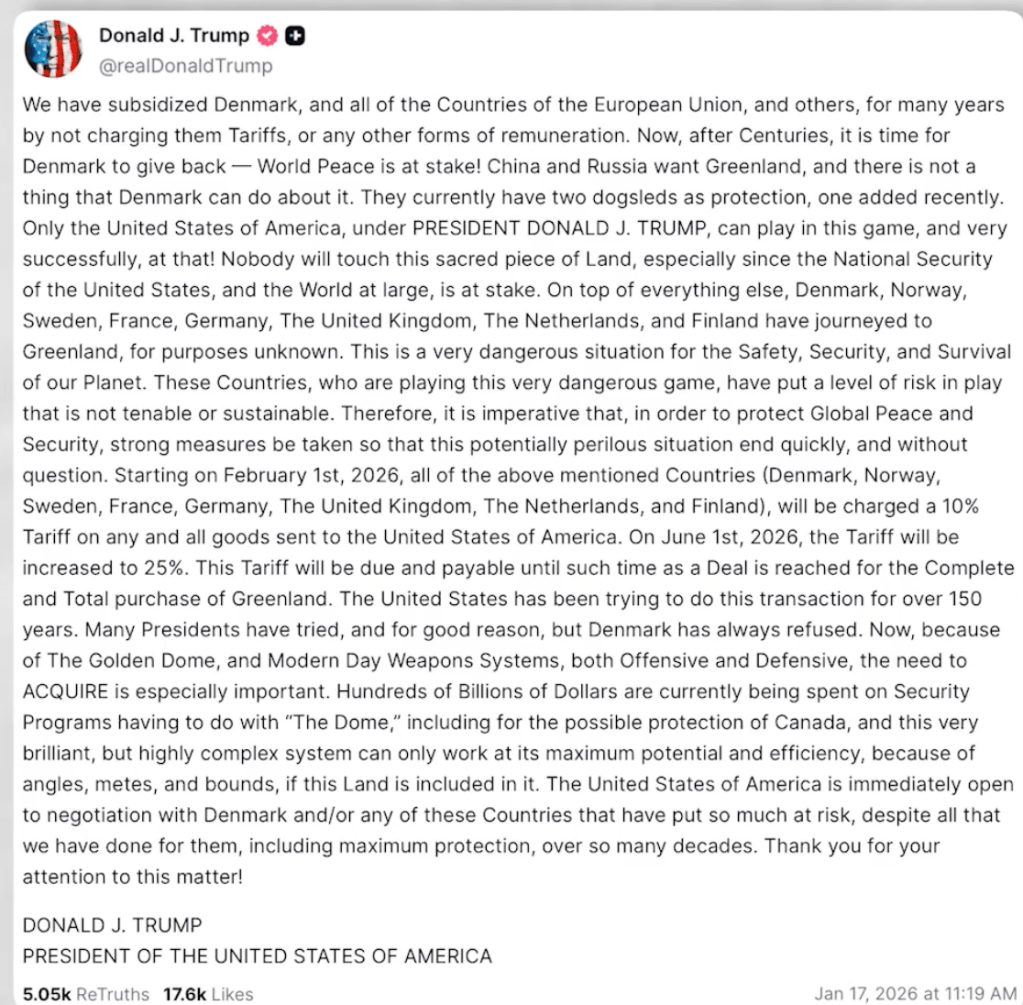
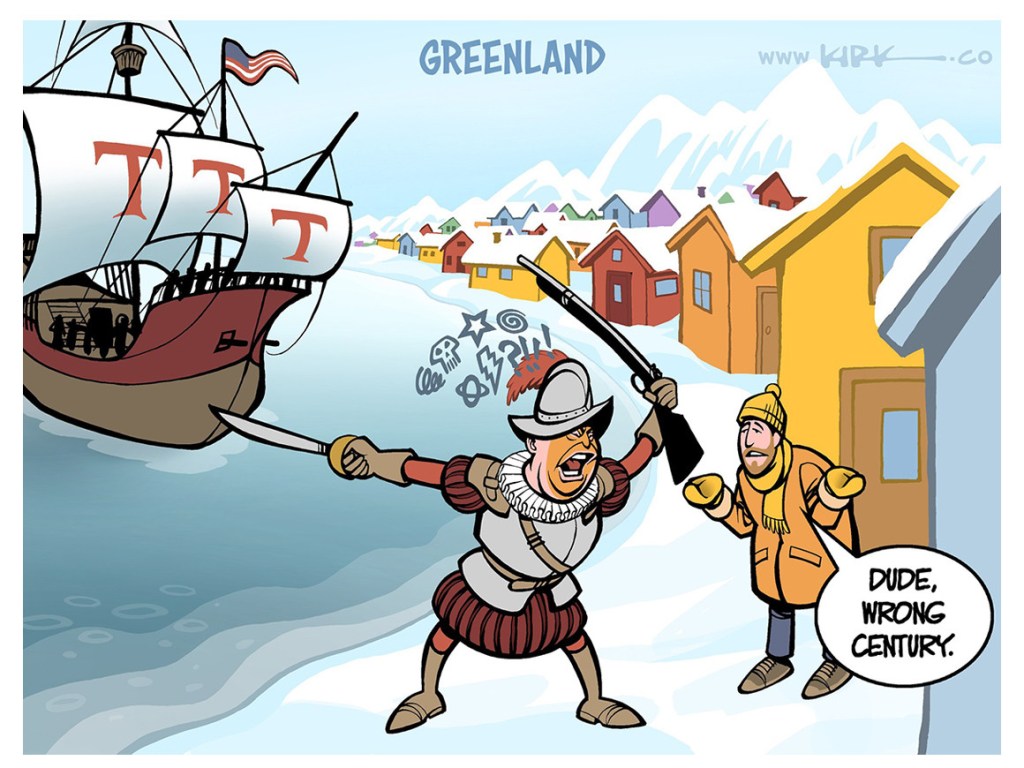
Wrong Century, Dude!
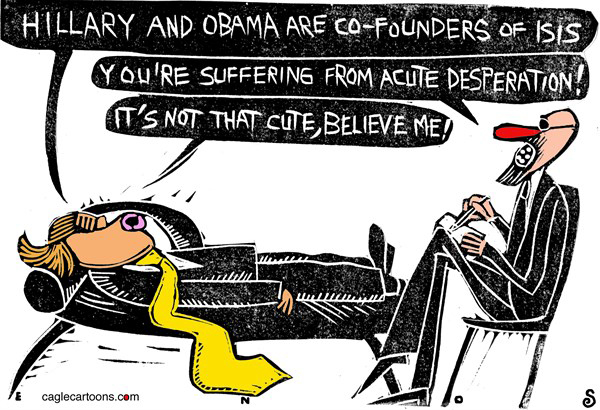
“I Smell, On the Other Hand, a Stench of Desperation”
Today, Jamelle Bouie, N.Y. Times opinion columnist, compares the Trump occupation of Minneapolis to the British occupation of Boston in the 1770’s. His concluding observations resonate with me:
One way to read the occupation of Minnesota is as a flex — a demonstration of the government’s power and authority. That, perhaps, is how Miller and Kristi Noem see the situation. I smell, on the other hand, a stench of desperation, an attempt to do with force what they can’t accomplish through ordinary politics. Faced with an angry public but committed to a rigid agenda of nativist brutality, the president and his coterie of ideologues are playing the only move they seem to have: wanton violence and threats of further escalation. They think this will break their opposition.
But looking at the ironclad resolve of ordinary Minnesotans to protect their homes and defend their neighbors, I think the administration is more likely to break on their opposition and learn, as the British did in Boston, that Americans are quite jealous of their liberties.
Waiting for the Supreme Court Decision on the Tariffs
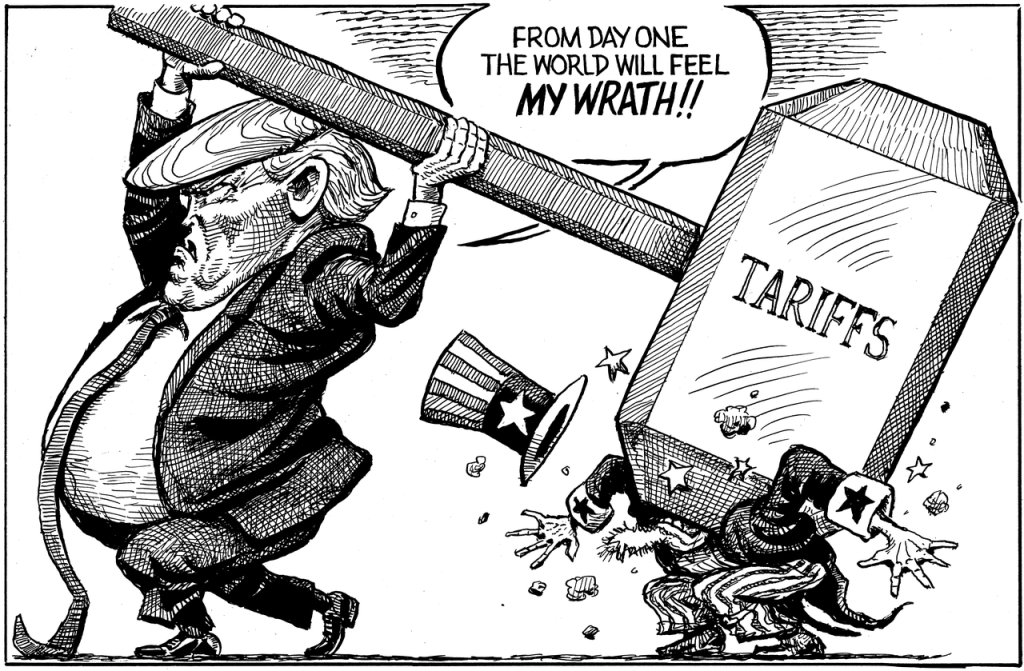
On November 5, the Court heard oral argument in Trump v. V.O.S. Selections (litigation sponsored by a libertarian foundation) and other cases challenging Trump’s attempted usurpation of tariff setting powers in purported reliance on the International Economic Emergency Powers Act. The decision should come soon. (There was a rumor that it would come yesterday, but that did not happen.
How to Predict the Outcome of a Case
For best results, you want to ask two big questions—one ruthlessly objective and the other relentlessly subjective.
Your first big question is, Which side should win the case? Gather the fact and take a rigorously objective view of them, study applicable legal principles, and ask how an intelligent, diligent, and utterly fair-minded court would apply the relevant principles to the relevant facts.
Your second big question is, Which side does the court want to win the case? Consider the judge’s (or judges’) political ideology, legal ideology, prior rulings, class interests, friends, and anything and everything else you know about the court’s leanings.
Obviously, if the party that should win the case is also the party that the court wants to win the case, then it’s easy to predict that that party is probably going to win the case.
What Factors Apply Here?
Here is how I see it.
1. This is a case of statutory interpretation. Pretty much all the traditional canons of statutory interpretation point toward the conclusion that Trump does not have the statutory power he claims to have.
2. Taking a textualist and originalist view of the matter, one reaches the same conclusion.
3. Prudential considerations go the same way: the tariffs are harming almost all segments of the economy.
4. Because the tariffs are creating broad economic harm, they are hurting Republicans politically, and will probably play an important role in the 2026 elections.
5. Trump will scream like a stuck pig when he loses the tariff cases, but, even if he doesn’t know it, a negative decision would tend to save him from his own misjudgment.
6. Liberals don’t like tariffs, and would applaud a decision against Trump.
6. Conservatives don’t like tariffs, and would applaud a decision against Trump.
Conclusion
A decision against Trump on the tariffs would be thoroughly unsurprising.
A decision the other way would mean that something very, very odd had happened.
On Fascism: Some Comments on MacWilliams and Goldberg
This follows up on the immediately preceding post. Some comments below.
1. What one key thing explains the rise of Trump? It’s a great question. I’ve been asking it for a decade, and so, very probably, have you.
In my opinion, this onion has a whole lot of layers, but if you’re looking to identify the essence of the matter, I think MacWilliams—he’s a political scientist at the University of Massachusetts—has as good an insight as any: (a) Always and everywhere, there are a goodly number of people with authoritarian tendencies. (b) Trump found a way to trigger these folks’ natural inclination toward authoritarianism. (c) The triggering process was greatly facilitated by the rise of the internet and of social media.
2. Some more layers to the onion, you said? Yes, I did say that. Here are some of them:
Point: with the rise of social media, a whole lot of our fellow citizens have detected a permission structure to joyfully embrace their inner asshole. One of these ways, but only one, is saying hello to the Nazi side of their personality.
Point: although I don’t believe either Goldberg or MacWilliams mentions racism by name, I think a large part of Trump’s attractiveness is the fact that he is both a stone cold racist and a wealthy celebrity. It gratifies his unwashed followers that a person of such wealth and celebrity will openly share their racism.
Point: I strongly suspect that, when a definitive history of our era is available, we’ll find it wasn’t just underlying racism, it wasn’t just the malign ability of one man to appear charismatic, and it wasn’t just the rise of social media as such. I think we’re going to find there was a whole lot of conscious, clever, compensated manipulation of social media by intelligent people in the pay of some of our economic overlords.
3. Always look on the bright side of life. Trump is not Machiavelli. His fundamental problem is that he believes a lot of his own bullshit—not all of it, but a whole lot of it, and a lot of it that is relevant to pursuing his fascist agenda. In consequence, he is forever misunderstanding key facts about the politico-economic environment. He lacks, moreover, the ability to gather, evaluate, and apply important information. He regularly fails to predict how key actors will respond to his lies, his bluster, his threats, and his bullshit. And when people do not respond as he might wish, his severely limited skill set handicaps him in reacting to an unfavorable situation. He cannot, for example, construct a rational argument or distinguish between a plausible lie and an implausible lie.
4. A lot of people think that things have changed in the past month. Are they right? Yes, I certainly think so. Michelle Goldberg identifies some key factors, and I agree with her.
Trump dimly perceives (a) that L’Affaire Epstein is a serious challenge to his continued popularity among the one third of the country who are his core supporters, and (b) that his standing with his own people is further threatened by the economic chaos caused by his policies on tariffs and immigration.
In response, Trump is trying both to appease and to distract the worst of his own supporters with military aggression, domestic and foreign. Because if the worst of the worst desert him, who will he have left?
5. What is the best advice for decent progressives? When your adversary is screwing himself, hold his beer, and let him get on with it.
We must oppose fascist aggression. And we must be mindful that Trump’s gross incompetence is helping him to dig his own political grave.
On Fascism
Michelle Goldberg (N.Y. Times), The Resistance Libs Were Right:
For the last decade there’s been a debate, among people who don’t like Donald Trump, about whether he’s a fascist.
The argument that he isn’t often hinges on two things. First, when Trump first came to power, he lacked a street-fighting force like Benito Mussolini’s Blackshirts, even if he was able to muster a violent rabble on Jan. 6. “Trump didn’t proceed to unleash an army of paramilitary supporters in an American Kristallnacht or take dramatic action to remake the American state in his image,” wrote the leftists Daniel Bessner and Ben Burgis in “Did It Happen Here?,” a 2024 anthology examining the fascism question.
Second, Trump didn’t pursue campaigns of imperial expansion, which some scholars view as intrinsic to fascism. “For all of Trump’s hostility towards countries he perceives as enemies of the U.S., notably Iran, there is no indication that he sought a war with any foreign power, still less that he has been consumed by a desire for foreign conquest and the creation of an American empire,” wrote Richard J. Evans in his 2021 essay “Why Trump Isn’t a Fascist.”
It’s striking how much the arguments that Trump is not a fascist have suffered in just the first few days of this year, in which we’ve plunged to new depths of national madness.
Now that America has plucked the dictator Nicolás Maduro from power in Venezuela and announced that it would help itself to the country’s oil, other nations are adjusting to a reality in which we’re more predator than ally. European countries are contemplating stepping up their military presence in Greenland to protect it from the United States. An Economist headline proclaims, “Canada’s Armed Forces Are Planning for Threats From America.”
In the Midwest, Trump’s paramilitary forces killed a citizen in Minneapolis and now appear to be using her death to threaten other activists, barking at one observer, “You did not learn from what just happened?” Videos from the city show gun-toting men in masks and camouflage descending on people to demand proof of citizenship, pelting crowded streets with tear gas and sometimes attacking those who film them. Meanwhile, a new ICE recruiting ad declares, “We’ll Have Our Home Again,” which just happens to be part of the refrain of a white nationalist anthem.
Both ICE’s occupation of Minneapolis and Trump’s threatened seizure of Greenland are part of the same story: An increasingly unpopular regime is rapidly radicalizing and testing how far it can go down the road toward autocracy. If anyone had predicted back in 2024 precisely what Trump’s return to the White House was going to look like, I suspect they’d have been accused of suffering from Trump Derangement Syndrome. But the shrillest of Resistance libs have always understood Trump better than those who make a show of their dispassion. As the heterodox writer Leighton Woodhouse put it on X, “The hysterical pussy hats were right.”
Of course they were. From the moment he descended his golden escalator, Trump’s message, the emotional core of his movement, has been textbook fascism. In his 2004 book “The Anatomy of Fascism,” the eminent historian Robert O. Paxton described the “mobilizing passions” that form fascism’s foundation. Among them are a “sense of overwhelming crisis” that renders traditional solutions obsolete; a belief that one’s own group has been victimized, justifying almost any action in redress; “dread of the group’s decline under the corrosive effects of individualistic liberalism, class conflict and alien influences”; and the need for a strong male leader with instincts more powerful than mere “abstract and universal reason.”
The premonitions of our current regime in Paxton’s work don’t stop there. Fascism, in his telling, is marked by its contradictory attitude toward modernity: a hatred of atomized urban life combined with a fetish for technology. Fascist movements “exploited the protests of the victims of rapid industrialization and globalization,” he wrote, though in power, they doubled down on industrial concentration. And, of course, fascists “need a demonized enemy against which to mobilize followers.”
If Trump didn’t always act on his most fascistic predilections in his first term, it was because he was restrained by the establishment types around him. Mark Esper, Trump’s former defense secretary, said that Trump repeatedly broached the idea of bombing Mexico. In 2019, Trump canceled a meeting with Prime Minister Mette Frederiksen of Denmark after she refused to entertain the idea of selling him Greenland. His taste for violence against his political enemies has never been secret, and was made clearest on Jan. 6, the event that led a once-doubtful Paxton to conclude that the word “fascist” applied to Trump.
None of this means that America is destined to become a fully fascist country. For now, we are trapped in the space between the liberal democracy most Americans grew up in and the dark, belligerent authoritarian state that our government seeks to impose. The important thing isn’t really the name we give to this political development, but our ability to see what’s happening clearly and make sense of its likely trajectory.
On the last page of “The Anatomy of Fascism,” Paxton offers a warning. “We know from tracing its path that fascism does not require a spectacular ‘march’ on some capital to take root,” he writes. “Seemingly anodyne decisions to tolerate lawless treatment of national ‘enemies’ is enough.”
The Bad News and the Good News

Wise Words from Heather Cox Richardson
Dr. Richardson is a prominent historian and professor at Boston College.
I think the whole video is worth watching, even if you are generally aware of what’s going on in this country. Some of the relevant points:
First Minute: HCR puts some of Trump’s outrageousness in historical context, in light of a Republican intellectual triumphalism—“We’re right and, guess what, you’re wrong!” We saw a lot of that beginning with Reagan’s election. I remember it well.
Third Minute: She doesn’t use the phrase, but others rightly call it “herrenvolk democracy”: any Democratic victory is inherently illegitimate.
Sixth Minute: A concerted effort to destroy rules-based order.
Eighth Minute: He thinks only people like himself should be in power.
Ninth Minute: He’s no compos mentis. It appears they’re giving him psychiatric drugs. It’s a behind-the-scenes effort to control him.
Eleventh Minute: No, J.D. Vance would not be worse.
Twelfth Minute: It’s extremely difficult to tell what’s happening in this Administration.
Fourteenth Minute: What appears to have just happened in Venezuela.
End of Seventeenth Minute: A work of genius by the Venezuelan regime and its allies.
As historians know, invasion of your country greatly helps to unify your people.
Nineteenth Minute: Trump’s oil fantasy.
Twenty-first Minute: Shrinkage from a global power to a regional power. Jettisoning the benefits of the rules-based international order.
Twenty-third Minute: Greenland.
Twenty-fourth Minute: A fundamental misunderstanding of the nature of American power.
Twenty-sixth Minute: Russia gets Ukraine, we get Venezuela. Sort of like the eve of World War I, but this time with nuclear weapons.
Twenty-seventh Minute: Oil is the technology of the past. The future lies in semi-conductors. We’re giving Xi permission to take over Taiwan—which makes 60% of the world’s semi-conductors. And Trump doesn’t understand this.
Twenty-eighth Minute: Destruction of the rules-based international order. A demented president, no longer operating in reality. Magical thinking is a hallmark of this moment.
Twenty-ninth Minute: Don’t follow grandpa down this road. Time to speak up.
Facing the New Year. Facing MAGA. David Brooks is Good. Michelle Goldberg is Better.
Michelle Goldberg (N.Y. Times), Trump Is Getting Weaker, and the Resistance Is Getting Stronger:
It has been a gruesome year for those who see Donald Trump’s kakistocracy clearly. He returned to office newly emboldened, surrounded by obsequious tech barons, seemingly in command of not just the country but also the zeitgeist. Since then, it’s been a parade of nightmares — armed men in balaclavas on the streets, migrants sent to a torture prison in El Salvador, corruption on a scale undreamed of by even the gaudiest third-world dictators and the shocking capitulation by many leaders in business, law, media and academia. Trying to wrap one’s mind around the scale of civic destruction wrought in just 11 months stretches the limits of the imagination, like conceptualizing light-years or black holes.
And yet, as 2025 limps toward its end, there are reasons to be hopeful.
That’s because of millions of people throughout the country who have refused to surrender to this administration’s bullying. When Trump began his second term, conventional wisdom held that the resistance was moribund. If that was ever true, it’s certainly not anymore. This year has seen some of the largest street protests in American history. Amanda Litman, a founder of Run for Something, a group that trains young progressives to seek local office, told me that since the 2024 election, it has seen more sign-ups than in all of Trump’s first four years. Just this month, the Republican-dominated legislature in Indiana, urged on by voters, rebelled against MAGA efforts to intimidate them and refused to redraw their congressional maps to eliminate Democratic-leaning districts.
While Trump “has been able to do extraordinary damage that will have generational effects, he has not successfully consolidated power,” said Leah Greenberg, a founder of the resistance group Indivisible. “That has been staved off, and it has been staved off not, frankly, due to the efforts of pretty much anyone in elite institutions or political leadership but due to the efforts of regular people declining to go along with fascism.”
In retrospect, it’s possible to see several pivot points. One of the first was a Wisconsin Supreme Court race in April. Elon Musk, then still running rampant at the so-called Department of Government Efficiency, declared the contest critical and poured more than $20 million into the race. Voters turned out in droves, and the Musk-backed conservative candidate lost by more than 10 points. Humiliated, Musk began to withdraw from electoral politics, at one point breaking with Trump. The tight bond between the world’s richest man and the most powerful one was eroded.
In June, Trump’s military parade, meant as a display of dominance, was a flop, and simultaneous No Kings protests all over the country were huge and energetic. A few months later, Charlie Kirk was assassinated, a tragedy that the administration sought to exploit to silence its opponents. When the late-night comedian Jimmy Kimmel made a distasteful comment on ABC that seemed to blame the right for Kirk’s killing, Disney, the network’s parent company, gave in to pressure to take Kimmel off the air. It was a perilous moment for free speech; suddenly America was becoming the kind of country in which regime critics are forced off television. But then came a wave of cancellations of Disney+ and the Disney-owned Hulu service, as well as a celebrity boycott, and Disney gave Kimmel his show back.
Trump has thoroughly corrupted the Justice Department, but its selective prosecutions of his foes have been thwarted by judges and, more strikingly, by grand juries. Two grand juries refused to indict Letitia James, New York’s attorney general, whom the administration has accused of mortgage fraud, with no credible evidence. After Sean Dunn, a Justice Department paralegal, tossed a sandwich at a Customs and Border Protection officer during a protest in Washington, the administration sent a team of agents in riot gear to arrest him. But grand jurors refused to indict him on a felony charge. Dunn was eventually charged with a misdemeanor, only to be acquitted by a jury. Jeanine Pirro, the former Fox News personality whom Trump made U.S. attorney in Washington, tried three times to secure a federal indictment for assault against a protester who struggled while being pushed against a wall by an immigration agent. Three times, grand juries refused.
Granted, all these grand juries were in liberal jurisdictions, but their rejections of prosecutors’ claims are still striking, since indictments are usually notoriously easy to secure. “I think you’re seeing reinvigorated grand jury processes,” said Ian Bassin, a founder of the legal and advocacy group Protect Democracy. “Nobody actually knows what’s going on in those grand juries, but the outcome of them seems to suggest that people are actually holding the government’s feet to the fire and being unwilling to simply be a rubber stamp.”
Trump ends the year weak and unpopular, his coalition dispirited and riven by infighting. Democrats dominated in the November elections. During Joe Biden’s administration, far-right victories in school board races were an early indication of the cultural backlash that would carry Trump to office. Now, however, Democrats are flipping school board seats nationwide.
Much of the credit for the reinvigoration of the resistance belongs to Trump himself. Had he focused his deportation campaign on criminals or refrained from injuring the economy with haphazard tariffs while mocking concerns about affordability, he would probably have remained a more formidable figure. He’s still a supremely dangerous one, especially as he comes to feel increasingly cornered and aggrieved. After all, by the time you read this, we could well be at war with Venezuela, though no one in the administration has bothered to articulate a plausible rationale for the escalating conflict.
But it’s become, over the past year, easier to imagine the moment when his mystique finally evaporates, when few want to defend him anymore or admit that they ever did. “I think it’s going to be a rocky period, but I no longer think that Trump is going to pull an Orban and fundamentally consolidate authoritarian control of this country the way that it looked like he was going to do in March or April,” said Bassin, referring to Prime Minister Viktor Orban of Hungary. If Bassin is right, it will be because a critical mass of Americans refused to be either cowed or complicit.
 Facing MAGA