
Alito’s Dissent to the Midnight Order

Read it here.

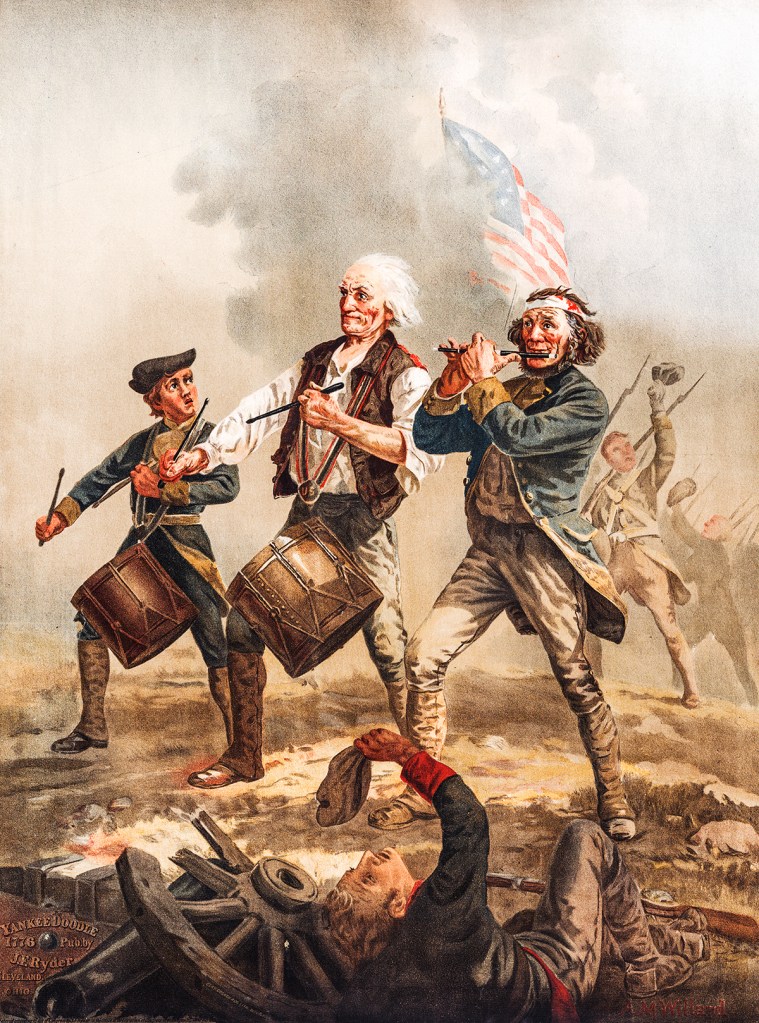
On April the 18th of 75—that would be 1775—Paul Revere took a midnight ride. Around midnight on April the 18th of 2025, seven justices of the Supreme Court issued an order. The order was addressed to His Most High Excellency, and it declared, in words or substance, “Yo! Numbnuts! Don’t deport no more undocumented aliens without due process! And, by the way, we’re telling you this at midnight on Good Friday, after unusual and truncated legal procedure, because we don’t trust your fat ass any further than we can throw your fat ass. And that ain’t very far. Have a nice day. Love and kisses, The Supreme Court.”

Justices Alito and Thomas dissented, and promised a written opinion. Two days later the written opinion has appeared over the transom. 

The First Question About the Dissent

Back on April 7, in Trump v. J.G.G., Justice Kavanagh wrote,

I agree with the Courts per curiam opinion. Importantly, as the Court stresses, the Court’s disagreement with the dissenters is not over whether the detainees receive judicial review of their transfers—all nine Members of the Court agree that judicial review of their transfers—all nine Members of the Court agree that judicial review is available. The only question is where that judicial review should occur. That venue question turns on … [yadda, yadda, yadda, yadda]. 

But was Justice Kavanagh telling the truth about the actual views of “all nine Members of the Court”? After all, Justices Alito and Thomas are—how to put this?—often idiosyncratic in their views. And their stated dissent to the Midnight Ruling left open the possibility that they might have dissented because they agreed with the Trump Administration on its dictatorial interpretation of the Alien Enemies Act.

The Answer to the First Question

Well, who knows what Alito and Thomas might do or say at some future time. But, as of this afternoon, we do know what they did not say. Their dissent offers no scintilla of support for Trump’s basic claim, or for any hint that Justice Kavanagh might have misdescribed their views of due process and judicial review. 

None. Zero. Not a smidgen. Not a soupçon. Bupkis. Rien. Nada. 

The Second Question About the Dissent

The second question is: What are we to glean from the fact that the Alito/Thomas dissent goes on, and on, and on, about how the Supreme Court’s Midnight Ruling is inconsistent with a whole variety of arcane rules of civil procedure?

The Answer to the Second Question

The answer is that seven justices do not Trump’s fat ass any further than they can throw Trump’s fat ass.

And they bloody well want him to know that they don’t trust his fat ass. 

And they want him to know that if he goes ahead and puts the next fifty Venzuelans on a plane for El Salvador, without notice and a hearing, then the long anticipated full blown constitutional crisis will be upon us. 

The Third Question About the Dissent

Well, then, why did Alito dissent?

The Answer to the Third Question

Alito writes, “ I refused to join the Court’s order because we had no good reason to think that, under the circumstances, issuing an order at midnight was necessary or appropriate.”

Translation? Not entirely clear, but one supposes that it wasn’t “appropriate” because it was in such tension with established procedural laws and precents—and it wasn’t “necessary” because, surely, Trump wasn’t going to play games and put those 50 guys on a plane before the Supreme Court could act.

Let me say that, if Justice Alito actually believes that Team Trump wasn’t trying to make a mockery of the Supreme Court, then I have a very nice bridge in Brooklyn that I am prepared to sell, at a very reasonable price.

The Dissent’s Addendum

The dissent ends thusly:

Both the Executive and the Judiciary have an obligation to follow the law. The Executive must proceed under the terms of our order in Trump v. J.G.G., 604 U.S. ___ (2025) (per curiam), and the Court should follow established procedures. 

And what, ladies and germs, is “our order in Trump v. J.G.G.”—the order that Justices Alito and Thomas so warmly embrace?

Why, it is, to quote the exact language of the Supreme Court decision, that detainees under the Alien Enemies Act “must receive notice … that they are subject to removal under the Act. The notice must be afforded within a reasonable time and in such a manner as will allow them to actually seek habeas relief in the proper venue before such removal occurs.”
If a Critical Mass of Americans Wake Up, Then the Supreme Court’s Stand Will be Indispensable to Justice

David French (N.Y. Times), The Supreme Court Can’t Save America, but Here’s What It Can Do

Mr. French writes,

Millions of Americans are desperate for a quick and effective response to Trump’s attacks on the Constitution. But the election foreclosed that possibility. The courts — even if they have the courage — lack the power to save America.

In this moment, think of the courts as a rear guard, capable of delaying constitutional collapse until the American people finally understand that the life and health of the Constitution is up to them. If they keep electing men like Trump or sycophants like those in his Congress of cowards, then we’ll lose our Republic.

But if a critical mass of Americans do wake up, then the court’s stand will be indispensable to justice and — critically — accountability. Every public official associated with Trump’s defiance of the courts (including his vice president, JD Vance) should be impeached, convicted and barred forever from holding public office.

I know that’s a fantastical vision in the present moment. In a closely divided country, impeachment and removal aren’t viable options, but supermajorities among Americans have existed before. The civil rights movement, empowered in part by the Supreme Court, attained a supermajority that changed America, and a movement to preserve the Constitution can be a supermajority again.

We can’t ask the Supreme Court to do more than it’s able to do, but it must do all that it can. The choices it will face may well be as stark as the choice between segregation and equality, or between internment and freedom.

The court’s past failures have destroyed lives and put our Republic in mortal danger. Its past courage has inspired revolutionary change. Unless Trump backs down, it will face the same choice the court faced in 1954 — yield in the face of enormous resistance or stand even when the politicians fail.

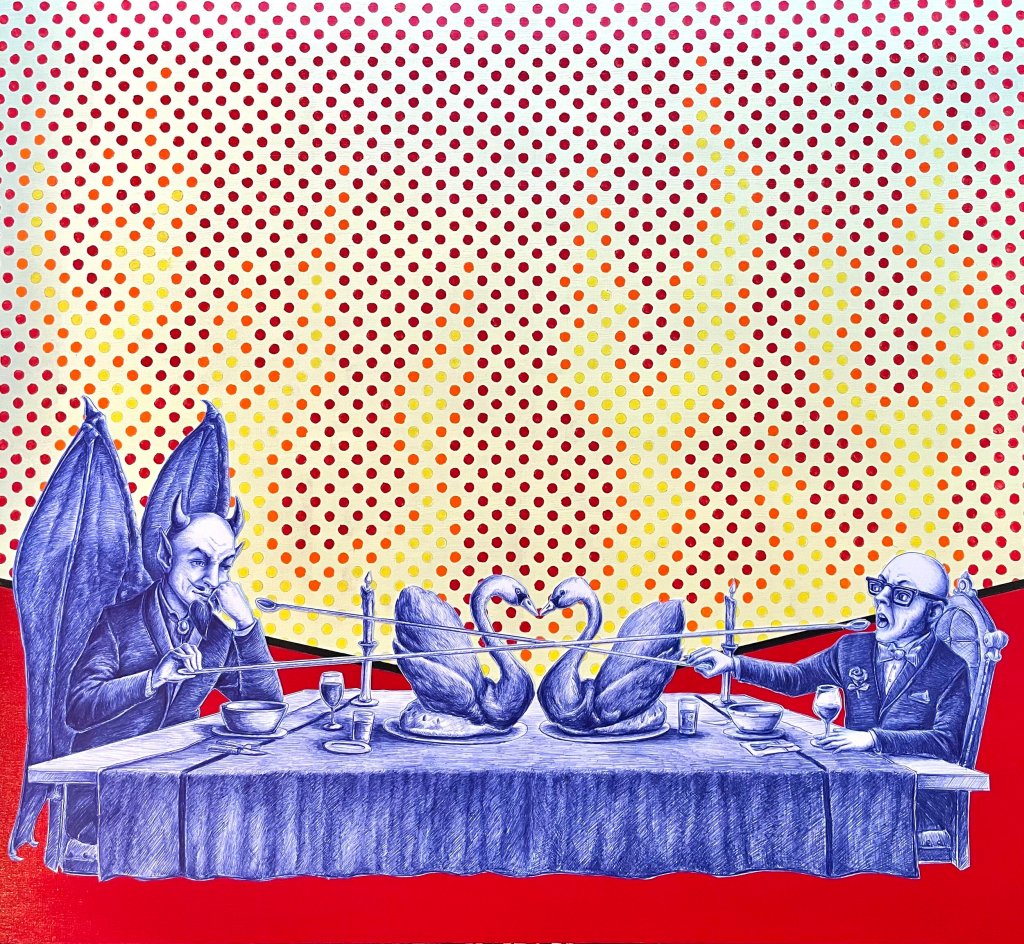
He Who Would Sup with the Devil Must Have a Long Spoon

Hey, Paul Weiss! Hey, Skadden! You CANNOT Do Business with Donald Trump!

N.Y. Times, Law Firms Made Deals with Trump. Now He Wants More From Them: To avoid retribution, big firms agreed to provide free legal services for uncontroversial causes. To the White House, that could mean negotiating trade deals—or even defending the president and his allies.

Not to mention defending Trump’s multiple constitutional violations—once the Justice Department has run through all its competent attorneys and the rest have been found in contempt of court.

Hey, Paul, Weiss! Hey, Skadden!

Y’all think y’all are gonna be able to keep on recruiting the cream of the crop from among law school graduates? To do what? To go work for Pam Bondi and be found in contempt of court? Maybe to be disbarred?

I don’t think so. 

As I have said before, I was a partner of New York law firms ranked in the #20 to #30 range or thereabouts. Not as rich as Paul Weiss or Skadden, but within spitting distance. 

And here’s something I learned. There are some bad people that you can do business with. And there are some bad people that you cannot do business with.

Some people you can buy, and they stay bought. Some people you can buy, but they don’t stay bought.

And Orange Mussolini is a bad person you cannot do business with.

Mainly because, in addition to being bad, he’s also crazy in the head.

Your “agreements” with Orange Mussolini are not legally enforceable, They do not even purport to be legally enforceable. And even if they did purport to be legally enforceable, they’re illusory. Their “terms” are ambiguous. And there was never a mutual manifestation of intent to abide by agreed on terms.

You have to repent of those deals. 

And why is that?

Because if you don’t repent of those deals, no one is going to come work for you.

And if competent young lawyers don’t come and work for you, then your business model is going to go up in smoke. 

And you can bend over and kiss your $20 million annual compensation goodbye.

A Letter from 876 Yale University Faculty: “We Stand Together at a Crossroads”

April 2025

Dear President McInnis, Provost Strobel, and Members of the Yale Board of Trustees:

We stand together at a crossroads. American universities are facing extraordinary attacks that threaten the bedrock principles of a democratic society, including rights of free expression, association, and academic freedom. We write as one faculty, to ask you to stand with us now. 

We urge you to:

  1. Defend the values and ideals of higher education, and Yale’s specific mission of “improving the world through outstanding research and scholarship, education, preservation, and practice.”
  2. Resist and legally challenge any unlawful demands that threaten academic freedom and university self-governance.
  3. Commit that no department, program, or structure of shared governance will be reorganized or eliminated in response to political threats.  
  4. Protect science and other research at Yale from funding cutoffs, by providing legal and financial support to affected scholars and research units, mobilizing extraordinary resources as necessary.
  5. Defend the rights to free speech on campus recognized in the Woodward Report, including by assisting community members at risk of government infringement on this right, whether through immigration action or other means.
  6. Work purposefully and proactively with other colleges and universities in collective defense.

We stand united, asking for your courageous leadership. We look forward to standing alongside you in this work.

Signed,

[Yale faculty of all ranks can sign this letter here.]

Matilda Moneybags and the Blessed Virgin

“Is it Possible That We Will Avoid a Recession?”

Just got off a Zoom with Matilda Moneybags, the head honcho at my financial advisory firm. Someone asked, “Is it possible that we’ll avoid a recession?”

“Yes, it is possible,” Matilda responded.

“But, on the other hand,” she added, “I’m a practicing Catholic, and I believe it’s possible that the Blessed Mother will appear in my living room this afternoon. And if that should happen, I would welcome her to my home.”

Those Were the Days!

Andy Kessler (Wall Street Journal), Trump’s Protectionist Blunder: The U.S. prospers atop a horizontal empire, not as a vertical island.

Mr. Kessler writes,

“Mister, we could use a man like Herbert Hoover again,” goes the “All in the Family” theme song. Donald Trump, who grew up 15 minutes from Archie Bunker, took it seriously. “We’re bringing wealth back to America,” says tariff-happy Mr. Trump. “That’s a big thing.” Those in the Trump administration with Wall Street experience should know better.

Mr. Trump’s America-first policy, as hallucinated by trade adviser Peter Navarro, is this: Make in America. Invest in America. Everything done by Americans. A self-sufficient, stand-alone country. 

It’s more of a political agenda than an economic one—more about protectionism and isolationism. Trade? Globalization? Increased living standards? How quaint. 

Look, I’m all for America on top, but America first isn’t how you get there. America first is a vertical model: Do everything. But vertical always fails. Vertical IBM made chips, wrote software, assembled computers and wrapped plastic around them. Vertical AT&T provided phones, wires and both local and long-distance calls. 

Fortunately, vertical gave way to horizontal: industries organized into layers of expertise, sorted by value added. Intel and Microsoft owned layers in a horizontal stack that made up personal computers, leveling IBM mainframes. The internet became a horizontal stack of routers, servers and applications, upending AT&T’s network. Even the artificial-intelligence revolution is horizontal—Silicon Valley’s OpenAI uses Nvidia chips made by Taiwan’s TSMCusing Dutch ASML’s equipment.

“Didn’t need no welfare state, everybody pulled his weight,” the theme song goes. Globalism and trade also became a horizontal model, with the U.S. sitting on top of what I call a horizontal empire, sorted by value added. Apple designs iPhones in California but assembles them lower down the stack in China—now shifting toward Vietnam and India—where living standards also increased.

Sadly, this horizontal model causes freak-outs over U.S. trade deficits. But who cares? Forget actual trade numbers. Focus on the margin of the products flowing cross-border. Apple has 34% operating margins. Foxconn, which assembles trade-deficit-boosting iPhones, has operating margins of 3%. Which would you prefer?

TVs, cars, clothes, toys and lumber that we import are all low-margin and usually labor-intensive businesses. We export high-margin software, financial services, drugs and AI applications, all intelligence-intensive businesses. I like to say, “we think, they sweat.” Meanwhile, Commerce Secretary Howard Lutnick says, “Human beings screwing in little screws to make iPhones, that kind of thing is going to come to America.” You first, Howard.

Getting horizontal got society wealthy. Economists note that trade deficits have a flip side of capital-account surpluses, money that gets invested in the U.S. to offset those trade deficits. But where are they in our economic statistics? Hard to find. Economists can count foreign money that bought Treasury bonds (so Americans don’t have to). But when capital flows into stocks—foreigners own 18% of our equities—the numbers get fuzzy. A net $1,000 buying Google shares can drive its value up $2,000, or $5,000. Google is worth more than $2 trillion, but $2 trillion in cash didn’t get invested—productivity drove its value up.

Mr. Bessent says, “Data is on our side.” Is it? We’ve run cumulative trade deficits since 1999 of $15.4 trillion. Meanwhile, U.S. equity values rose $45 trillion between 1999 and 2024 (both market peaks). U.S. household net worth at the end of 1999: $41 trillion. End of 2024: $160 trillion. Let’s run bigger trade deficits! As long as we keep the margin. Trade and productivity pay. No wonder the market is a yo-yo.

“Gee, our old LaSalle ran great,” the song concludes. So why would you ever want to go back to a vertical, isolationist model for the U.S., leading to higher-rate mortgages and expensive cars? A margin surplus means we let low-margin jobs move overseas and become a high-margin nation. Living standards rose across the globe. Smartphones and autos everywhere. Why go back?

Note to Trump yes-men: Low-wage jobs aren’t the American dream either. Populist protectionism, worsened by tariffs, has been shown to destroy more jobs than it creates. Even the lower-valued jobs that the Trump administration hopes will return may not exist. Most machine and metalworking shops now use programmable machine tools. Factory jobs will require proficiency in operating robots. Fixing education is critical.

“Boo hoo,” one can almost hear, “collapsing stocks only hurt the rich.” Yeah, but it also severely limits access to capital for U.S. companies to fund growth and create better jobs—let alone build new factories. Do we really want that? America can stay first only by sitting on top of a horizontal empire, not by reconstructing a retro isolated vertical island. Going backward is a meathead move. Stop trying to bring back the “All in the Family” nostalgia: “Those were the days!”

Trump’s Poll Trajectory: Down, Down, and Down

For CNN’s take on the new polls, go here.

On March 31, I posted a video from the Bulwark posing the question “Want to Beat Trump?” and responding to its own rhetorical question like this: “Get him to 32%.”

And why 32 percent? Because that’s a good estimate of the proportion of Americans who are hard core MAGA nutjobs. A lot of those folks will stay with him to the bitter end. After all, he’s God’s Anointed, n’est-ce pas?

But when you strip his support down to the MAGA nutjobs, you’re going to flip Congress. 

And the latest polls show that we are indeed well on our way toward stripping down his support to the hard core MAGA nutjobs. 

Kinda shows why he’s already thinking so hard about how to steal the 2026 election, doesn’t it?

Trump Versus Susman Godfrey: Some Further Thoughts

On Friday, I wrote about l’affaire Susman Godfrey. Here, I revise and extend—I hope not too much—my remarks. 

If you have a bet-your-company problem, and if that problem can be addressed through litigation, and if you have the money, then, in all likelihood, you will give serious consideration to the Susman Godfrey firm—and you’ll probably hire them. Such was the situation in which Dominion Voting Systems found itself, when it retained the Susman firm to sue Fox News for defamation over lies told about its voting machines in the 2020 election. As you probably know, the outcome was that Fox settled for $787.5 million. 

Wednesday, April 9, 2025

The Susman firm also represents Dominion in its suit against One America News Network, its related suit against Patrick Byrne, former CEO of Overstock.com, and its suit against Newsmax. In the latter case, on April 9 the district judge ruled that Newsmax made false and defamatory statements about Dominion and its voting machines; the “actual malice” issue remains to be decided, presumably by a jury, after detailed inquiry into the state of mind of the honchos at Newsmax who decided to publish the lies. The smart money is predicting that Newsmax, just like Fox News, is going to have to pay a ton of money. 

Also on Wednesday, April 9, a Couple of Hours After the Newsmax Defamation Decision

By pure coincidence, Mango Mussolini decided this would be a good day to denounce Susman Godfrey as a “rogue law firm,” chiefly for defending the results of the 2020 election and for being too zealous in representing the interests of Dominion Voting. Along with the denouncing, he also imposed the customary draconian penalties on the firm, its lawyers, and its clients. 

To provide some context for these developments, check out this article from the Washington Post: Trump’s order seeks to force states to buy costly new voting machines: The edict [issued on March 25] could hurl elections into tumult, though lawsuits challenging the order mean it probably won’t be implemented anytime soon.

The logical inference: Trump plans to steal the 2026 election, just like he tried to steal the 2020 election. His plan is to issue an impractical and unenforceable order that the states should throw away their existing voting machines and buy new ones. This he did last month. Then, when his side loses bigly in 2026, he’ll lie about the Dominion voting machines to excuse his loss. 

But, to advance the lie, he needs help from liars with big megaphones. Like Fox. Like Newsmax.

But even if the liars are perfectly OK with lying, they may be chastened by the fear of big losses in defamation suits.

Hence, in President Lizard Brain’s reasoning, the need to screw the lawyers who are successfully pursuing defamation claims.

Two Days Later, Friday, April 11

Two days later, the Susman firm, represented by Munger, Tolles & Olson LLP, filed a 65-page complaint laying out ten constitutional violations committed by Orange Jesus.

For some reason—I assume it’s because of all the nonsense that has happened this week—the press has by and large missed the filing of this complaint. (I just read an article in the New York Times that should have mentioned it, but did not.)

This Coming Week

It is to be expected that, like Perkins Coie, like Jenner & Block, and like WilmerHale, the Susman firm will ask for a temporary restraining order and preliminary injunction, a district judge will instantly agree, and the judge will issue yet another opinion strongly suggesting that Donald J. Trump should take a long walk off a short pier. 

I have three questions.

1. Who the Hell is Giving Trump Legal Advice About the Law Firms, and are They Actively Trying to Sabotage Trump’s Legal Position?

The wording of the Trumpian “fact sheet” and executive order—especially when considered together with the timing of the two events on April 9—is tantamount to Trump’s having prefaced his remarks with “THIS EXECUTIVE ORDER IS UNCONSTITUTIONAL AND ENTIRELY LEGALLY INDEFENSIBLE.”

2. Does Trump Think for a New York Second that the Supreme Court is Going to Buy This Garbage?

And, if not, what game does he think he’s playing?

Is he just delusional? Well, I don’t know. But he acts delusional. And he speaks in a delusional way. 

And if it walks like a duck and talks like a duck, it’s probably a duck.

3. How is the Susman Firm Going to Play its Hand?

Susman Godfrey can win its case without relitigating the 2020 election, without talking much about its client Dominion Voting, and without going into exactly which lies Fox and Newsmax told and why they told them.

That said, Trump has gone out of its way to make his quarrel with Susman Godfrey all about 2020. 

In 2020, Team Trump brought 62 lawsuits to challenge the election. The result? Team Trump lost every single one. Their record was zero to 62. 

Now Trump declares that he has the authority to execute a business for being on the winning side in some of those 62 cases. 

Might the plaintiff want to call Trump to testify at a deposition, or a trial, as to the factual basis for his contention that he actually won in 2020? (The case law is that presidents do not enjoy absolute immunity from being called to testify.) 

And if Trump does testify against the Susman firm, what are the chances that he will perjure himself?