Dumb and Dumber

Wall Street Journal Editorial Board, The Dumbest Trade War Fallout Begins: Canada and Mexico vow retaliation in response to Trump’s tariffs, amid new economic uncertainty

What Mango Mussolini Thinks He’s Doing—A Clever Way to Transfer Wealth from the Poor to the Rich

The WSJ doesn’t say it, so I will. As far as I can tell, Orange Jesus knows full well that tariffs are going to increase inflation, cost jobs, and hurt his supporters. But he thinks they are a complicated, and therefore clever, way to generate a shit load of revenue and thus finance tax cuts for the billionaires. 

As for the foreigners, Trump hates them all, but he particularly hates American allies. As the WSJ points out, Mexico and Canada will be hurt even more than his American supporters will be hurt. For Mango Mussolini, that’s a feature, not a bug.

Some Thoughts from the Wall Street Journal Editorial Board

Now back to the Wall Street Journal Editorial Board, which writes,

WILL THERE BE SOME PAIN? YES, MAYBE (AND MAYBE NOT!). BUT WE WILL MAKE AMERICA GREAT AGAIN, AND IT WILL ALL BE WORTH THE PRICE THAT MUST BE PAID,” Mr. Trump posted on Truth Social on Sunday morning. He also included a blast at these columns for leading the “Tariff Lobby” after our Saturday editorial called his 25% across-the-board tariffs on our friends and neighbors “the dumbest trade war in history.” 

We appreciate Mr. Trump’s attention, though we’re anti-tariff and not lobbyists. But bad policy has damaging consequences, whether or not Mr. Trump chooses to admit it. Mr. Trump can’t repeal the laws of economics any more than Joe Biden could on inflation. 

***

Tariffs are taxes, and when you tax something you get less of it. Who pays the tariff depends on the elasticity of supply and demand for the specific goods. But Mr. Trump wants American workers and employers to take one for the team. Hope you don’t lose your job or business before the golden age arrives.

The economic fallout began Saturday evening as Canada said it will retaliate with a 25% tariff on $30 billion (Canadian dollars) of U.S. goods, with another C$125 billion to follow in three weeks. Mexican President Claudia Sheinbaum also promised to retaliate.

Canada’s new border taxes will hit orange juice, whiskey and peanut butter—all from states with GOP Senators. Prime Minister Justin Trudeau said Ottawa’s tariff list would also include beer, wine, vegetables, perfume, clothing, shoes, household appliances, furniture and much more. He said Canada could also withhold critical minerals. 

Note that Canada’s Conservative opposition leader, Pierre Poilievre, also called for retaliation. Mr. Poilievre is the favorite to be the next Prime Minister and he rightly said the trade war will damage both countries. But he said Canada had to stand up for its “sovereignty” and protect its economic interests.

Mr. Trump’s tariffs are already roiling North America’s energy markets, which are highly integrated. The President implicitly recognized the risk by hitting Canada’s energy exports to the U.S. with a lower 10% tariff. But that will still hurt Midwestern refiners that rely on Canadian oil. Canada and Mexico could send more of their oil elsewhere for refining, perhaps even China. 

Canada’s expanded Trans Mountain pipeline runs from Alberta to the West Coast and has spare capacity. It could be used to increase tariff-free oil shipments to Asia that would hurt California refineries that now import oil from Trans Mountain. California could have to import more oil from the Middle East.

Mr. Trump says the tariffs will revive U.S. manufacturing. But Jay Timmons, CEO of the National Association of Manufacturers, said in a statement that “a 25% tariff on Canada and Mexico threatens to upend the very supply chains that have made U.S. manufacturing more competitive globally.” 

He added that, while his members understand the need to reduce fentanyl flows to the U.S., “the ripple effects will be severe, particularly for small and medium-sized manufacturers that lack the flexibility and capital to rapidly find alternative suppliers or absorb skyrocketing energy costs.” 

Many more trade groups have criticized the tariffs, including even U.S. aluminum makers who benefited from tariffs in the first term. Canada accounts for more than half of U.S. aluminum imports (owing to its cheap hydropower) that secondary and downstream manufacturers use. 

***

None of this means the Trump tariffs will tip the U.S. economy into recession. U.S. growth may be strong enough to absorb the blow from tariffs, as it was after Mr. Trump’s more modest levies in the first term. But the same can’t be said about Mexico and Canada, where growth is weak and which depend on U.S. markets for much of their GDP. 

The tariffs may also not cause a surge in the general U.S. price level. Overall inflation depends far more on the Federal Reserve’s monetary policy. But prices will increase for most tariffed goods, which will be painful enough. 

The tariff broadside also adds new policy risk and uncertainty that could dampen business animal spirits. Markets have been pricing in an assumption that Mr. Trump would step back from his most florid tariff threats, or limit tariffs to China.

The hammer blow to Mexico and Canada shows that no country or industry is safe. Mr. Trump believes tariffs aren’t merely useful as a diplomatic tool but are economically virtuous by themselves. This will cause friends and foes to recalibrate their dependence on America’s market, with consequences that are hard to predict. How this helps the U.S. isn’t apparent, so, yes, “dumbest trade war” sounds right, if it isn’t an understatement.

Canada Faces MAGA: Today’s Remarks by Prime Minister Justin Trudeau

Good evening. Today, the United States informed us they will be imposing a 25 per cent tariff on Canadian exports to the United States and 10 per cent on Canadian energy, a decision that, should they elect to proceed with, should take effect on Tuesday, Feb. 4.

Tonight, first I want to speak directly to Americans. Our closest friends and neighbors. This is a choice that, yes, will harm Canadians. But beyond that, it will have real consequences for you, the American people.

As I have consistently said, tariffs against Canada will put your jobs at risk, potentially shutting down American auto assembly plants and other manufacturing facilities. 

They will raise costs for you, including food at the grocery stores and gas at the pump. 

They will impede your access to an affordable supply of vital goods crucial for U.S. security, such as nickel, potash, uranium, steel and aluminum. 

They will violate the free trade agreement that the president and I, along with our Mexican partner, negotiated and signed a few years ago. But it doesn’t have to be this way.

As President John F. Kennedy said many years ago, geography has made us neighbors. History has made us friends, economics has made us partners and necessity has made us allies. 

That rang true for many decades prior to President Kennedy’s time in office, and in the decades since, from the beaches of Normandy to the mountains of the Korean Peninsula, from the fields of Flanders to the streets of Kandahar, we have fought and died alongside you during your darkest hours during the Iranian hostage crisis. Those 444 days, we worked around the clock from our embassy to get your innocent compatriots home.

During the summer of 2005, when Hurricane Katrina ravaged your great city of New Orleans, or mere weeks ago when we sent water bombers to tackle the wildfires in California. During the day, the world stood still,  Sept. 11, 2001, when we provided refuge to stranded passengers and planes. We were always there, standing with you, grieving with you. The American people. 

Together, we’ve built the most successful economic, military and security partnership the world has ever seen. A relationship that has been the envy of the world. 

Yes, we’ve had our differences in the past, but we’ve always found a way to get past them. As I’ve said before, if President Trump wants to usher in a new golden age for the United States, the better path is to partner with Canada, not to punish us.

Canada has critical minerals, reliable and affordable energy, stable democratic institutions, shared values and the natural resources you need. Canada has the ingredients necessary to build a booming and secure partnership for the North American economy, and we stand at the ready to work together. 

Let’s take a moment to talk about our shared border. Our border is already safe and secure, but there’s always, always more work to do. Less than one per cent of fentanyl, less than one per cent of illegal crossings into the United States come from Canada. 

But hearing concerns from both Canadians and Americans, including the American president himself, we’re taking action. We launched a $1.3 billion border plan that is already showing results, because we, too, are devastated by the scourge that is fentanyl, a drug that has torn apart communities and caused so much pain and torment for countless families across Canada, just like in the United States. 

A drug that we too want to see wiped from the face of this earth. A drug whose traffickers must be punished as neighbors, we must work collaboratively to fix this. 

Unfortunately, the actions taken today by the White House split us apart instead of bringing us together. 

Tonight, I am announcing Canada will be responding to the U.S. trade action with 25 per cent tariffs against a $155 billion worth of American goods. This will include immediate tariffs on $30 billion worth of goods as of Tuesday, followed by further tariffs on $125 billion worth of American products in 21 days time to allow Canadian companies and supply chains to seek to find alternatives.

ike the American tariffs, our response will also be far reaching and include everyday items such as American beer, wine and bourbon, fruits and fruit juices, including orange juice, along with vegetables, perfume, clothing and shoes. 

It’ll include major consumer products like household appliances, furniture and sports equipment, and materials like lumber and plastics, along with much, much more.

And as part of our response, we are considering with the provinces and territories, several non-tariff measures, including some relating to critical minerals, energy procurement and other partnerships. 

We will stand strong for Canada. We will stand strong to ensure our countries continue to be the best neighbors in the world. 

With all that said, I also want to speak directly to Canadians in this moment.

I’m sure many of you are anxious, but I want you to know we are all in this together. The Canadian government, Canadian businesses, Canadian organized labor, Canadian civil society, Canada’s premiers, and tens of millions of Canadians from coast to coast to coast are aligned and united. 

This is Team Canada at its best. 

 Geopolitically, Prime Minister, the 12th on the unique is 30 day is a rush only to see a linear storm.

And now is also the time to choose Canada.

It might mean doing all of these things or finding your own way to stand up for Canada. In this moment, we must pull together because we love this country. We pride ourselves on braving the cold during the long winter months. We don’t like to beat our chests, but we’re always out there waving the maple leaf loudly and proudly to celebrate an Olympic gold medal.

Canada is home to bountiful resources, breathtaking beauty, and a proud people who’ve come from every corner of the globe to forge a nation with a unique identity worth embracing and celebrating. We don’t pretend to be perfect, but Canada is the best country on earth. 

There’s nowhere else that I, in our 41 million strong family, would rather be. 

And we will get through this challenge just as we’ve done countless times before together.

Thank you. Merci. Vive le Canada!

Prof. Michael Sandel Explains What Trump’s Election Says About America

You know what they say: You can always tell a Harvard man—but you can’t tell him much. 

Michael Sandel, a political philosopher and the Anne T. and Robert M. Bass Professor of Government at Harvard, has a whole lot to say about the root causes of working class resentment in the United States. 

A Sense of Being Treated Unfairly Is Not the Same as “Zero Sum Thinking”

I want to take issue with one implication found in the Guardian piece quoted in my most recent post, Rage in the Rust Belt.

The author implies that the good folks in the Rust Belt are thinking in zero sum terms: if Blacks or Gays are getting some benefit, that must mean that good old working class white people like me are being deprived of that benefit. In other words, there’s only so much to go around, and if your tribe is getting more, that necessarily means my tribe is getting less.

Now, I am sure that a lot of working class white folks do feel exactly that way. And I am sure that Orange Jesus and his supporters and enablers have done everything they can to whip up such zero sum thinking. 

But … but … but …

As a matter of fact, and as a matter of logic, it’s entirely possible that you can legitimately complain of being “left behind” without thinking, fallaciously, that the reason you were “left behind” is that someone else got a benefit. 

In other words, resentful thinking—a sense that you’re being treated unfairly—is not the same thing as zero sum thinking. 

Zero sum thinkers are likely to be resentful, but not all resentful folks think in zero sum terms. 

Rage in the Rust Belt

The Guardian, ‘There are a lot of bitter people here, I’m one of them’: rust belt voters on why they backed Trump again despite his broken promises: Many in Youngstown, Ohio, believe the president-elect will tackle the town’s decline this time.

The Guardian writes,

The last time Donald Trump was president, he travelled to Youngstown, Ohio, among the most depressed of America’s rust belt cities, and promised voters the impossible.

The high-paying steel, railroad and car industry jobs that once made Youngstown a hard-living, hard-drinking blue collar boom town were coming back, he said. “Don’t move. Don’t sell your house,” he crowed to a rapturous crowd in 2017. “We’re going to fill up those factories – or rip ”em down and build brand new ones.”

None of that happened. Indeed, within 18 months, General Motors (GM) announced that it was suspending operations at its one remaining ­manufacturing plant outside Youngstown, throwing 5,000 jobs into jeopardy in a community with little else to cling to. Trump’s reaction was to say the closure didn’t matter, because the jobs would be replaced “in, like, two minutes”.

That, too, did not happen. People moved away, marriages broke down, depression soared and, locals say, a handful of people took their own lives.

Ordinarily, politicians who promise the moon and fail to deliver get punished at the ballot box. But that did not happen to Trump either. Instead, he has steadily built up his popularity in Youngstown, a city that was once a well-oiled Democratic party machine but has now turned into one of his most remarkable bases of working-class support.

“Does [Trump] understand at all what you’re going through?” Joe Biden asked Ohio voters during the 2020 presidential campaign, referring directly to the GM closure. “Does he see you where you are and where you want to be? Does he care?”

To which the answer, in Youngs­town, has been an astonishing and vigorous “yes”.

Trump might have lost to Biden overall that year, but he became the first Republican presidential candidate in almost half a century to win in Youngstown and surrounding Mahoning County. This past November, he extended his margin there to a decisive 13 points, giving so much cover to local Republican party candidates that they won a majority of county-wide offices for the first time in 90 years.

Anyone seeking to understand the earthquake that has shaken US politics – to the point where a convicted felonserial liar and twice-impeached former president can return to the White House in triumph, as Trump will do on 20 January – might learn a lot from the disillusioned working-class voters of northeast Ohio.

They tell blunt, profanity-laden stories of watching their city slump ever deeper into decline and express a real bleakness about the future. They see a political class corrupted by big-money donors who, they say, don’t care about communities like theirs. White voters point to conversations about justice – for racial minorities, for the children of immigrants, for women worried about losing their reproductive rights, for transgender teenagers – and question why nobody ever talks about justice for them.

Few expect Trump to fix everything or believe him when he says he will. What they do believe is that the system is broken and corrupt, just as Trump says it is, and that a candidate who promises to tear it down and start again might just be on to something. …

When Youngstown first sank into decline in the 1980s, voters turned to a populist congressman named Jim Traficant, a Democrat who had a Trump-like disregard for the ordinary rules of political decorum and was widely adored because he would stand up for his constituents in Washington and yell at his colleagues to stop ignoring them.

Traficant was also a crook, with long-standing ties to the Youngstown mob and a pattern of taking bribes and falsifying his taxes that eventually sent him to prison for seven years – but most of his working-class voters didn’t care. In their view, politics was corrupt and government authority fundamentally untrustworthy, but he at least was on their side. “We got the best politicians money can buy,” Joe the former railroad worker joked.

Now they see the same virtues – and the same flaws – in Trump. As Acierno explained: “The Democrats and the Republicans are all a den of crooks. Only one side lies about being crooks, and one doesn’t. If you’re going to be a crook, I’d rather know it than be lied to.”

Trump, in other words, comes across as someone who doesn’t pretend to be anything other than what he is, and that perceived authenticity counts for more with many Youngstown voters than his character flaws or even his policy ­positions. They’d rather have his gut instincts, ugly as they often are, over the carefully scripted messaging of a Democrat like Kamala Harris or even a mainstream Republican.

Tex Fischer, a Republican state representative who cut his teeth working on Mitt Romney’s doomed 2012 presidential campaign, said Trump had done the party a huge favour by ripping the old order apart because it chimed with voters’ anti-establishment instincts and gave them real hope for the change they thirst for.

“When Romney came to Youngs­town,” Fischer recalled, “he wore blue jeans and rolled up his sleeves, and nobody bought it. Trump doesn’t pretend – here he comes in his suit and tie and gold jewellery, and people respect that.”

Local Democrats don’t necessarily disagree. “American voters have a unique ability to smell bullshit, and they smell bullshit with the Democrats,” said Dave Betras, a former Democratic party county chair who believes his party’s brand has to be rebuilt from the ground up.

Betras said Trump’s success was a symptom of the Democrats’ failure to address the catastrophic impact of international trade agreements on manufacturing jobs in the US – a failure he pins on Bill Clinton and Barack Obama – and its further failure, under Obama, to take any meaningful action against Wall Street or the big banks after the housing collapse of 2007-08.

“Most Americans think the system is rigged. And Trump shuffled the deck on us,” Betras said. “Not only does Trump say this thing is rigged, but he says: ‘I know, because I rigged it. I was part of the rigging.’”

Trump, in other words, has exposed the Democrats as hollow and ineffectual as much as he has proposed any viable alternative. …

In contrast to other parts of the country, where political disagreements over Trump have ended lifelong friendships and split families apart, Youngstown is remarkable for the consensus between people of opposing views about the underlying problems and the frustrations that stem from them. They disagree only on the remedy.

Some Trump supporters are actually alarmed by parts of his platform – one cigarette shop patron said he was worried the future ­administration might make his kidney dialysis unaffordable – but their anger at the Democrats outweighs those concerns.

Some anti-Trump voters, conversely, agree that the Democrats have abandoned the working class but believe that backing Trump is the worst possible answer. “I never liked Trump even when he was only a builder in New York … because he stiffed union workers and he generally seemed like a douche bag,” said Tim O’Hara, a former president of the United Auto Workers (UAW) union at Lordstown. “One thing I wasn’t then and I’m not now is a racist, misogynistic, uninformed dipshit who enjoys supporting a rapist, felon, traitor … These people have no clue yet what they’ve done, but they will find out.”

Then there is a third group of voters who loathed both presidential candidates and wished they’d had some other choice. “We were screwed either way,” said Sonja Woods, one of the GM workers forced out in 2018 who is also an official with the UAW. “We’ve been lied to, let down. It’s disappointing.”

Woods’ personal story expresses much of the heartache and frustration felt across the community. After the closure of GM’s Lordstown plant – presented not as a closure at first, but as something more temporary – she was forced to commute to a GM job in Kentucky. Between the cost of renting an apartment and driving back and forth, she lost money over the next six years and had to rely on her husband’s salary to make ends meet. When she returned to Youngstown to work for a car battery company called Ultium, a new joint venture between GM and a South Korean firm, she was devastated to see that the old Lordstown plant, once a symbol of US industry, now belonged to Foxconn, a Chinese company. The job losses had gutted the community, including a number of schools and businesses that had shuttered in her absence.

“It was desolate, eerie,” she said.

Woods, like many in Youngstown, sympathises with Trump’s zero-sum view of the world – that if one group is benefitting, it is usually at the expense of another. Seeing Afghan refugees move into government-subsidised housing when she had to finance her move to Kentucky infuriated her. Reading about Biden’s plans to forgive student debt when she paid off her daughter’s student loans in full struck her as deeply unfair.

She was unwilling to give the Biden administration much credit for spurring clean-energy businesses like her current employer, and she was too angry at GM to place much, if any, blame on Trump for allowing the old plant to close. What she saw, rather, was a general indifference from the political class, especially now that Ohio is no longer regarded as a swing state. “Nobody showed up in Youngstown this time, not Trump or Kamala,” she observed. “There are a lot of bitter people, and I’m one of them.”

Conversation at the Struthers cigarette shop reflected many of these complex, contradictory feelings. The retired blue-collar workers offered hints of the misogyny O’Hara mentioned – they said they didn’t like Harris’s “Hollywood girlboss” energy – and clearly responded to the Trump campaign’s aggressive but unsubstantiated charge that the Democrats were more interested in subsidising gender reassignment surgery than in helping working people.

None, though, were Trump ideologues. They spoke with contempt of two Maga true believers who came into the cigarette shop and started swinging fists at anyone who disagreed with them. Their worries were about the cost of living and taking care of friends they’ve loved for decades and what it means to be working class in an era that has either outsourced or mechanised the work they used to do.

“They are waiting for us older white guys to just die and get out of the way,” Paul the retired aluminium worker said. He did not say it forlornly, though. He and his friends are tough people, and nobody in Youngstown is going down without a fight.

Attacking Denmark and Other Horseshit: My Two Cents

Everybody’s got their take on the “Gulf of America” and other babblings from the Trump “news conference” yesterday. 

As per usual, some espouse the view that Trump is playing some kind of three-dimensional chess. 

May I humbly suggest that Trump has, for a long time, suffered from malignant narcissistic personality disorder and related mental diseases; that, to his portfolio of afflictions, he has recently added early stage dementia; that his mental and physical health are worsening by the day; and that handing him power was a breathtakingly irresponsible act.

The Richie Richs did it because they loved them some tax cuts back in 2017—and here in 2025, they would love them some more tax cuts.

What with the confusion in their Republican legislative ranks, I don’t think they’re actually going to get their tax cuts.

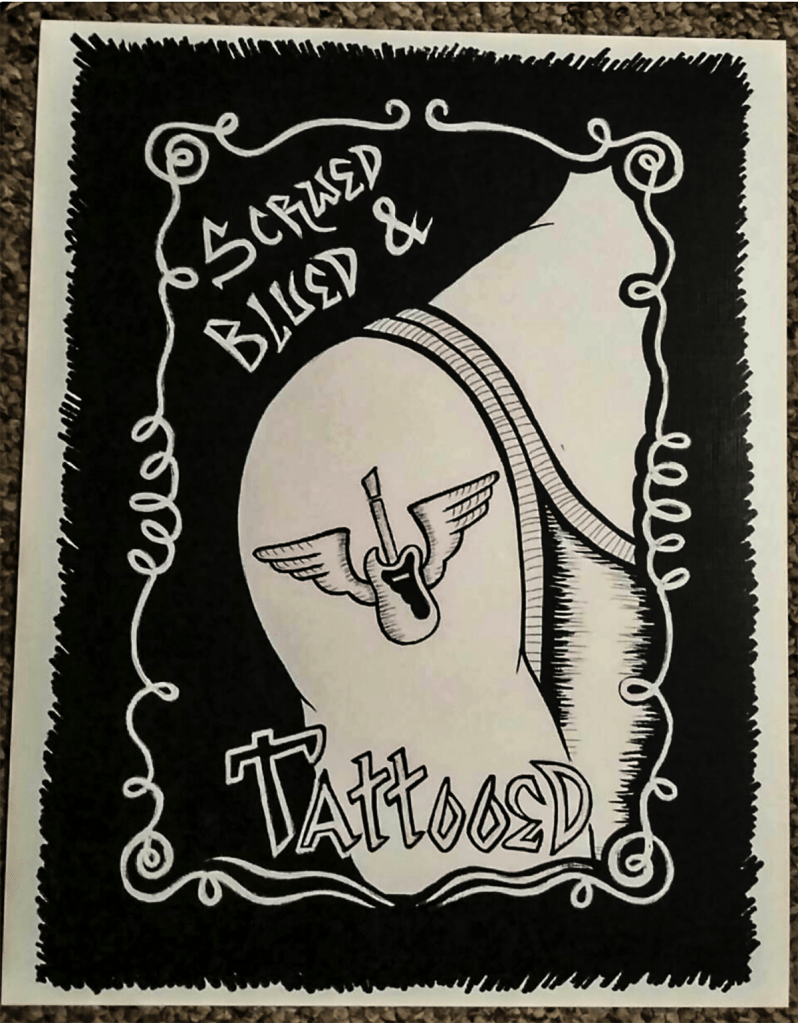
What with the tariffs, the deportations, and other reckless nonsense, I think the Richie Riches are going to wind up screwed, blued, and tattooed.

It couldn’t happen to a nicer bunch of guys. 

We Have Met the Enemy and He is Us

I found this three-year-old video from the Noo Yak Times insightful and profound. 

Blue states—defined as those states, like California and Illinois, that have Democratic governors and Democrats in control of the Legislature—are not voting their stated values. 

The presenter addresses housing, taxation, and education, and demonstrates how blue state governments are systematically screwing the lower and middle class.

Please understand the point I am trying to make, however imperfectly I am making the point. The point is NOT that anyone should lash himself with a whip for the sin of “hypocrisy.” (If you feel you have been hypocritical, and if you think that self-flagellation would do you good, then go ahead. Please don’t let me stop you. But that’s not the point here.)

The point IS that 

  • we blue folk, collectively, are not (for whatever reason) acting and voting the values we claim to hold, and that
  • the situation is unsustainable, and that,
  • unless we are prepared to live in a fascist state, the economic concerns of the lower and middle class have got to be addressed, and that right soon.

Oligarchy and Kleptocracy: Scott Galloway Lays it on the Line

A Small But Important Point of Clarification

After the episode shown above, Mika—obviously prompted by the back office—came on to clarify that Trump was not criminally convicted of rape, he was found civilly liable for “sexual abuse” as “sexual abuse” is defined in New York state law. Judge Lewis Kaplan noted that what the jury found that Trump did would be called “rape” in jurisdictions other than the state of New York. 

This is the same issue involved in the infamous Trump v. ABC News settlement. Mika and her back office were right to make the clarification and avoid giving Trump a stick with which to beat her over the head. Debating the fine points about New York’s narrow definition of “rape” is not the hill to die on.