As of this Morning, the Constitutional Republic Still Stands
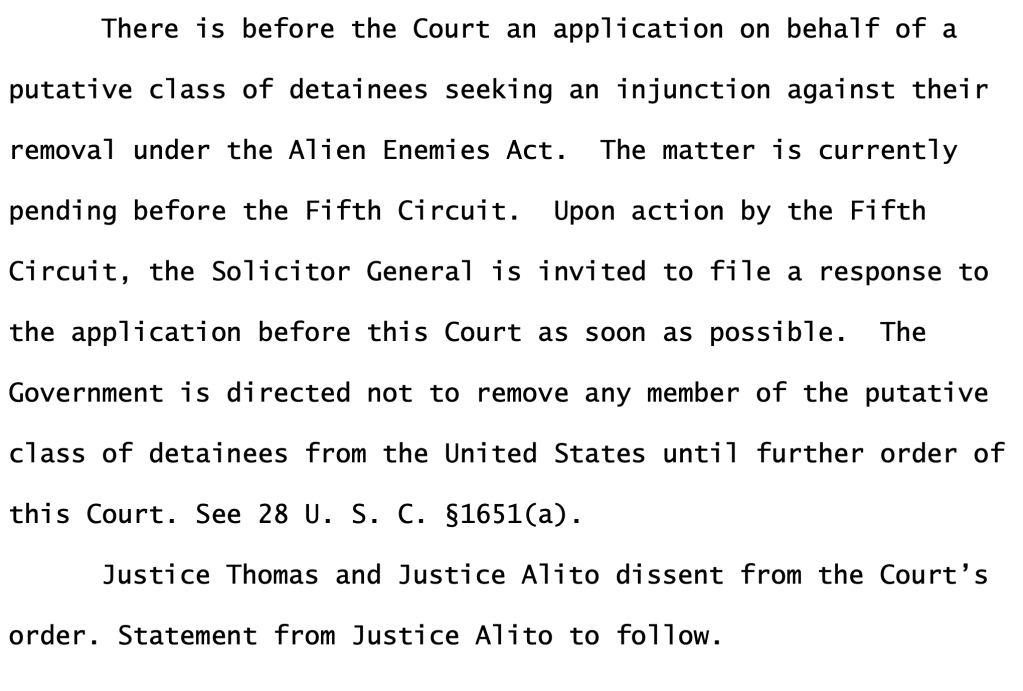
About 1 AM this morning, the Supreme Court, in response to an emergency petition by the American Civil Liberties Union, issued this order:

With clear eyes, hard facts, critical thinking, new political strategy, empathy, and a soupçon of Schadenfreude
About 1 AM this morning, the Supreme Court, in response to an emergency petition by the American Civil Liberties Union, issued this order:
O R D E R
WILKINSON, Circuit Judge, with whom KING and THACKER, Circuit Judges, join:
Upon review of the government’s motion, the court denies the motion for an emergency stay pending appeal and for a writ of mandamus. The relief the government is requesting is both extraordinary and premature. While we fully respect the Executive’s robust assertion of its Article II powers, we shall not micromanage the efforts of a fine district judge attempting to implement the Supreme Court’s recentdecision.
It is difficult in some cases to get to the very heart of the matter. But in this case, it is not hard at all.The government is asserting a right to stash away residents of this country in foreign prisons without the semblance of due process that is the foundation of our constitutional order. Further, it claims in essence that because it has rid itself of custody that there is nothing that can be done.
This should be shocking not only to judges, but to the intuitive sense of liberty that Americans far removed from courthouses still hold dear.
The government asserts that Abrego Garcia is a terrorist and a member of MS-13. Perhaps, butperhaps not. Regardless, he is still entitled to due process. If the government is confident of its position, itshould be assured that position will prevail in proceedings to terminate the withholding of removalorder.See8 C.F.R. § 208.24(f) (requiring that the government prove “by a preponderance of evidence” that the alien is no longer entitled to a withholding of removal). Moreover, the government has conceded thatAbrego Garcia was wrongly or “mistakenly” deported. Why then should it not make what was wrong,right?
The Supreme Court’s decision remains, as always, our guidepost. That decision rightly requires the lower federal courts to give “due regard for the deference owed to the Executive Branch in the conduct offoreign affairs.”Noem v. Abrego Garcia, No. 24A949, slip op. at 2 (U.S. Apr. 10, 2025);see also UnitedStates v. Curtiss-Wright Exp. Corp., 299
U.S. 304, 319 (1936). That would allow sensitive diplomatic negotiations to be removed from public view.It would recognize as well that the “facilitation” of Abrego Garcia’s
return leaves the Executive Branch with options in the execution to which the courts in accordance with the Supreme Court’s decision should extend a genuine deference. That decision struck a balance that does not permit lower courts to leave Article II by the wayside.
The Supreme Court’s decision does not, however, allow the government to do essentiallynothing. It requires the government “to ‘facilitate’ Abrego Garcia’s release from custody in El Salvador and to ensure that his case is handled as it would have been had he not been improperly sent to El Salvador.” Abrego Garcia, supra, slip op. at 2. “Facilitate” is an active verb. It requires that steps be taken as theSupreme Court has made perfectly clear. See Abrego Garcia,supra, slip op. at 2 (“[T]he Government shouldbe prepared to share what it can concerning the steps it has taken and the prospect of further steps.”). Theplain and active meaning of the word cannot be diluted by its constriction, as the government would have it,to a narrow term of art. We are not bound in this context by a definition crafted by an administrative agencyand contained in a mere policy directive. Cf. Loper Bright Enters. v. Raimondo, 603 U.S. 369, 400 (2024);Christensen v. Harris Cnty., 529 U.S. 576, 587 (2000). Thus, the government’s argument that all itmust do is “remove any domestic barriers to [Abrego Garcia’s] return,” Mot. for Stay at 2, is not well taken in light of the Supreme Court’s command that the government facilitate Abrego Garcia’s release from custody in El Salvador.
“Facilitation” does not permit the admittedly erroneous deportation of an individual to the one country’s prisons that the withholding order forbids and, further, to do so in disregard of a court order thatthe government not so subtly spurns. “Facilitation” does not
sanction the abrogation of habeas corpus through the transfer of custody to foreign detention centers inthe manner attempted here. Allowing all this would “facilitate” foreign detention more than it would domestic return. It would reduce the rule of law to lawlessness and tarnish the very values for which Americans of diverse views and persuasions have always stood.
The government is obviously frustrated and displeased with the rulings of the court. Let one thing beclear. Court rulings are not above criticism. Criticism keeps us on our toes and helps us do a better job. See Cooper v. Aaron, 358 U.S. 1, 24 (1958) (Frankfurter, J., concurring) (“Criticism need not be stilled. Active obstruction or defiance is barred.”). Court rulings can overstep, and they can further intrude upon the prerogatives of other branches. Courts thus speak with the knowledge of their imperfections but also with a sense that they instill a fidelity to law that would be sorely missed in their absence.
“Energy in the [E]xecutive” is much to be respected. FEDERALIST NO. 70, at 423 (1789) (Alexander Hamilton) (Clinton Rossiter ed., 1961). It can rescue government from its lassitude and recalibrate imbalances too long left unexamined. The knowledge that executive energy is a perishable qualityunderstandably breeds impatience with the courts. Courts, in turn, are frequently attuned to caution and are often uneasy with the Executive Branch’s breakneck pace.
And the differences do not end there. The Executive is inherently focused upon ends; the Judiciary much more so upon means. Ends are bestowed on the Executive by electoral outcomes. Means are entrusted to all of government, but most especially to the Judiciary by the Constitution itself.
The Executive possesses enormous powers to prosecute and to deport, but with powers come restraints. If today the Executive claims the right to deport without due process and in disregard of courtorders, what assurance will there be tomorrow that it will not deport American citizens and then disclaim responsibility to bring them home?∗ And what assurance shall there be that the Executive will not train its broad discretionary powers upon its political enemies? The threat, even if not the actuality, would always bepresent, and the Executive’s obligation to “take Care that the Laws be faithfully executed” would lose itsmeaning. U.S. CONST. art. II, § 3;see also id.art. II, § 1, cl. 8.
Today, both the United States and the El Salvadoran governments disclaim any authority and/or responsibility to return Abrego Garcia. See President Trump Participates in a Bilateral Meeting with thePresident of El Salvador, WHITE HOUSE (Apr. 14, 2025). We are told that neither government has the powerto act. The result will be to leave matters generally and Abrego Garcia specifically in an interminable limbowithout recourse to law of any sort.
The basic differences between the branches mandate a serious effort at mutual respect. The respect that courts must accord the Executive must be reciprocated by the Executive’s respect for the courts. Too often today this has not been the case, as calls for impeachment of judges for decisions the Executivedisfavors and exhortations to disregard court orders sadly illustrate.
∗ See, e.g., Michelle Stoddart,‘Homegrowns are Next’: Trump Doubles Down on Sending American ‘Criminals’ to Foreign Prisons, ABC NEWS (Apr. 14, 2025, 6:04 PM); David Rutz, Trump Open to SendingViolent American Criminals to El Salvador Prisons, FOX NEWS (Apr. 15, 2025, 11:01 AM EDT).
It is in this atmosphere that we are reminded of President Eisenhower’s sage example. Puttinghis “personal opinions” aside, President Eisenhower honored his “inescapable” duty to enforce theSupreme Court’s decision in Brown v. Board of Education IIto desegregate schools “with all deliberatespeed.” Address by the President of the United States, Delivered from his Office at the White House 1-2(Sept. 24, 1957); 349 U.S. 294, 301 (1955). This great man expressed his unflagging belief that “[t]he verybasis of our individual rights and freedoms is the certainty that the President and the Executive Branchof Government will support and [e]nsure the carrying out of the decisions of the Federal Courts.”Id.at 3.Indeed, in our late Executive’s own words, “[u]nless the President did so, anarchy would result.” Id.
Now the branches come too close to grinding irrevocably against one another in a conflict that promises to diminish both. This is a losing proposition all around. The Judiciary will lose much from theconstant intimations of its illegitimacy, to which by dent of custom and detachment we can only sparinglyreply. The Executive will lose much from a public perception of its lawlessness and all of its attendant contagions. The Executive may succeed for a time in weakening the courts, but over time history will scriptthe tragic gap between what was and all that might have been, and law in time will sign its epitaph.
It is, as we have noted, all too possible to see in this case an incipient crisis, but it may present an opportunity as well. We yet cling to the hope that it is not naïve to believe our good brethren in the ExecutiveBranch perceive the rule of law as vital to the American ethos. This case presents their unique chance tovindicate that value and to summon the
best that is within us while there is still time.
In sum, and for the reasons foregoing, we deny the motion for the stay pending appeal and the writof mandamus in this case. It is so ordered.

David French (N.Y. Times), The Supreme Court Can’t Save America, but Here’s What It Can Do
Mr. French writes,
Millions of Americans are desperate for a quick and effective response to Trump’s attacks on the Constitution. But the election foreclosed that possibility. The courts — even if they have the courage — lack the power to save America.
In this moment, think of the courts as a rear guard, capable of delaying constitutional collapse until the American people finally understand that the life and health of the Constitution is up to them. If they keep electing men like Trump or sycophants like those in his Congress of cowards, then we’ll lose our Republic.
But if a critical mass of Americans do wake up, then the court’s stand will be indispensable to justice and — critically — accountability. Every public official associated with Trump’s defiance of the courts (including his vice president, JD Vance) should be impeached, convicted and barred forever from holding public office.
I know that’s a fantastical vision in the present moment. In a closely divided country, impeachment and removal aren’t viable options, but supermajorities among Americans have existed before. The civil rights movement, empowered in part by the Supreme Court, attained a supermajority that changed America, and a movement to preserve the Constitution can be a supermajority again.
We can’t ask the Supreme Court to do more than it’s able to do, but it must do all that it can. The choices it will face may well be as stark as the choice between segregation and equality, or between internment and freedom.
The court’s past failures have destroyed lives and put our Republic in mortal danger. Its past courage has inspired revolutionary change. Unless Trump backs down, it will face the same choice the court faced in 1954 — yield in the face of enormous resistance or stand even when the politicians fail.
Quinn Emanuel Urquhart & Sullivan is a top ranked business litigation law firm. King & Spalding is a top corporate and litigation firm; one good source ranks them as #24. Here is the letter that two of their partners signed on behalf of Harvard and sent to Team Trump:
April 14, 2025
VIA ELECTRONIC MAIL
Josh Gruenbaum
Commissioner of the Federal Acquisition Service General ServicesAdministration
Sean R. Keveney Acting General Counsel
U.S. Department of Health & Human Services
Thomas E. Wheeler Acting GeneralCounsel
U.S. Department of Education
Dear Messrs. Gruenbaum, Keveney, and Wheeler:
We represent Harvard University. We are writing in response to your letter dated April 11, 2025, addressed toDr. Alan Garber, Harvard’s President, and Penny Pritzker, Senior Fellow of the Harvard Corporation.
Harvard is committed to fighting antisemitism and other forms of bigotry in its community. Antisemitism and discrimination of any kind not only are abhorrent and antithetical to Harvard’s values but also threaten its academicmission.
To that end, Harvard has made, and will continue to make, lasting and robust structural, policy, and programmatic changes to ensure that the university is a welcoming and supportive learning environment for allstudents and continues to abide in all respects with federal law across its academic programs and operations, whilefostering open inquiry in a pluralistic community free from intimidation and open to challenging orthodoxies,whatever their source.
Over the past 15 months, Harvard has undertaken substantial policy and programmatic measures. It hasmade changes to its campus use policies; adopted new accountability procedures; imposed meaningful discipline for those who violate university policies; enhanced programs designed to address bias and promote ideological diversity and civil discourse; hired staff to support these programs and support students; changed partnerships; dedicatedresources to combat hate and bias; and enhanced safety and security measures. As a result, Harvard is in a verydifferent place today from where it was a year ago. These efforts, and additional measures the university will be taking against antisemitism, not only are the right thing to do but also are critical to strengthening Harvard’scommunity as a place in which everyone can thrive.
It is unfortunate, then, that your letter disregards Harvard’s efforts and instead presents demands that, incontravention of the First Amendment, invade university freedoms long recognized by the Supreme Court. The government’s terms also circumvent Harvard’s statutory rights by requiring unsupported and disruptive remedies foralleged harms that the government has not proven through mandatory processes established by Congress and required by law. No less objectionable is the condition, first made explicit in the letter of March 31, 2025, that Harvard accede to these terms or risk the loss of billions of dollars in federal funding critical to vital research and innovation that has saved and improved lives and allowed Harvard to play a central role in making our country’sscientific, medical, and other research communities the standard-bearers for the world. These demands extend notonly to Harvard but to separately incorporated and independently operated medical and research hospitals engaging in life-saving work on behalf of their patients. The university will not surrender its independence or relinquish its constitutional rights. Neither Harvard nor any other private university can allow itself to be taken over by the federal government. Accordingly, Harvard will not accept the government’s terms as an agreement in principle.
Harvard remains open to dialogue about what the university has done, and is planning to do, to improve the experience of every member of its community. But Harvard is not prepared to agree to demands that go beyond thelawful authority of this or any administration.
William A. Burck Robert K. Hur
Quinn Emanuel Urquhart & Sullivan, LLP King & Spalding LLP
1300 I Street NW 1700 Pennsylvania Avenue NW
Suite 900 Suite 900
Washington, DC 20005 Washington, DC 20006
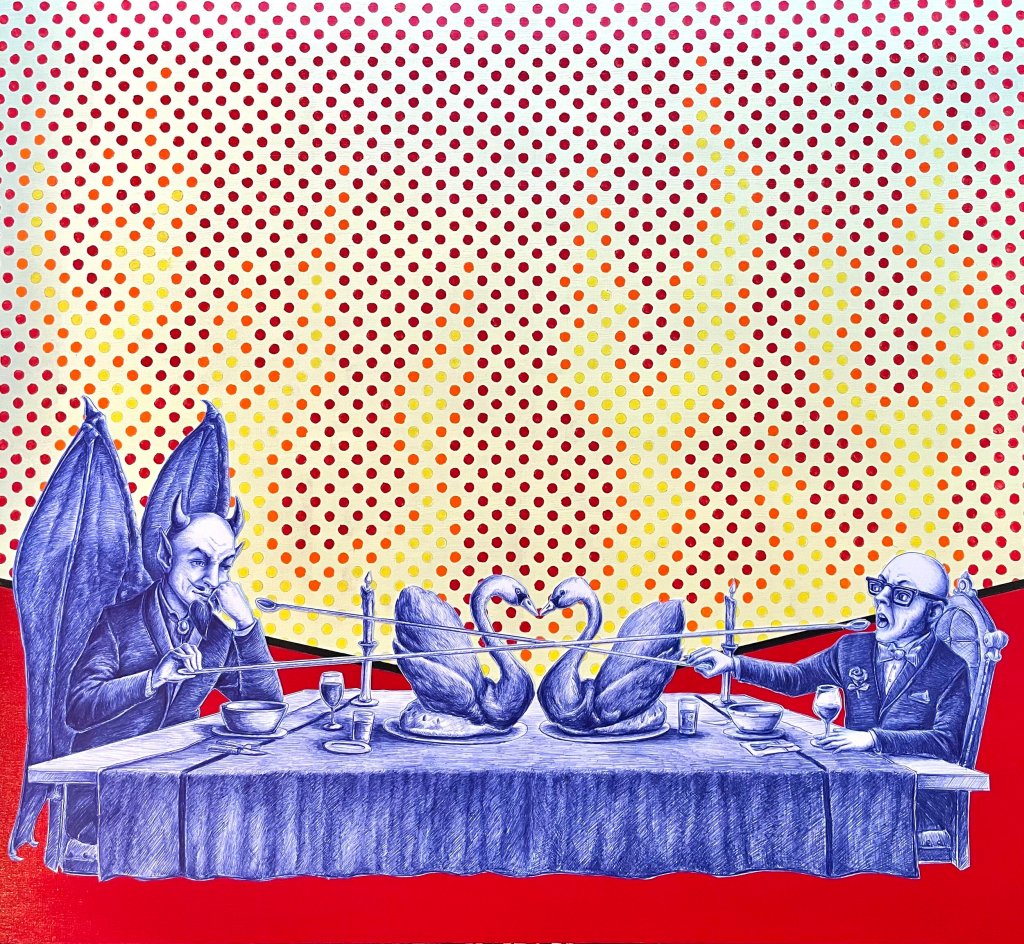
Not to mention defending Trump’s multiple constitutional violations—once the Justice Department has run through all its competent attorneys and the rest have been found in contempt of court.
Hey, Paul, Weiss! Hey, Skadden!
Y’all think y’all are gonna be able to keep on recruiting the cream of the crop from among law school graduates? To do what? To go work for Pam Bondi and be found in contempt of court? Maybe to be disbarred?
I don’t think so.
As I have said before, I was a partner of New York law firms ranked in the #20 to #30 range or thereabouts. Not as rich as Paul Weiss or Skadden, but within spitting distance.
And here’s something I learned. There are some bad people that you can do business with. And there are some bad people that you cannot do business with.
Some people you can buy, and they stay bought. Some people you can buy, but they don’t stay bought.
And Orange Mussolini is a bad person you cannot do business with.
Mainly because, in addition to being bad, he’s also crazy in the head.
Your “agreements” with Orange Mussolini are not legally enforceable, They do not even purport to be legally enforceable. And even if they did purport to be legally enforceable, they’re illusory. Their “terms” are ambiguous. And there was never a mutual manifestation of intent to abide by agreed on terms.
You have to repent of those deals.
And why is that?
Because if you don’t repent of those deals, no one is going to come work for you.
And if competent young lawyers don’t come and work for you, then your business model is going to go up in smoke.
And you can bend over and kiss your $20 million annual compensation goodbye.
April 2025
Dear President McInnis, Provost Strobel, and Members of the Yale Board of Trustees:
We stand together at a crossroads. American universities are facing extraordinary attacks that threaten the bedrock principles of a democratic society, including rights of free expression, association, and academic freedom. We write as one faculty, to ask you to stand with us now.
We urge you to:
We stand united, asking for your courageous leadership. We look forward to standing alongside you in this work.
Signed,
[Yale faculty of all ranks can sign this letter here.]
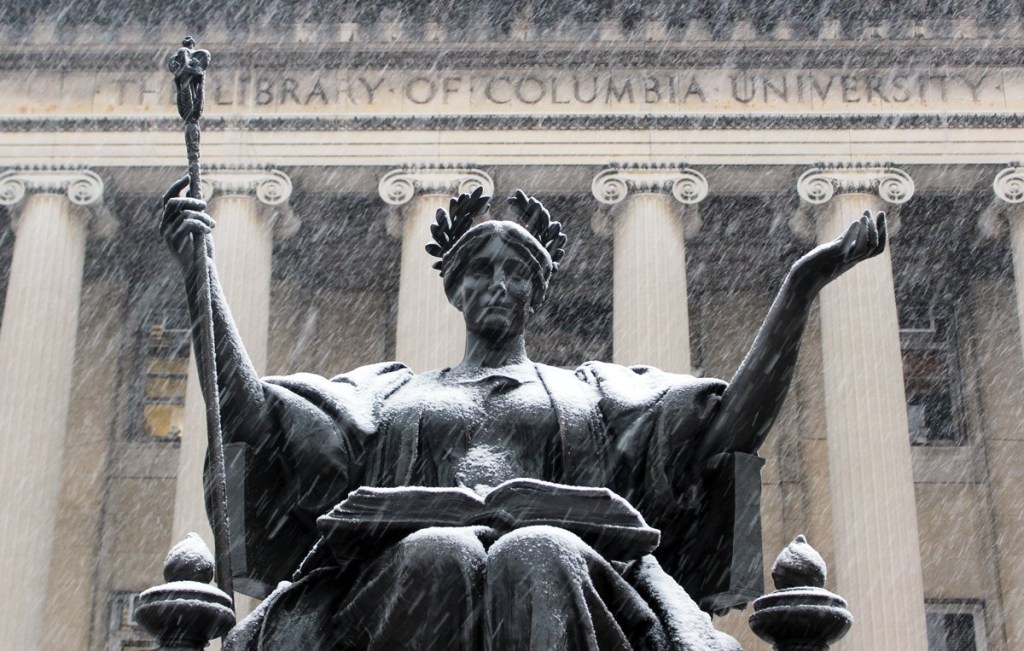
An open letter from Claire Shipman, Acting President, Columbia University in the City of New York (emphasis added):
Dear Members of the Columbia Community:
Over the past few weeks, days, indeed over the past few hours, you have no doubt seen and heard much about Columbia and the future of higher education. This is an extraordinary and difficult time for our University. We face unprecedented pressures, with no easy answers and many uncertainties. That combination is creating significant anxiety for our community, and we must, as we navigate this moment, stay true to our core mission as an educational and research institution, and true to our community.
I’ve heard deep concern about when and whether we will get our research funding back, what form an agreement with the government would take, whether we would have to compromise our values to reach such an agreement, and what we’re doing to support our international students right now. Let me attempt to address each of these issues.
As we have shared before, the University has been engaged in what we continue to believe to be good faith discussions with the Federal Task Force to Combat Antisemitism. We have sought to address allegations of antisemitism, harassment, and discrimination on our campuses, and provide a path to restoring a partnership with the federal government that supports our vital research mission, while also protecting the University’s academic and operational integrity and independence.
Those discussions have not concluded, and we have not reached any agreement with the government at this point. Some of the government’s requests have aligned with policies and practices that we believe are important to advancing our mission, particularly to provide a safe and inclusive campus community. I stand firmly behind the commitments we outlined on March 21, and all the work that has been done to date. Other ideas, including overly prescriptive requests about our governance, how we conduct our presidential search process, and how specifically to address viewpoint diversity issues are not subject to negotiation.
To be clear, our institution may decide at any point, on its own, to make difficult decisions that are in Columbia’s best interests. Any good institution must do that. Where the government – or any stakeholder – has legitimate interest in critical issues for our healthy functioning, we will listen and respond. But we would reject heavy-handed orchestration from the government that could potentially damage our institution and undermine useful reforms that serve the best interests of our students and community. We would reject any agreement in which the government dictates what we teach, research, or who we hire. And yes, to put minds at ease, though we seek to continue constructive dialogue with the government, we would reject any agreement that would require us to relinquish our independence and autonomy as an educational institution.
Like many of you, I read with great interest the message from Harvard refusing the federal government’s demands for changes to policies and practices that would strike at the very heart of that university’s venerable mission. In this moment, a continued public conversation about the value and principles of higher education is enormously useful. I am especially concerned that many Americans have lost faith and trust in higher education. We should continue the hard work of understanding why. At the same time, we must more clearly explain what we here, at Columbia, know instinctively about the vital contributions we make to the world.
I want to turn to our international students, who are essential to our unique and powerful ecosystem, and who are experiencing enormous distress. We have been following with great concern the various actions being taken by the federal government toward members of our community. We know this has provoked not only anxiety, but multiple new, day-to-day challenges for our international student community. For that reason, the University launched a new University fund, supported by my office, our Board of Trustees, and generous alumni, to assist students who need help managing unanticipated expenses and other challenges right now.
This comes alongside our recently announced commitment of additional resources to our International Students and Scholars Office (ISSO) to expand their ability to help our international students, through logistical, legal, and mental health support, including a significant expansion of hours and staff resources. I’m pleased to announce a new websitededicated to these efforts.
We are navigating a turbulent time for higher education. The challenges ahead of us are formidable. Knowing Columbia as I do, and as you do, I am confident that we will get through this to serve our students, faculty, staff, and society for centuries to come.
Sincerely,
Claire Shipman
Acting President, Columbia University in the City of New York
Susman Godfrey Gets Its Temporary Restraining Order
 Facing MAGA