The Difference Between Actual Power and Just Killing People and Blowing Stuff Up

Today, the inimitable and indispensable Ed Luce of the Financial Times takes another whack at the piñata that Lydia Polgreen so eloquently struck in her recent N.Y. Times column.

Luce writes, 

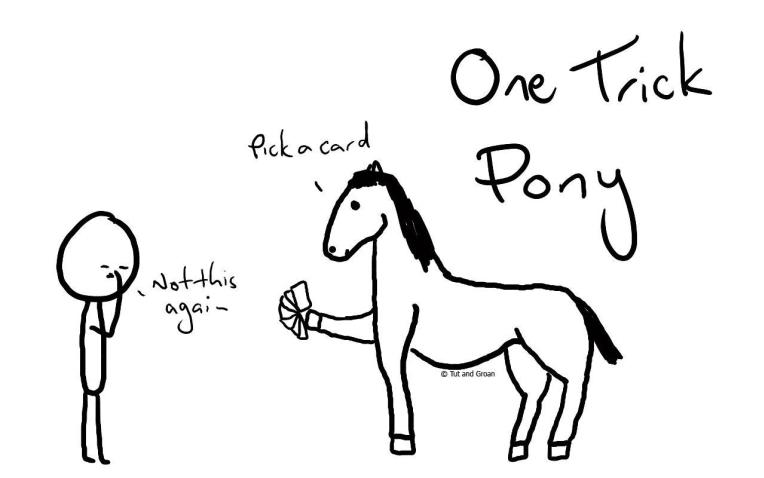
America’s ailing one-trick pony: Trump’s excessive faith in military power is squarely within the US tradition

Count the obliterated targets. Tally the corpses of senior leaders. Behold America’s military prowess. By any measure, Iran has taken a pummelling. Yet threats of more US strikes are yielding no concessions. Donald Trump’s threats, including bombing Iran into the Stone Age, have sounded empty since early March. Yet he keeps repeating them. Threatening a failed tactic over and over again and expecting a different outcome is the definition of insanity.

It is rightly observed that America has a greater margin of error than any other power. The US has the world’s most powerful military and is flanked by vast oceans to its east and west and benign neighbours to its north and south. But such blessings can induce lazy thinking. Decades before Trump’s Operation Epic Fury, America picked up the habit of confusing its military superiority with an ability to impose its will on faraway lands. The only thing that is novel about Trump’s Iran war is the immediate obviousness of its bankruptcy.

Epic Fury is no departure from American tradition. When Trump was a young man pulling strings to escape military service in Vietnam — a privilege he shared with other future US presidents, including George W Bush — the Pentagon announced regular “kill ratios” of the number of enemy dead versus American. The Tet Offensive in early 1968 was heralded as a major US victory since so many Vietcong insurgents had been killed. In reality, Tet delivered a crushing political defeat to America since it conveyed the enemy’s iron will.

The Pentagon did not see it that way. Pete Hegseth, the US “secretary of war”, is a very different figure to Robert McNamara, the then secretary of defence. But his playbook is similar. In crude terms, success is judged by how many things and people America can blow up. Hegseth’s favourite words are “precision” and “lethality”. The similarity between Lyndon B Johnson’s Operation Rolling Thunder and Trump’s Epic Fury is almost exact. Just as LBJ used carpet-bombing of North Vietnam to prod elusive concessions in negotiations, Trump’s missile threats are wasted on Iran. As the Taliban used to say during the two-decade US military operation in Afghanistan: “America has the watches, we have the time.” The Taliban regained power five years ago.

Trump seemed to grasp the limits of America’s one-trick ponies better than most US presidents. His denouncement of Bush’s Iraq war was a key propellant of his 2016 hostile takeover of the Republican Party. The irony is that he is now riding that pony into the same old quicksand. Trump can run the gamut of America’s greatest hits in the same interview. One moment he is proclaiming mission accomplished as Bush did at an early stage of the Iraq war. The next he is dangling peace with honour, as Richard Nixon and Henry Kissinger branded America’s retreat from Vietnam. When his blood is really up he demands second world war-style unconditional surrender.

But his only way out is via sustained diplomacy on multiple fronts. On Monday he called off the next wave of strikes on Iran scheduled for Tuesday. He wanted to give the Pakistan-mediated talks another chance. At the forefront of Trump’s mind is that he must do better than Barack Obama did with his 2015 Iran nuclear deal. Nowhere in his mind, apparently, is the recollection that it took Obama’s negotiators 20 months to nail it down. The idea that much less knowledgeable US officials could do better in a few days is delusional. That Obama could have pulled off a serious agreement without once threatening to bomb Iran is inconceivable to him.

The lesson from Epic Fury is the same one that Obama drew from Iraq. Diplomacy should always be the first resort. There is no need even to mention US military power, still less to brag about it daily. To paraphrase a maxim, the military that fights best is that which fights least. The comforting take is to blame Epic Fury on Trump’s unique recklessness. But he is no aberration. Once you screen out his uniquely self-defeating verbal incontinence, you discern a Washington traditionalist. His approach is the reductio ad absurdum of one lost US war after another preceded by strings of victories on the battlefield.

As the world googles Thucydides and digests the emerging G2 China-US reality, the question is whether Washington is capable of reinventing itself. Better informed US figures than Trump are calling on him to “finish the job” in Iran. Had they learnt from the recent or distant past, they would be revising their advice. But that would require thinking. Good strategy is the product of intellectual humility. Trump’s lack of it puts him in plentiful company.

From Ed Luce’s Lips to God’s Ears: “There is no school of foreign policy realism, or trade mercantilism, that could explain Trump’s actions. If you want to forecast the world, study his psychology. While Trump is in charge, stay short on America.”

Edward Luce (Financial Times), Trump has no idea what he has unleashed

Ed Luce of the Financial Times, acute student of America, and sometime guest on Morning Joe, writes today’s thought piece (particularly choice passages underlined):

We should trust in Donald Trump’s instincts, says Mike Johnson, Speaker of the House of Representatives. Alternatively, Johnson and his caucus should run screaming in the opposite direction. It is too late for Republicans to revert to being a normal party — belief in Trump is their organising principle. But they could play the loyalist by coaxing Trump off the ledge. In addition to their jobs, the future of the global economy, and every American’s retirement fund, depends on it.  

Their task is complicated by the fact that Trump still thinks he is on to a winner. Try to stand in his shoes. From his 2011 Obama foreign birth conspiracy to his 2024 conviction as a felon, and so many points in between, Trump has almost annually been left for dead. But his phoenix keeps rising. Trump is a fantasist whose deepest-lodged fantasy — that he is an unstoppable champion — keeps coming true. Why would a little market turmoil stop him? 

The starting point is that Trump is a hammer and the rest of the world, as well as half of America, is a nail. Sometimes the hammer can focus on select nails, or soften its blow, but he is always a hammer. That some of Trump’s closest backers, such as the New York hedge fund manager Bill Ackman, are surprised by his global tariff war is a mystery. Trump vowed in almost every single campaign speech to unleash the trade war we are now in. 

He has been blaming foreigners for ripping off America since the mid-1980s. Note, his obsession was with Japan, not the Soviet Union. Trump has always been angriest with allies and friends. His deepest contempt is now reserved for Europe and Canada. Psychologists extrapolate from the estate settlement Trump tried to impose on his own siblings. If your instinct is to rip people off, including those closest to you, assume that is everyone’s method

The mystery is why so many — from Ackman’s fellow billionaires to Florida-based Venezuelans — have bent over backwards to miss who Trump is. A trillion comments have been wasted accusing the wrong people of Trump derangement syndrome. The real TDS afflicts those who keep seeing a rational actor, or an economic chess game, where none exists. The whole market arguably suffers from this syndrome. Shortly after plummeting on Monday morning, a fake news release surfaced that said Trump would announce a pause on his tariffs this week. The markets more than erased their opening losses. All those gains, in turn, were wiped out when the White House issued a denial.

If an online meme can turn a bear market into a bull recovery in the space of a minute, and back again, Trump has the world in his palm. The merest rumour that he might be sane can trigger a buying frenzy. Roman emperors would envy the finger-crooking sway of one man. Yet at some point, possibly imminent, Trump could be forced to pause at least some of his “liberation day” duties. That will trigger a big relief rally. But his pause will be no surer than stray driftwood. The same might apply to his threats of a new 50 per cent tariff escalation on China. 

Markets will cheer any hints of bilateral deals Trump plans to strike with more influential demandeurs — Japan, China and India should be closely watched. Investors should also pay heed to the fact that such deals will be struck between foreign governments and Trump personally, not his administration. The departments of Treasury, commerce and the US trade representatives are often out of the loop. Given the lack of boundary between Trump’s public role and private investments, the scope for non-trade-related bartering is great.

The idea that Trump’s impact will be limited to the goods-traded economy is also wishful thinking. Foreigners own a critical share of US Treasury debt. Continued high demand for an asset in whose issuer the world is losing trust is the difference between a Trump recession and a Trump depression. On this, Europe’s governments seem to have better instincts than the equity and fixed-income markets. Rather than escalate the trade war, the EU is mulling only a modest toolkit of retaliations. This is not because Brussels thinks Trump is likely to embrace comity. It is because it fears a tit-for-tat trade spiral will break the global financial system.  

Either way, this teachable moment is needlessly belated. Trump’s sane-washers have forfeited their credibility. There is no school of foreign policy realism, or trade mercantilism, that could explain Trump’s actions. If you want to forecast the world, study his psychology. While Trump is in charge, stay short on America.