A Trenchant Analysis of the Difference Between Brute Force and Power
Tomorrow, we are told, Trump will meet with his military advisors to talk about Iran. Now, ladies and germs, I am no Nostradamus, but let me say this: In a world of great uncertainty, one may confidently predict that (1) Pete Hegseth and his buffoons will bomb Iran some more, (2) Iran will respond by bombing some U.S. military bases in the Middle East, (3) Iran will probably launch some terrorist attacks in the United States, and (4) in a few days’ time, we’ll be further from a resolution than we are today.
Meanwhile, Lydia Polgreen (graduate of the Columbia Graduate School of Journalism, veteran reporter, and now New York Times columnist) offers up as astute an analysis of violence versus power as one is going to find.
Trump Has Done More Than Misjudge Iran
In January, Stephen Miller gave a blustery and revealing interview to the CNN journalist Jake Tapper. Flush with the triumph of the military raid to abduct Venezuela’s president, Nicolás Maduro, Miller was taking a victory lap. America was done being the world’s nice guy, footing the bill for a global order that no longer served its interests. From now on, he said, the gloves were off. America would act boldly and with unapologetic force to impose its will on the world.
This was seemingly the purest expression of Donald Trump’s theory of power, spoken by perhaps the most hard-line member of the administration. Indeed, America is the most powerful nation the world has ever known. Its economy is, by most measures, the world’s largest, and its currency dominates global markets. Above all, it commands the most advanced military on the planet, fueled by expensive, high-tech wizardry and the derring-do of its special forces.
It was with this pugnacious certainty that the Trump administration barreled into a reckless, unprovoked war against Iran more than two months ago. Trump clearly thought it would be a showcase of American might, unshackled from what Miller called the “niceties” of international law and powered by ruthless “kinetic” action, to borrow a favorite word of Defense Secretary Pete Hegseth.
It hasn’t worked out that way. Despite losing its leader and many other top officials, Iran has mounted a formidable response, inflicting widespread damage on America’s regional allies and military bases. By seizing control of the Strait of Hormuz, Iran has grasped something akin to an economic nuclear weapon, sending fuel prices soaring and prompting shortages of key goods in many parts of the world.
“We live in a world,” Miller told Tapper, “that is governed by strength, that is governed by force, that is governed by power.” The painful fallout of the Iran war provides an eloquent rebuttal. But the Trump administration has done more than misjudge American force and the wherewithal of its adversary. It has fundamentally misunderstood what power is, conflating it with the capacity to inflict violence when the two are, in truth, opposed.
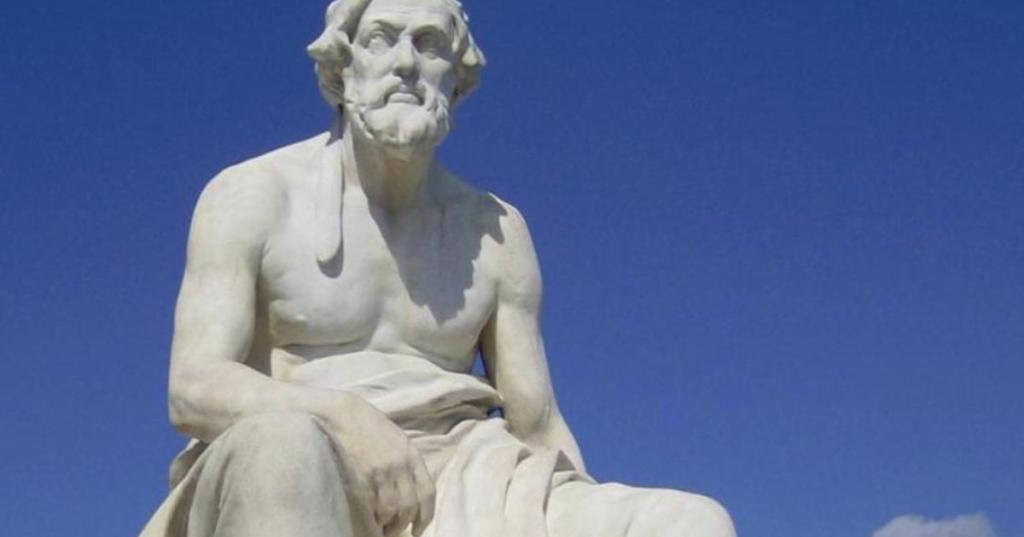
Miller’s chest-thumping recalls one of the most ancient and influential texts about war, Thucydides’ “History of the Peloponnesian War.” Across eight detailed books, it tells the story of an epic fight between two rival hegemons in the Mediterranean, Athens and Sparta. “The strong do what they can and the weak suffer what they must,” the powerful Athenians tell the citizens of Melos, a neutral Greek island, ordering them to submit or be slaughtered.
This declaration is often cited as an ur-realist iron law of might equaling right. But there’s an irony that often escapes those who cite the line, perhaps because they didn’t read the whole text. If they had, they’d discover that the Melians were not powerless victims but cleareyed prophets. “And what is this but to make greater the enemies that you have already, and to force others to become so who would otherwise have never thought of it?” the Melians asked their attackers.
Unmoved, the Athenians laid siege to the city, slaughtering all its men and enslaving its women and children. But the triumph at Melos was a false victory. Drunk on the violence they mistook for power, the Athenians blundered on to a far riskier gambit, an invasion of Sicily. The Athenians, initially divided on the war, were eventually persuaded by leaders who believed that the Sicilians were weak and corrupt. They were sitting ducks, unable to defend themselves against so fearsome a foe. It would be an easy victory bringing Athens greater glory.
But strength was not enough. The timbers of Athenian ships, enforcing a long blockade, rotted; supply lines dried up. The Athenians, increasingly short of money, had to impose new taxes to fund the war. Finally, in a fierce battle at Syracuse, they were routed. It wasn’t the end of Athens’ hegemony, but it was the beginning of the end. Eventually, Sparta took its place as the Mediterranean’s pre-eminent power.
It is not hard to see the parallels to America’s situation. Like the Athenians, the Trumpians saw their romp in Venezuela as a sign of their irrefutable power. And like the Athenians, they overreached — attacking an enemy they underestimated with muddled motives, uncertain support at home and no clear plan for victory. Entranced by their own capacity for violence, they thought their power to effect their will was limitless.
Their strategic mistake rested on a misreading of power. In 1970, the philosopher Hannah Arendt published a slim book, “On Violence.” In it, Arendt argues that violence is not a form of power but its opposite. Written amid America’s failing war in Vietnam, the book was partly critiquing the calls for violence among left radicals who opposed the war. Yet reading the book in recent weeks, I was struck by how resonant it is for the American predicament in the Persian Gulf.
Power, Arendt argued, is collective, consensual and relational. Violence, by contrast, is instrumental and coercive, its strength evaporating the moment the threat is evaded or withdrawn. “Violence can always destroy power,” Arendt wrote. “Out of the barrel of a gun grows the most effective command, resulting in the most instant and perfect obedience. What never can grow out of it is power.”
We see this dynamic playing out in the stalemate with Iran today. For all America’s military prowess, its endless ability to inflict violence, including Trump’s barely veiled threat to use a nuclear weapon, Iran has not capitulated. Its brutal theocratic regime may be widely reviled by its own people, but in the face of obliteration many Iranians have rallied around their government. Years of economic isolation wrought by sanctions have honed the country’s survival skills.
Trump has been reduced to playing down Iranian attacks on American destroyers trying to blockade the Strait of Hormuz, calling them “a trifle.” Evidence has emerged of widespread damage to American military bases across the Gulf, turning barracks and mess halls into heaps of rubble and ash. The war has already cost $29 billion, according to the Pentagon, in what is surely a huge underestimate. And American intelligence officials have reportedly concluded Iran could endure the blockade for months.
Trump’s support back home, meanwhile, is in free fall. In poll after poll, large majoritiesof Americans say they oppose the war, do not understand its purpose and deeply dislike the havoc it is wreaking on their pocketbooks. Seeing the political peril ahead, Trump has urgently sought an offramp, promising an imminent deal even as he issues empty threats of total annihilation and baseless claims of total victory. Few seem to believe him.
“All governments rest on opinion,” as the Federalist Papers famously declare. Yet Trump has been unable to persuade Americans to accept a modicum of suffering to achieve his strategic aims. For all his defiant projection of unbound command, the war has revealed extraordinary weakness at the core of his presidency, the true puniness of his power.
This weakness is hardly limited to the war. When Trump tried to use violence to prosecute his harsh deportation agenda in Minnesota, he was defeated by the relentless efforts of a coordinated, nonviolent civic opposition, which rallied public opinion against him. The vast operation in Minneapolis has been almost entirely abandoned, the presence of federal agents in the state dwindling from thousands to hundreds of agents, not much more than before the operation began.
Many of Trump’s attempts to rule through the different force of executive orders have met a similar fate — be they imposing tariffs, slashing government spending or building opulent monuments to himself. In the court of public opinion and even, at crucial moments, at the Supreme Court, Trump keeps losing his fights. Perhaps it is no surprise that Miller has been awfully quiet of late. His entire theory of power, and perhaps Trump’s presidency, is in peril.
Yet America, unlike Athens, faces no Sparta. Its only credible rival for global hegemony, China, has shown little interest in foreign adventurism. Instead, it has set about strengthening its power in an Arendtian fashion: through the accumulation of willing allies rather than coerced vassals, using trade deals, foreign investment and diplomacy. These are precisely the tools that the United States once used to great effect to build its power and wealth.
The Trump administration, however, has shown nothing but contempt for the patient work of building durable power based on consensus, preferring the blitzkrieg of violence. Last week’s long-awaited summit in Beijing underscored the divergence. “Our two countries should be partners rather than rivals,” China’s president, Xi Jinping, pointedly said. For the beleaguered Trump, the scale of defeat must have been unmissable.