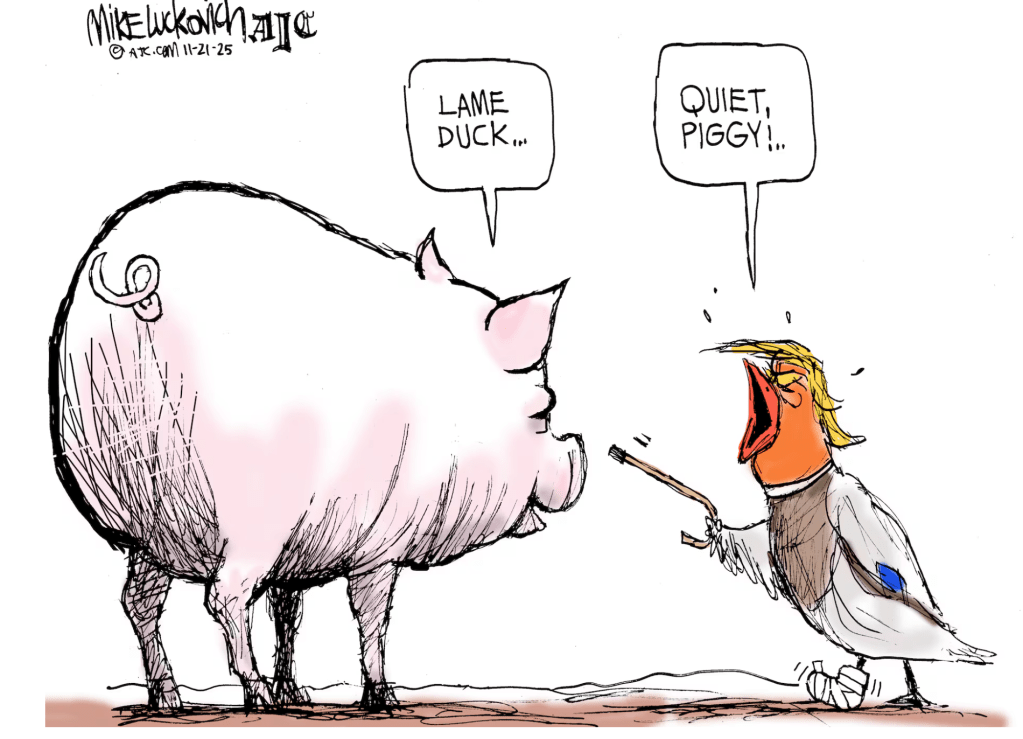
Thankful on Thanksgiving Day for Trump’s Collapse

With clear eyes, hard facts, critical thinking, new political strategy, empathy, and a soupçon of Schadenfreude
Posts about the situation we are in–the good facts, the bad facts, and the terrible facts. Facts that, if taken on board, will let us “know ourselves, know the other side” and go on to win those hundred battles.

The Wall Street Journal has a few choice observations.
Under the law, when a U.S. Attorney’s office becomes vacant, a President may temporarily fill the job for 120 days, after which the district court is supposed to get the power to fill the role. Congress wrote the law that way to ensure the Justice Department wouldn’t be left short-handed, while also protecting the Senate’s advise-and-consent power over nominees.
In January, after Mr. Trump’s inauguration, the Administration named Erik Siebert as interim prosecutor for Eastern Virginia. Once his three-month lease was set to expire, the judges of the district chose to retain him. But Mr. Siebert was reluctant to charge Mr. Comey and Ms. James, as Mr. Trump demanded, and he stepped down in September. Then the Administration purported to install Ms. Halligan, who had no experience as a prosecutor.
In the White House’s view, Mr. Siebert’s exit gave Mr. Trump the opportunity to name another interim prosecutor for a new three-month term. But that isn’t what the law says, according to Monday’s analysis by Judge Cameron McGowan Currie. As he explains, that interpretation would let the President “evade the Senate confirmation process indefinitely by stacking successive 120-day appointments.”
The vacancy law is designed for a temporary fill-in, not Senate circumvention. Ms. Halligan “has been unlawfully serving,” the judge concludes, and her efforts on indicting Mr. Comey and Ms. James were “unlawful exercises of executive power.” This is what happens when officials don’t follow legal procedure. They lose cases. Mr. Trump was so eager to indict his enemies, and Attorney General Pam Bondi was so quick to go along, that it all unraveled at the pull of one legal thread.
The Trump Administration could refile the charges, though the statute of limitations may have expired in Mr. Comey’s case. If Mr. Trump tries again, he might end up with cases that are two-time legal losers.
/
The Democratic officials who put out the video on illegal orders were clearly implying that
But the officials did not explicitly say what orders they considered illegal—obviously a conscious and considered omission.
One could plausibly argue that this omission was cowardly. More to the point, one could plausibly argue that the failure to specify exactly what illegal orders they were talking about could create confusion in the minds of military personnel. Indeed, some have made plausible arguments along these lines, and the controversy will continue to grow.
However, our President, Mango Mussolini
Afflicted by these mental lacunae, Mango Mussolini cannont begin to devise a workable plan to make the Democratic officials pay for their failure to identify the illegal orders of which they spoke. Instead, he can only bluster and threaten—in this case, threaten to order his minions (1) to arrest the Democratic officials for the crime of referring to the Uniform Code of Military Justice and then (2) to procure their execution following trial in the federal criminal justice system.
First of all, pretty much everyone who plays in the arena of politics or business knows that it’s a bad idea to take the hostage if you are not prepared to kill the hostage. That’s because your extreme threat, followed by supine inaction, makes you look like a blustering fool.
And, by the way, the reason why you look like a blustering fool is that you are in fact a blustering fool.
On the other hand, what if the Justice Department does arrest Senator Slotkin, get Lindsey Halligan to indict her for treason, and put her on trial in a United States district court? Well, guess what? It isn’t illegal, let alone treasonous, for someone to make a general reference to a provision of law—here, the Uniform Code of Military Justice, Title 10 of the United States Code, Section 892, and the related case law.
Conclusion? Either course of action—blustering followed by inaction, or blustering followed by a ridiculous prosecution in federal court—leads inexorably to failure by Trump.
The logical next step would be for Trump to tell the Proud Boys to get our their guns and go after Senator Slotkin and the rest of the crew.
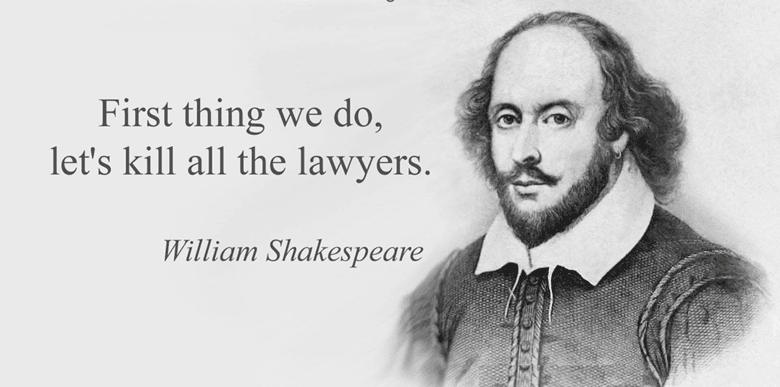
Washington Post, Justice Department struggles as thousands exit—and few are replaced
D. John Sauer, Esquire, pursued a double major, philosophy and electrical engineering, at Duke. After college, he was a Rhodes Scholar at Oxford, where he earned a degree in theology, followed by a masters in philosophy at Notre Dame. At that point, he felt a call to the bar, prompting him to go to Harvard Law School, where he “made Law Review” and earned a degree magna cum laude. After Harvard Law, Judge Luttig of the Fourth Circuit gladly offered him a position as clerk, and from there he went on to provide his considerable intellectual talents as clerk to Justice Scalia.
No slouch is D. John Sauer, Esquire. As a consequence of his brilliance and prestigious education, Mr. Sauer knew exactly what to tell the judge who asked if it would be A-OK for a president to order Seal Team Six to assassinate a political enemy. “Yessiree bobtail,” readily responded D. John Sauer, Esquire, “that would be just hunky-dory.”
Having achieved victory in the presidential immunity case through the ministrations of D. John Sauer—electrical engineer, philosopher, theologian, and legal scholar—Mango Mussolini knew exactly whom to appoint as Solicitor General, the position Mr. Sauer currently graces.
Clearly, Trump and his Attorney General, Ms. Bondi, would like to shitcan all the normal lawyers from the Justice Department and replace every mother’s son and daughter of them with clones of D. John Sauer, Esquire.
Sadly, however, as the Washington Post reports today, the American bar is not populated by lots of Harvard trained Nazis, eager to replace the thousands of lawyers who have been fired or who have left the Justice Department. Nor are the law schools at Columbia and Harvard and Georgetown filled with eager young Fascist whipper-snappers, read to pour their hearts and souls into the struggle to establish authoritarianism. WaPo writes,
Current Justice Department prospective hires are more likely to have political backgrounds than have been typical in the past, coming from Republican congressional offices and advocacy groups, the people familiar with the hiring process said. Others are young attorneys with little relevant experience or mid- to late-career attorneys who have no background in prosecutions.
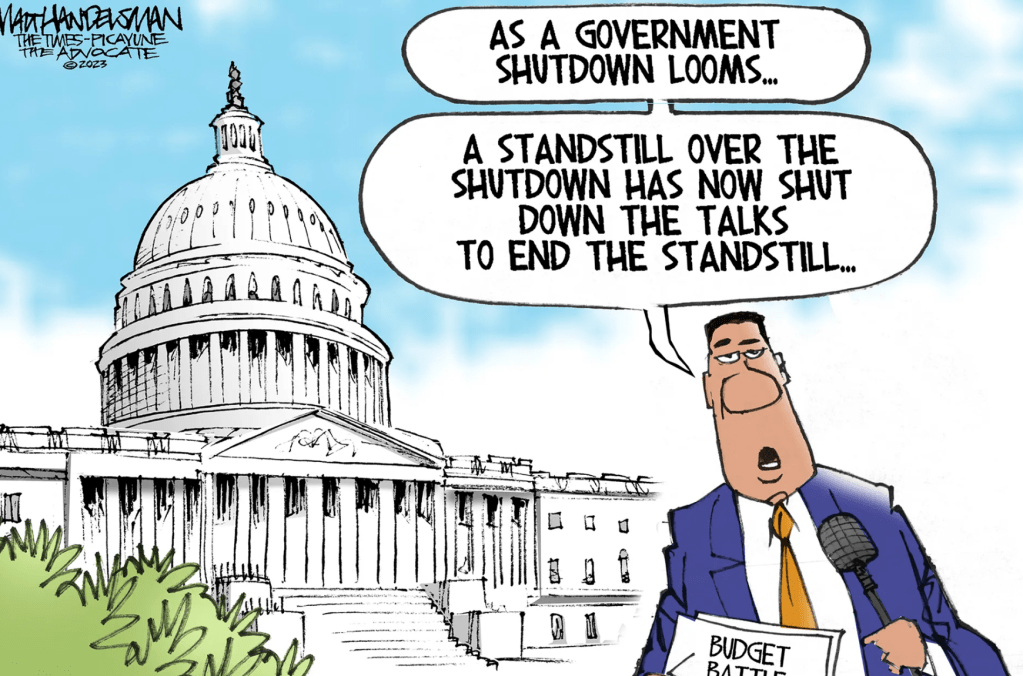
Ezra Klein (N.Y. Times), What Were Democrats Thinking?
As far as I can tell, the headline is intended to be read in a straightforward way—“WHAT were Democrats thinking?”—not in a sarcastic tone of voice—“What were Democrats THINKING?”
In any event, as per usual, Ezra Klein has a dozen or so really interesting things to say—some of which might not have occurred to you and me—and it’s best to let him speak for himself.
But as a preamble, two brief comments from me. First, some of the eight senators who joined the Republicans are political heavyweights, and people not known for an inclination to wimp out. So, before your knee jerks and you hurl criticism at them for wimping out, please think twice.
Second, among the really interesting things one might say about this putrid mess, the most interesting, IMHO, is that Republicans are now set up to cast spectacularly unpopular votes to screw a large portion of the public on the health insurance costs.
Ezra Klein writes,
Back in September, when I was reporting an article on whether Democrats should shut down the government, I kept hearing the same warning from veterans of past shutdown fights: The president controls the bully pulpit. He controls, to some degree, which parts of the government stay open and which parts close. It is very, very hard for the opposition party to win a shutdown.
Which makes it all the more remarkable that Democrats were winning this one. Polls showed that most voters blamed Republicans, not Democrats, for the current shutdown — perhaps because President Trump was bulldozing the East Wing of the White House rather than negotiating to reopen the government. Trump’s approval rating has been falling — in CNN’s tracking poll, it dipped into the 30s for the first time since he took office again. And last week, Democrats wrecked Republicans in the elections and Trump blamed his party’s losses in part on the shutdown. Democrats were riding higher than they have been in months.
Then, over the weekend, a group of Senate Democrats broke ranks and negotiated a deal to end the shutdown in return for — if we’re being honest — very little.
The guts of the deal are this: Food assistance — both SNAP and WIC, I was told — will get a bit more funding, and there are a few other modest concessions on spending levels elsewhere in the government. Laid-off federal workers will be rehired and furloughed federal workers given back pay. Most of the government is funded only until the end of January. (So get ready: We could be doing this again in a few months.) Most gallingly, the deal does nothing to extend the expiring Affordable Care Act tax credits over which Democrats ostensibly shut down the government in the first place. All it offers is a promise from Republicans to hold a vote on the tax credits in the future. Of the dozen or so House and Senate Democrats I spoke to over the past 24 hours, every one expected that vote to fail.
To understand why the shutdown ended with such a whimper, you need to understand the strange role the A.C.A. subsidies played in it. Democrats said the shutdown was about the subsidies, but for most of them, it wasn’t. It was about Trump’s authoritarianism. It was about showing their base — and themselves — that they could fight back. It was about treating an abnormal political moment abnormally.
T he A.C.A. subsidies emerged as the shutdown demand because they could keep the caucus sufficiently united. They put Democrats on the right side of public opinion — even self-identified MAGA voters wanted the subsidies extended — and held the quivering Senate coalition together. You shut the government down with the Democratic caucus you have, not with the Democratic caucus you want.
The shutdown was built on a cracked foundation. There were Senate Democrats who didn’t want a shutdown at all. There were Senate Democrats who did want a shutdown but thought it strange to make their demand so narrow: Was winning on health care premiums really winning the right fight? Should Democrats really vote to fund a government turning toward authoritarianism so long as health insurance subsidies were preserved?
And what if winning on the health care fight was actually a political gift to Donald Trump? Absent a fix, the average health insurance premium for 20 million Americans will more than double. The premium shock will hit red states particularly hard. Tony Fabrizio, Trump’s longtime pollster, had released a survey of competitive House districts showing that letting the tax credits expire might be lethal to Republican efforts to hold the House. Why were Democrats fighting so hard to neutralize their best issue in 2026?
The political logic of the shutdown fight was inverted: If Democrats got the tax credits extended — if they “won” — they would be solving a huge electoral problem for Republicans. If Republicans successfully allowed the tax credits to expire — if they “won” — they would be handing Democrats a cudgel with which to beat them in the elections.
This is why Senator Chuck Schumer’s compromise, which offered to reopen the government if Republicans extended the tax credits for a year, struck many Democrats as misguided. Morally, it might be worth sacrificing an electoral edge to lower health insurance premiums. But a one-year extension solved the Republicans’ electoral problem without solving the policy problem. Why on earth would they do that?
In any case, Republicans were not interested in Schumer’s offer. Trump himself has shown no interest in a deal. Rather than negotiating over health care spending, Trump has been ratcheting up the pain the shutdown is causing. Hundreds of thousands of federal workers have been furloughed or fired. The administration has been withholding food assistance from Americans who desperately need it. Airports are tipping into chaos as air traffic controllers go without pay.
More than anything else, this is what led some Senate Democrats to cut a deal: Trump’s willingness to hurt people exceeds their willingness to see people get hurt. I want to give them their due on this: They are hearing from their constituents and seeing the mounting problems and they are trying to do what they see as the responsible, moral thing. They do not believe that holding out will lead to Trump restoring the subsidies. They fear that their Republican colleagues would, under mounting pressure, do as Trump had demanded and abolish the filibuster. (Whether that would be a good or a bad thing is a subject for another column.) This, in the end, is the calculation the defecting Senate Democrats are making: They don’t think a longer shutdown will cause Trump to cave. They just think it will cause more damage.
If I were in the Senate, I wouldn’t vote for this compromise. Shutdowns are an opportunity to make an argument, and the country was just starting to pay attention. If Trump wanted to cancel flights over Thanksgiving rather than keep health care costs down, I don’t see why Democrats should save him from making his priorities so exquisitely clear. And I worry that Democrats have just taught Trump that they will fold under pressure. That’s the kind of lesson he remembers.
But it’s worth keeping this is perspective: The shutdown was a skirmish, not the real battle. Both sides were fighting for position, and Democrats, if you look at the polls, are ending up in a better one than they were when they started. They elevated their best issue — health care — and set the stage for voters to connect higher premiums with Republican rule. It’s not a win, but given how badly shutdowns often go for the opposition party, it’s better than a loss.

When I was three years old, I had to learn by experience what are the consequences of sticking the table knife into the electric socket. Apparently, large numbers of our fellow citizens need to learn from experience that it is unwise to pick as your airline pilot someone suffering from severe mental illness, who lacks common sense, and who is quickly becoming senile and demented. Such a pilot is likely to fly the plane into the ground. It’s a shame the passenegers didn’t know that before the picked him.
I think the New York Times did a good job laying out twelve markers of authoritarianism. (See the immediately preceding post.) That said, I also think some context is badly needed.
Trump doesn’t know how to do second-order thinking. He cannot accurately grasp the consequences of his actions, or the consequences of the actions of others.
Trump doesn’t know how to think long term. Witness, for example, his thoughts on the filibuster.
Trump doesn’t know how to use any tools to achieve his goals, apart from bribery and threats, including threats of violence.
It is a constant surprise to Trump that, while some people will succumb to bribery and some will succumb to threats, others will not. In fact, for many, the threats will, from Trump’s perspective, be entirely counterproductive.
As a sociopath lacking all empathy, Trump is unable to appeal to others’ empathy, because he does not know that most people are empathetic, at least to some degree.
Trump doesn’t know how to construct a plausible argument. Thus, on the rare occasions when his positions have some merit, he cannot make a logical argument.
In fact, Trump is unaware that some arguments are backed by facts and logic, and some are just bullshit. To him, legal disputes are just a matter of which side screams the loudest. Because he is unaware that some legal positions are well founded and others are not, and because he cannot accurately predict the consequences of his actions, and because he is incapable of second order thinking, he has ordered the prosecution of Letitia James and James Comey even though the prosecutions will fail, and he and his legal team will be revealed as the idiots they are.
By contrast, a rational proto-fascist would have known that ordinary prosecutions of his enemies would fail, and he would do better to encourage violent action against them, outside the formal legal structure.
So, he can do a lot of mischief and cause a lot of chaos.
From The Economist this morning:

Trump’s slender margin of victory in 2024 was based on inflation and fears of criminal immigrants.
A rational proto-fascist would have kept his promise to try to lower inflation. A rational wannabe dictator would have realized that policies that tend to promote inflation will in fact increase inflation. Someone capable of second order thinking would have realized that higher inflation would decrease his popularity and make it harder for him to achieve his authoritarian dreams. Someone not blinded by grandiosity would recognize his loss of popularity when he sees it.
A rational nascent Nazi would recognize that if he has made inroads into the Latino community by promising to round up criminal immigrants, then he should round up criminal immigrants, not terrorize the whole Latino population.
The Supreme Court is slow walking Trump’s emergency application to invade Illinois. On Wednesday of this week, they’ll hear oral argument on Trump’s tariff power grab. Other issues will follow in due course.
They game of Trump v. Justice is under way, but there are more innings to play. In the last game of the World Series, the Blue Jays were ahead at the end of eighth inning, but the Dodgers won the contest. Let’s let this game play out.
Well, as someone once said, aye, there’s the rub.
Let’s say Trump doesn’t want to obey a Supreme Court order and directs [insert name of police unit, National Guard, Army battalion, etc. etc.] to act in contravention of the Court’s decision, will the people making up that official body obey Trump or will they obey the Supreme Court or will law and order just break down?
I put it to you that it’s hardly a foregone conclusion that the … police, National Guard, Army, etc. … will just jerk their knees and do exactly what Trump tells them to do.
If the official organs of state power refuse to obey illegal orders, will Trump just call out the Proud Boys and the other hooligans?
Answer: I don’t know, but he has done it before.
N.Y. Times Editorial Board, Are We Losing Our Democracy?
The Times identifies twelve “markers of democratic erosion,” briefly discusses each one, and gives a “bottom line” view of where we are on the downward curve. This post cites each “marker” and reproduces the Times Editorial Board’s “bottom line”:
1. An authoritarian stifles dissent and speech. Bottom Line: Many forms of speech and dissent remain vibrant in the United States. But the president has tried to dull them. His evident goal is to cause Americans to fear they will pay a price for criticizing him, his allies or his agenda.
2. An authoritarian persecutes political opponents. Bottom line: True authoritarians go much further than Mr. Trump has, but he has already targeted his opponents with legal persecution in shocking ways.
3. An authoritarian bypasses the legislature. Bottom line: Mr. Trump has defied the Constitution by trampling on Congress’s power of the purse. In full autocracies, legislatures often formally transfer some of their authority to the executive, and some congressional Republicans have proposed such changes.
4. An authoritarian uses the military for domestic control. Bottom line: Mr. Trump’s use of the military for domestic control has been limited. But his willingness to use it as he has — and his threats to expand that use, through the invocation of the Insurrection Act and with troops beyond the National Guard — is extremely worrisome.
5. An authoritarian defies the courts. Bottom line: It is a hopeful sign that he has not ignored the Supreme Court, and the court may yet block his most blatant power grabs. Still, the court’s reluctance to restrain himappears to have emboldened him to sidestep lower court orders he does not like.
6. An authoritarian declares national emergencies on false pretenses. Bottom line: Mr. Trump’s willingness to kill people without due process, through the blowing up of boats that American officials could instead stop and search, represents one of his most extreme abuses of power. It raises the prospect that he may expand the use of emergency power to other areas, including domestic law enforcement.
7. An authoritarian vilifies marginalized groups. Bottom line: Mr. Trump is borrowing from the autocrats’ playbook by suggesting that some citizens are legitimate and others are second-class.
8. An authoritarian controls information and the news media. Bottom line: In place of an independent and free press, Mr. Trump evidently hopes to create a shadow ecosystem willing to promote his interests and talking points.
9. An authoritarian tries to take over universities. Bottom line: Because the federal government finances so much academic research, it has considerable power over universities. Initially, some universities seemed as if they might simply submit to Mr. Trump’s demands. More recently, several showed more willingness to resist, rejecting a proposal that would have rewarded them financially for adopting Trump-friendly policies.
10. An authoritarian creates a cult of personality. Bottom line: The Trump cult of personality plays into his claims — common among autocrats — that he possesses a unique ability to solve the country’s problems. As he put it, “I alone can fix it.” He seeks to equate himself with the federal government, as if it does not exist without him.
11. An authoritarian uses power for personal profit. Bottom line: The Trump cult of personality plays into his claims — common among autocrats — that he possesses a unique ability to solve the country’s problems. As he put it, “I alone can fix it.” He seeks to equate himself with the federal government, as if it does not exist without him.
12. An authoritarian manipulates the law to stay in power. Bottom line: Even if he backs away from any scheme to serve more than two presidential terms, Mr. Trump’s attempts to tilt the electoral field in favor of Republicans is anti-democratic and could pervert American elections for years.

Earlier in the day, I wrote about the behavior of the big law firms vis-à-vis Trump, which looks like “cowardice.”
I followed up, with a post about the Wall Street Journal’s courageous condemnation of “moral relativism.”
Now for a little commentary of my own.
Molière is said to have taken great pains to find le mot juste. Confucius heavily emphasized the harm that can arise when elites don’t understand the situation they are in—and don’t use accurate language to talk about it. See Analects !3:3, which reads in part, “When a ruler doesn’t understand what he’s talking about, he should remain silent. When names aren’t correct, language doesn’t accord with the truth of things. When language doesn’t match reality, nothing can be carried out successfully.”
In the spirit of Confucius and Molière, I would like to suggest that our elites have not been afflicted with a bout of cowardice, nor has their thinking suddenly become infected by morally relativistic fallacious reasoning.
They aren’t cowards, and they aren’t irrational. Instead, their problem is that same problem that elites always have—their values.
What they value is acquiring wealth and exercising power. In pursuit of those values, they are both courageous and rational.
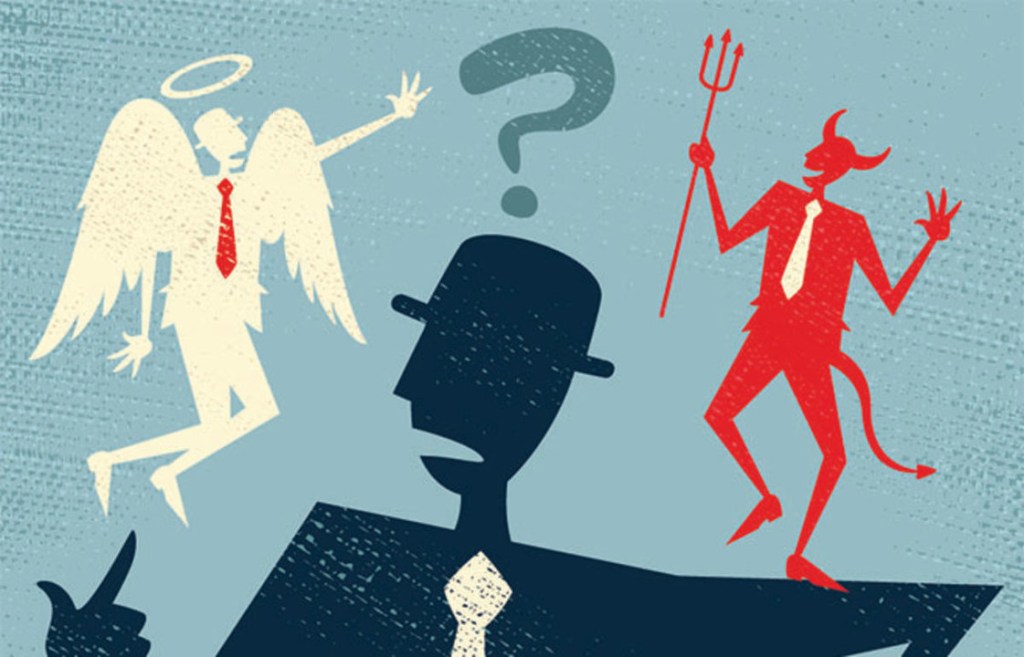
Gerard Baker, editor at large of the Wall Street Journal, writes Trump Accelerates Our Decline Into Moral Relativism: As is often true, he wasn’t the first but is the worst to use others’ wrongs as an excuse for his own:
Moral relativism is enticing. It enables me to establish the moral value of everything I do by reference to the behavior of others. It allows me to avoid censure by judging my intentions, choices and actions not on the basis of whether they are intrinsically right or wrong, but by the lesser standard of whether someone in a similar position might have done something similar.
Moral relativism is hardly new in public life. Self-exoneration through false moral equivalence by public figures is as old as time itself. But when it becomes the controlling ethical architecture of public behavior, we are in serious trouble. Its effect is to give leaders permission to do just about anything they want, unconstrained by guilt, shame or political sanction. Moral relativism and the ratchet effect will ensure that there is always some precedent close enough to persuade people to shrug even when confronted with some evidence of genuine turpitude on their own side.
We’ve been descending this spiral for a long time, but as with just about everything to do with the gargantuan figure of Donald Trump, his behavior has accelerated the descent.
His corrosive effect on norms of ethics, language and, for that matter, conservatism, has been amplified by the eager acquiescence of the Republican Party in the process.
The party that once liked to think of itself as committed to values and principles has become the most cynical exponent of the idea that everything is relative. A cheerleading chorus of so-called conservatives in the media eased the way. Every time they are confronted with evidence of some new infamy by their president, many on the right will choose to avoid the unrewarding path of moral consistency and opt instead for the tactics of least resistance: misdirection, “whataboutism,” or simply reaching for the blinders. All of these relativist tools have been on display in the last week.
Take the pardon for Changpeng Zhao, the Binance cryptocurrency exchange founder, convicted of money-laundering offenses. This after his firm had been involved in a lucrative financial partnership for the president and his family that helped contribute to the $4.5 billion in wealth they have generated this year alone. Morally equivalent precedents: Hunter Biden? The Clinton Foundation? Hardly on the same scale. What we have seen this year is new levels of graft and grift. We seem to be moving rapidly toward a justice system in which the president essentially gets to decide who should be in prison. If you’re a political enemy, we’ll come up with a crime to fit your punishment. If you’re a friend, we will annul your crimes.
Then there is Mr. Trump’s grandiose plan for the East Wing of the White House. There has been a lot of nonsense about this. I don’t doubt that the left’s hysteria is overdone. It seems certain that, legally and constitutionally, the president could, if he wanted, tear down the whole executive mansion and replace it with a giant casino—and there’s certainly plenty of presidential precedent. This much is grounds for legitimate moral equivalence.
But there is the legitimate question of how it’s paid for. Usage has by now dulled us to the question “What would we say if a Democrat did this?” But some of us remember when Bill Clinton had wealthy donors for sleepovers in the Lincoln Bedroom, and for weeks Republicans and their supporters in the media treated it as if he were selling the sacred space to the highest bidder. Now we have a president who is literally selling the place to the highest bidders, all justified on spurious comparisons with some changes Barack Obamamade on a much smaller scale.
Misdirection is a convenient tool of relativism. Look at the latest mind-numbing assault on sanity of the president’s new tariffs on Canada. The obvious legal, political, moral, diplomatic and economic monstrosity of a president unilaterally imposing a tax on imports because he was upset by something that a Canadian provincial government decided to show on television is literally without precedent. Yet a lot of people on the right have spent the last week explaining how Mr. Trump was essentially right to say Ronald Reagan “loved” tariffs more than those wicked Canadians claimed. (He didn’t, but truth is another casualty of moral relativism.)
And never mind that the president is making personal laws and dispensing arbitrary justice, have you seen the tattoo on the chest of that Democratic candidate for Senate in Maine? My God, the Democrats have a Nazi problem.
It should be possible—and it is essential to a well-ordered society—to call out morally reprehensible behavior by your own side as well as by your opponents. That it no longer seems to be leaves us all morally degenerate.
 Facing MAGA