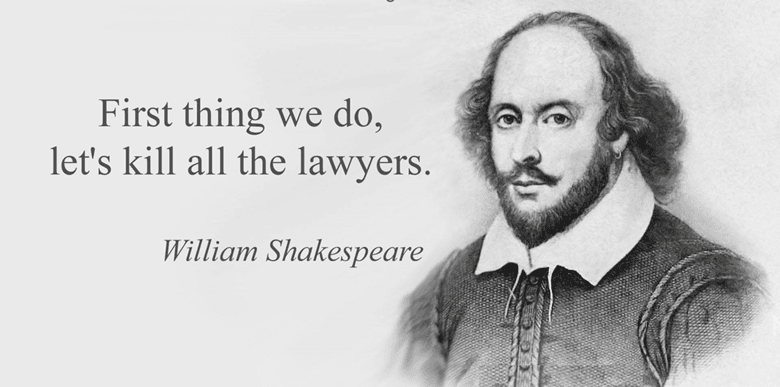
D. John Sauer, Esquire, pursued a double major, philosophy and electrical engineering, at Duke. After college, he was a Rhodes Scholar at Oxford, where he earned a degree in theology, followed by a masters in philosophy at Notre Dame. At that point, he felt a call to the bar, prompting him to go to Harvard Law School, where he “made Law Review” and earned a degree magna cum laude. After Harvard Law, Judge Luttig of the Fourth Circuit gladly offered him a position as clerk, and from there he went on to provide his considerable intellectual talents as clerk to Justice Scalia.
No slouch is D. John Sauer, Esquire. As a consequence of his brilliance and prestigious education, Mr. Sauer knew exactly what to tell the judge who asked if it would be A-OK for a president to order Seal Team Six to assassinate a political enemy. “Yessiree bobtail,” readily responded D. John Sauer, Esquire, “that would be just hunky-dory.”
Having achieved victory in the presidential immunity case through the ministrations of D. John Sauer—electrical engineer, philosopher, theologian, and legal scholar—Mango Mussolini knew exactly whom to appoint as Solicitor General, the position Mr. Sauer currently graces.
Clearly, Trump and his Attorney General, Ms. Bondi, would like to shitcan all the normal lawyers from the Justice Department and replace every mother’s son and daughter of them with clones of D. John Sauer, Esquire.
Sadly, however, as the Washington Post reports today, the American bar is not populated by lots of Harvard trained Nazis, eager to replace the thousands of lawyers who have been fired or who have left the Justice Department. Nor are the law schools at Columbia and Harvard and Georgetown filled with eager young Fascist whipper-snappers, read to pour their hearts and souls into the struggle to establish authoritarianism. WaPo writes,
Current Justice Department prospective hires are more likely to have political backgrounds than have been typical in the past, coming from Republican congressional offices and advocacy groups, the people familiar with the hiring process said. Others are young attorneys with little relevant experience or mid- to late-career attorneys who have no background in prosecutions.
When I was three years old, I had to learn by experience what are the consequences of sticking the table knife into the electric socket. Apparently, large numbers of our fellow citizens need to learn from experience that it is unwise to pick as your airline pilot someone suffering from severe mental illness, who lacks common sense, and who is quickly becoming senile and demented. Such a pilot is likely to fly the plane into the ground. It’s a shame the passenegers didn’t know that before the picked him.
The Markers of Authoritarianism
I think the New York Times did a good job laying out twelve markers of authoritarianism. (See the immediately preceding post.) That said, I also think some context is badly needed.
What Trump Doesn’t Know
Trump doesn’t know how to do second-order thinking. He cannot accurately grasp the consequences of his actions, or the consequences of the actions of others.
Trump doesn’t know how to think long term. Witness, for example, his thoughts on the filibuster.
Trump doesn’t know how to use any tools to achieve his goals, apart from bribery and threats, including threats of violence.
It is a constant surprise to Trump that, while some people will succumb to bribery and some will succumb to threats, others will not. In fact, for many, the threats will, from Trump’s perspective, be entirely counterproductive.
As a sociopath lacking all empathy, Trump is unable to appeal to others’ empathy, because he does not know that most people are empathetic, at least to some degree.
Trump doesn’t know how to construct a plausible argument. Thus, on the rare occasions when his positions have some merit, he cannot make a logical argument.
In fact, Trump is unaware that some arguments are backed by facts and logic, and some are just bullshit. To him, legal disputes are just a matter of which side screams the loudest. Because he is unaware that some legal positions are well founded and others are not, and because he cannot accurately predict the consequences of his actions, and because he is incapable of second order thinking, he has ordered the prosecution of Letitia James and James Comey even though the prosecutions will fail, and he and his legal team will be revealed as the idiots they are.
By contrast, a rational proto-fascist would have known that ordinary prosecutions of his enemies would fail, and he would do better to encourage violent action against them, outside the formal legal structure.
But Trump is the President
So, he can do a lot of mischief and cause a lot of chaos.
Trump’s Popularity is Headed South
From The Economist this morning:
Inflation and Criminal Immigrants
Trump’s slender margin of victory in 2024 was based on inflation and fears of criminal immigrants.
A rational proto-fascist would have kept his promise to try to lower inflation. A rational wannabe dictator would have realized that policies that tend to promote inflation will in fact increase inflation. Someone capable of second order thinking would have realized that higher inflation would decrease his popularity and make it harder for him to achieve his authoritarian dreams. Someone not blinded by grandiosity would recognize his loss of popularity when he sees it.
A rational nascent Nazi would recognize that if he has made inroads into the Latino community by promising to round up criminal immigrants, then he should round up criminal immigrants, not terrorize the whole Latino population.
And What About the Supreme Court?
The Supreme Court is slow walking Trump’s emergency application to invade Illinois. On Wednesday of this week, they’ll hear oral argument on Trump’s tariff power grab. Other issues will follow in due course.
They game of Trump v. Justice is under way, but there are more innings to play. In the last game of the World Series, the Blue Jays were ahead at the end of eighth inning, but the Dodgers won the contest. Let’s let this game play out.
Yeah, But What if Trump Just Defies the Courts?
Well, as someone once said, aye, there’s the rub.
Let’s say Trump doesn’t want to obey a Supreme Court order and directs [insert name of police unit, National Guard, Army battalion, etc. etc.] to act in contravention of the Court’s decision, will the people making up that official body obey Trump or will they obey the Supreme Court or will law and order just break down?
I put it to you that it’s hardly a foregone conclusion that the … police, National Guard, Army, etc. … will just jerk their knees and do exactly what Trump tells them to do.
But Because I Can Do Second Order Thinking, I Post the Next Question
If the official organs of state power refuse to obey illegal orders, will Trump just call out the Proud Boys and the other hooligans?
The Times identifies twelve “markers of democratic erosion,” briefly discusses each one, and gives a “bottom line” view of where we are on the downward curve. This post cites each “marker” and reproduces the Times Editorial Board’s “bottom line”:
1. An authoritarian stifles dissent and speech. Bottom Line: Many forms of speech and dissent remain vibrant in the United States. But the president has tried to dull them. His evident goal is to cause Americans to fear they will pay a price for criticizing him, his allies or his agenda.
2. An authoritarian persecutes political opponents. Bottom line: True authoritarians go much further than Mr. Trump has, but he has already targeted his opponents with legal persecution in shocking ways.
3. An authoritarian bypasses the legislature. Bottom line: Mr. Trump has defied the Constitution by trampling on Congress’s power of the purse. In full autocracies, legislatures often formally transfer some of their authority to the executive, and some congressional Republicans have proposed such changes.
4. An authoritarian uses the military for domestic control. Bottom line: Mr. Trump’s use of the military for domestic control has been limited. But his willingness to use it as he has — and his threats to expand that use, through the invocation of the Insurrection Act and with troops beyond the National Guard — is extremely worrisome.
5. An authoritarian defies the courts. Bottom line: It is a hopeful sign that he has not ignored the Supreme Court, and the court may yet block his most blatant power grabs. Still, the court’s reluctance to restrain himappears to have emboldened him to sidestep lower court orders he does not like.
6. An authoritarian declares national emergencies on false pretenses. Bottom line: Mr. Trump’s willingness to kill people without due process, through the blowing up of boats that American officials could instead stop and search, represents one of his most extreme abuses of power. It raises the prospect that he may expand the use of emergency power to other areas, including domestic law enforcement.
7. An authoritarian vilifies marginalized groups. Bottom line: Mr. Trump is borrowing from the autocrats’ playbook by suggesting that some citizens are legitimate and others are second-class.
8. An authoritarian controls information and the news media. Bottom line: In place of an independent and free press, Mr. Trump evidently hopes to create a shadow ecosystem willing to promote his interests and talking points.
9. An authoritarian tries to take over universities. Bottom line: Because the federal government finances so much academic research, it has considerable power over universities. Initially, some universities seemed as if they might simply submit to Mr. Trump’s demands. More recently, several showed more willingness to resist, rejecting a proposal that would have rewarded them financially for adopting Trump-friendly policies.
10. An authoritarian creates a cult of personality. Bottom line: The Trump cult of personality plays into his claims — common among autocrats — that he possesses a unique ability to solve the country’s problems. As he put it, “I alone can fix it.” He seeks to equate himself with the federal government, as if it does not exist without him.
11. An authoritarian uses power for personal profit. Bottom line: The Trump cult of personality plays into his claims — common among autocrats — that he possesses a unique ability to solve the country’s problems. As he put it, “I alone can fix it.” He seeks to equate himself with the federal government, as if it does not exist without him.
12. An authoritarian manipulates the law to stay in power. Bottom line: Even if he backs away from any scheme to serve more than two presidential terms, Mr. Trump’s attempts to tilt the electoral field in favor of Republicans is anti-democratic and could pervert American elections for years.
“They have a ‘Hate America’ rally that’s scheduled for October 18 on the National Mall,” the House speaker, Mike Johnson, said on Fox News on Friday. “It’s all the pro-Hamas wing and, you know, the antifa people. They’re all coming out.”
The Republican Minnesota congressman Tom Emmer said the party’s “terrorist wing” was holding the “Hate America” rally. “Democrats want to keep the government shut down to show all those people that are going to come here and express their hatred towards this country that they’re fighting President Trump,” said the House majority leader, Steve Scalise. The transportation secretary, Sean Duffy, embellished the story on Fox, referring to the demonstrations’ “paid protesters” and adding: “It begs the question who’s funding it.”
I thought about skipping the No Kings demonstration next week. We’ll be lined up along a major north-south route in a large urban area. It would be easy for someone with a machine gun to drive along the street and mow us down.
Then I thought about my father, who got on that boat in 1944 and dodged several U-boat attacks as he went to Europe to fight the Nazis.
At minute 23, he expounds on how we will be called to resist when the shit hits the fan. At minute 32, he talks about the temptation to engage in physical violence. At minute 35, he counsels against the temptation to wallow in fear and despair.
Before I quote from Frum’s piece, I begin with some key points.
First, Frum is a mighty shrewd fellow.
Second, Frum grasps a vital truth: to understand what’s going on around us, you have absolutely got to focus on what motivates people. That’s people in general. That’s individual people, with all their eccentricities and foibles. And that’s categories of people. And, in our day and age, the category of criminals and opportunists who surround Trump.
If the Trump hangers on think that Trump is prevailing, well, that’s one calculation. But if they begin to fear he’s losing, well, that’s another calculation entirely.
So, with those thoughts in mind, take it away, David!
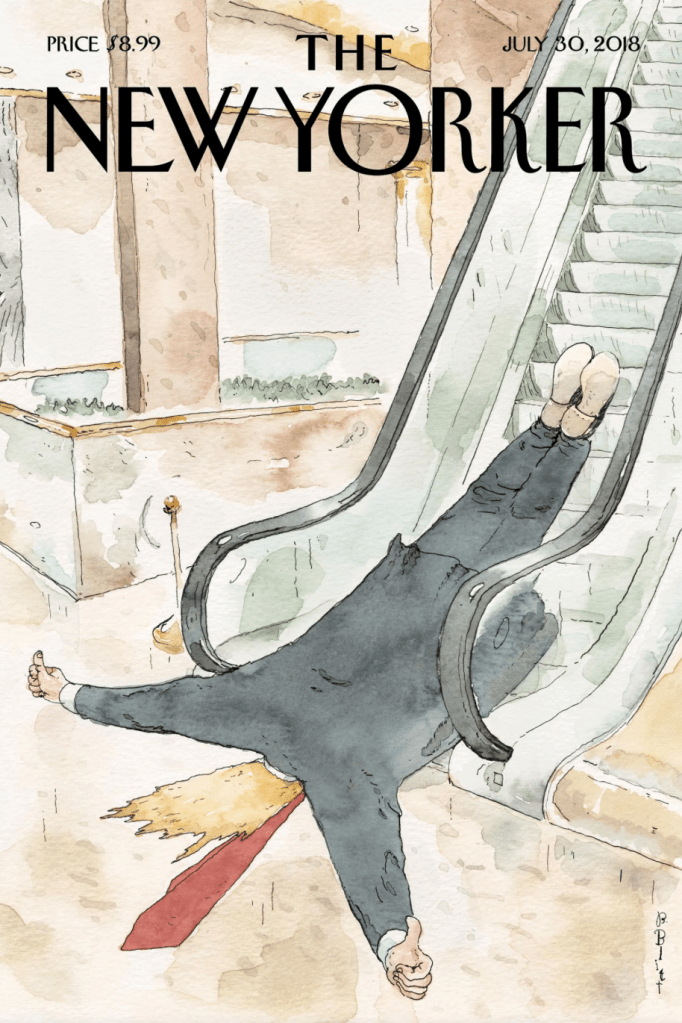
President Donald Trump is worried that Attorney General Pam Bondi is moving too slowly to prosecute his political adversaries on fake charges. Trump has good reason to be concerned. He is carrying out his project to consolidate authoritarian power against the trend of declining public support for his administration and himself. He is like a man trying to race upward on a downward-moving escalator. If he loses the race, he will be pulled ever deeper below—and the escalator keeps moving faster against him.
Autocracies are headed by one man but require the cooperation of many others. Some collaborators may sincerely share the autocrat’s goals, but opportunists provide a crucial margin of support. In the United States, such people now have to make a difficult calculation: Do the present benefits of submitting to Trump’s will outweigh the future hazards?
As Bondi makes her daily decisions about whether to abuse her powers to please Trump, she has to begin with one big political assessment: Will Trump ultimately retain the power to reward and punish her? It’s not just about keeping her present job. On the one hand, people in Trump’s favor can make a lot of money from their proximity to power. On the other, Richard Nixon’s attorney general, John Mitchell, served 19 months in prison for his crimes during Watergate. If Trump’s hold on power loosens, Bondi could share Mitchell’s fate.
Trump’s hold on power is indeed loosening. His standing with the voting public is quickly deteriorating. Grocery prices jumped in August 2025 at the fastest speed since the peak of the post-pandemic inflation in 2022. Job growth has stalled to practically zero.
Almost two-thirds of Americans disapprove of higher tariffs, Trump’s signature economic move. His administration’s attack on vaccines for young children is even more unpopular. This year has brought the highest number of measles cases since the Clinton administration introduced free universal vaccination for young children in 1993. Parents may be rightly shocked and angry.
Shortly after MSNBC reported that Tom Homan, Trump’s border czar, had accepted $50,000 in cash from FBI agents posing as businessmen last year, allegedly in exchange for a promise to help secure government contracts, the pro-Trump podcaster Megyn Kelly posted, “We DO NOT CARE.” This kind of acquiescence to corruption has been one of Trump’s most important resources. But the American people become a lot less tolerant of corruption in their leaders when they feel themselves under economic pressure. As of early August, nearly two-thirds of Americans regarded Trump as corrupt, 45 percent as “very corrupt.” More than 60 percent think the Trump administration is covering up the Jeffrey Epstein case. Almost 60 percent regard Bondi personally responsible for the cover-up.
The MAGA project in many ways resembles one of former businessman Donald Trump’s dangerously leveraged real-estate deals. A comparatively small number of fanatics are heart-and-soul committed. Through them, Trump controls the Republican apparatus and the right-wing media world, which allows him to do things like gerrymander states where he is in trouble (50 percent of Texans now disapprove of Trump, while only 43 percent approve) or wield the enforcement powers of the Federal Communications Commission to silence on-air critics. But overleveraged structures are susceptible to external shocks and internal mistakes.
Trump in his first term mostly avoided screwing up the economy. His trade wars with China triggered a nearly 20 percent stock-market slump in the fall and early winter of 2018. Trump retreated, and no recession followed the slump until the COVID shock of 2020. But in his second term, Trump has jettisoned his former economic caution. The stock market is doing fine in 2025 on hopes of interest-rate cuts. The real economy is worsening. The percentage of Americans who think the country is on the “wrong track” rose sharply over the summer. Even self-identified Republicans are now more negative than positive.
The souring is especially bitter among younger people. More than 60 percent of Republicans younger than 45 say things are on the wrong track, a 30-point deterioration over the three summer months.
Trump has a shrewd instinct for survival. He must sense that if he does not act now to prevent free and fair elections in 2026, he will lose much of his power—and all of his impunity. That’s why he is squeezing Bondi. But for her, the thought process must be very different. Trump is hoping to offload culpability for his misconduct onto her. She’s the one most directly at risk if she gives orders later shown to be unethical or illegal.
The survival of American rights and liberties may now turn less on the question of whether Pam Bondi is a person of integrity—which we already know the dismal answer to—than whether she is willing to risk her career and maybe even her personal freedom for a president on his way to repudiation unless he can fully pervert the U.S. legal system and the 2026 elections.
Since the spring, the shine has come off President Trump’s handling of immigration. And yet there has been no apparent surge in voters’ desire to put immigration policy back in the hands of Democrats.
Frankly, Democrats have not earned voters’ trust on immigration — and I say this as a Democrat.
The most recent Democratic administration presided over an enormous surge in migration, with the unauthorized immigrant population exploding to 14 million in 2023 from 10.5 million in 2021 and likely millions more by the time Joe Biden left office, according to the Pew Research Center.
For too long, Mr. Biden and his team asserted they couldn’t stop the surge without new legislation. That proved false: In 2024, having failed to get an immigration bill through Congress, Mr. Biden finally took executive actions to curb abuse of the asylum system and slow the flow of migrants across the southern border. When Mr. Trump took office, illegal border crossings slowed to a trickle. In other words, the problem had been fixable all along; Mr. Biden simply did not fix it until much too late.
As a result, the unauthorized immigrant population in the United States today is considerably different from what it was before Mr. Biden’s presidency. In 2021, over 80 percent of unauthorized immigrants had been living here for at least five years. Now there are millions more recent arrivals without similarly deep links to American communities. Admitting all these new migrants was never an agreed-upon public policy — no voters endorsed this, no law passed by Congress contemplated it and to the extent the migrants are seeking asylum, their legal claims are too often bogus.
But it happened, and Democrats need to explain to voters why they should not expect it to happen again if they regain power. They also need a story about what happens with the millions of people who came here recently, even though they weren’t supposed to.
The longstanding preferred Democratic framework has been comprehensive immigration reform. The idea is that you secure the border, set an intentional and thoughtful immigration policy about who to admit going forward, and give some sort of amnesty to most of the unauthorized immigrants who are already here. Twenty years of legislative efforts to enact this framework failed, even when there was substantial Republican support for it, which is no longer the case. And that was before the composition of the unauthorized immigrant population changed so drastically.
Center-left commentators like Matthew Yglesias and Jerusalem Demsas have been proposing policy ideas that aim to make Democrats’ plans for immigration more appealing to the public. These include refocusing immigration toward higher-skilled migrants, allowing more guest workers on nonimmigrant visas to address inflation-producing labor shortages in industries like hospitality, adding requirements related to assimilation and English-language learning, and even taxing immigrants at higher rates than native-born Americans.
The Center for American Progress has a smart set of proposals to prevent a recurrence of the abuses of the asylum system that prevailed during the Biden administration. The institution’s Neera Tanden and Debu Gandhi propose to prohibit almost all asylum claims from migrants who crossed the southern border illegally, while those who make claims atthe border would be held in custody instead of being allowed into the country on a parole basis. Their claims would be adjudicated within 30 days, with rapid removal for those whose claims are rejected. The proposal would also raise the standard of proof for asylum claims and maintain a list of democratic countries whose citizens are presumptively ineligible for asylum.
These sorts of reforms to prevent abuse are necessary to maintain the long-term political viability of the right to claim asylum — though Democrats should also be mindful that the total number of migrants matters, and further restriction could be necessary if too many migrants try to seek asylum under the new system.
The idea is to emphasize that immigration policy must be designed principally for the benefit of American citizens, who stand to gain from the economic and cultural contributions of immigrants so long as immigration is managed appropriately.
This is a good project — but it won’t work without a robust and credible commitment to enforcement, including interior enforcement. That’s because you can make whatever rules you want about who is supposed to immigrate and how, but if you continue to allow millions of people to come live in the United States in contravention of those rules, the immigration situation on the ground will not match what is written in policy.
The mental block that Democrats have here relates to an instinct about deportations: a feeling that it’s presumptively improper to remove an unauthorized immigrant who has settled in our country if that migrant hasn’t committed a crime unrelated to immigration. These people have been here a long time, the idea goes. They’re not causing trouble.
But if we build a system where people very often get to stay here simply because they made it in — the system that prevailed during most of Mr. Biden’s term — then we don’t really have an immigration policy, and voters won’t have any reason to believe us when we say our new policy will produce different results about who comes here.
Liberals also note, accurately, that there are negative economic consequences to a stepped-up program of interior enforcement that doesn’t focus narrowly on criminals. Unauthorized immigrants play an important role in our work force, especially in agriculture and construction. More deportations will make it more expensive to grow fruits and vegetables and reduce the number of housing units we can add. (On the other hand, it will also reduce demand for housing.) But these near-term economic costs need to be weighed against the way that stepped-up interior enforcement makes any future immigration policy more credible and more effective by sending migrants the message that they need a valid visa to stay in the United States.
The need to make a credible enforcement threat does not require Democrats to endorse specific enforcement practices of the Trump administration, like having ICE officers cover their faces during raids or pursue a goal of 3,000 detentions per day. Democrats are right to highlight and criticize the way that indiscriminate raids can sweep up U.S. citizens and to call for a more effectively targeted approach. But that more targeted approach still needs to contemplate that being in the country without authorization is reason enough to deport someone.
There is a political risk for Democrats in Mr. Trump’s softer poll numbers on immigration. Earlier in the year, when his immigration stances were clearly a political asset, Democrats looked for ways to moderate their image on immigration and show a willingness to get tough on enforcement; for example, many moderate Democrats in Congress voted for the Laken Riley Act (which directs the authorities to detain and deport immigrants who are charged or admit to — but are not yet convicted of — specific crimes, if they are in the country illegally).
But now that more Americans disapprove than approve of his approach to immigration, Democrats have often reverted toward centering the concerns of noncitizens — which is to say, nonvoters. The fact that voters increasingly see Mr. Trump’s approach to immigration as too harsh is not enough to turn the issue into an asset for Democrats. A late-July poll for The Wall Street Journalshows the problem for Democrats. It found respondents narrowly disapproving of the president’s handling of the issue — and yet it also showed that voters would not rather see immigration policy in the hands of Democrats. Only 28 percent said that they trust Democrats in Congress to handle immigration policy more than they trust Republicans, while 45 percent say they trust Republicans more than Democrats (the split was slightly wider on the question of illegal immigration).
If we force voters to choose between Mr. Trump’s overly harsh approach and our overly permissive one, we will continue to lose on the issue.
Most voters say immigration provides net benefits to the country, but they also want rules to be enforced. We need to echo both of those sentiments.