At War With Iran: Ed Luce’s Observations

Edward Luce (Financial Times): Trump has opened a Pandora’s box:

They say with Donald Trump that accusation is confession. Having warned during the 2024 campaign that Joe Biden, then Kamala Harris, would trigger “world war three”, Trump is now offering a perilous test of that proposition. In his statement on Saturday night, Trump pronounced his military strikes on Iran a success. America’s bunker-busting bombs had obliterated Iran’s nuclear capacity, he said. It could take a while to find out whether both Iran and Israel — the prime actors in a show that Trump did not script but in which he is now taking a starring role — will share the US president’s assessment. But Trump is hoping that his awesome display of power will bring the curtain down on the war. That is not his decision to make. 

Whatever happens next, it is worth recalling how Trump got here. Ten days ago, Benjamin Netanyahu torpedoed Trump’s nuclear negotiations with Iran with a series of devastating missile strikes. Israel’s prime minister said that Iran was weaponising its nuclear programme and posed an existential threat. Most others, including the US intelligence community, do not share Netanyahu’s diagnosis. Having his desired deal scuppered by Israel’s move, Trump quickly associated himself with it. He demanded Iran’s unconditional surrender and said that he could take out the regime’s supreme leader, Ali Khamenei, at any point. Iran did not submit to Trump’s demand. His de facto declaration of war on Saturday night was the outcome. 

It also bears stressing that nobody, including Trump, knows what will happen next. It is easy to start a war, especially if you command the most powerful military on Earth. But wars only end when one side gives up. That age-old warning about the fog of war is particularly relevant to today’s Middle East, in which there are often more than two warring parties. The enemy of your enemy can turn out also to be your enemy. Having once been lectured by a younger Netanyahu, Bill Clinton said to an aide, “Who’s the fucking superpower here?” Trump’s brief televised address following the strikes was meant to showcase his command of the situation. In reality, Netanyahu has been dictating events. But even he cannot predict how Iran will respond. 

Netanyahu’s interests are not the same as Trump’s. Israel’s leader has made it clear he wants regime collapse in Iran. Trump wants Iran to surrender. The first would be precipitated by a strong Iranian response that left Trump no choice but to escalate — a prospect he threatened in his address. The second would involve a token Iranian retaliation that enabled Trump to declare mission accomplished. How this unfolds, and who gets to diagnose whether Iran’s actions are token or lethal, is largely out of Trump’s hands. This leaves him as the most powerful military actor in the Middle East but potentially a hollow one. Power is about the ability to shape events. Trump is largely their prisoner. 

Whatever happens, Trump’s bombing of Iran has defined his presidency at home as well as abroad. This is Trump’s war now. Iran’s submission would reverberate to his advantage in many ways; a full-blown war could sink his presidency. Among the ironies, Trump’s Iran strikes are being cheered on by many of the “Never Trumpers” who had been warning so starkly of Trump’s autocratic impulses. They are prepared to risk the power-aggrandising opportunity that war will offer Trump. Another irony is Trump’s Maga allies, such as Steve Bannon, are among the biggest sceptics of this latest, and potentially most dramatic, chapter in the “forever wars” that Trump has vowed to end. 

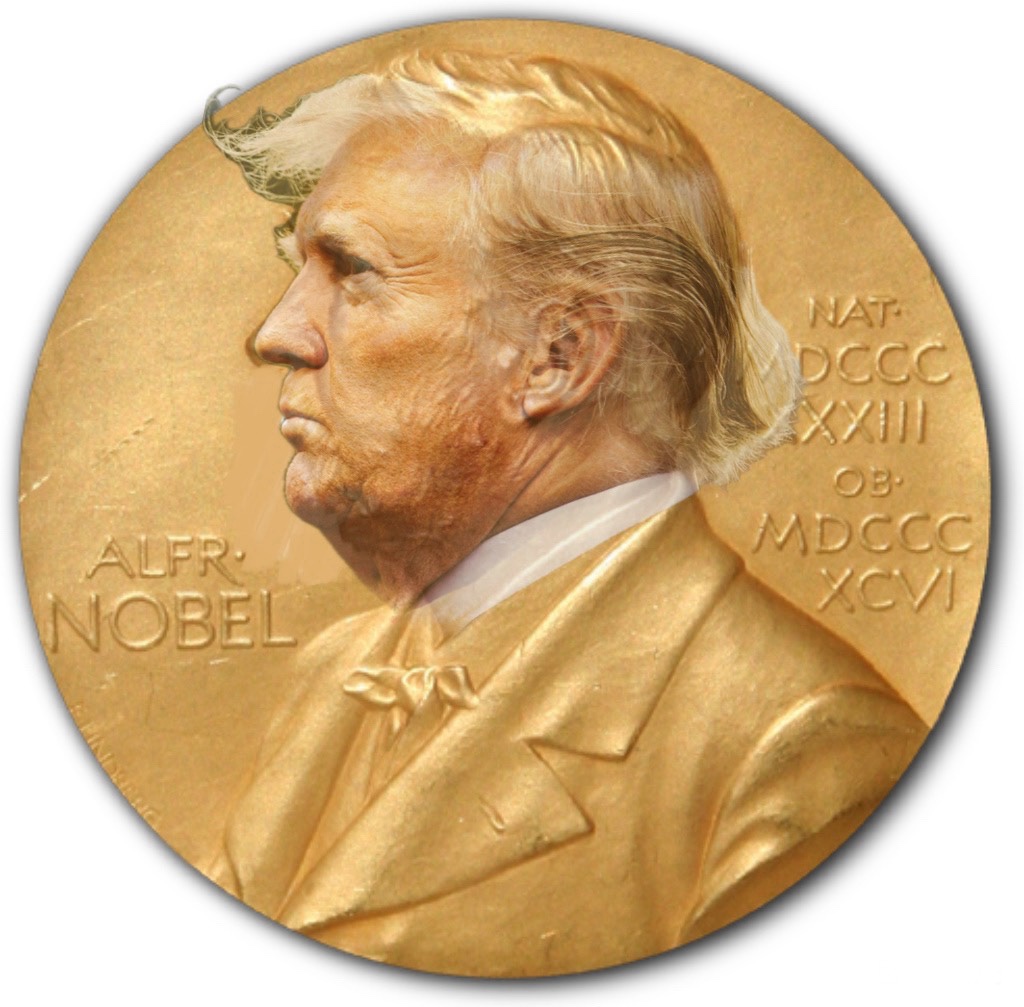
Only a fool would take Trump at his word, which he serially breaks. But it is safe to say that his ambition of winning the Nobel Peace Prize is unlikely to bear fruit. Without consulting Congress, and in probable contravention of international law, Trump has taken a fateful gamble. Whether he has fully digested this fact or not, he is now committed to seeing this through to the end. Iran and Israel will have at least as big a say as Trump in deciding when and how that happens. 

I Think Mango Mussolini is Going to TACO on Attacking Iran: As He Said Today, “I may do it. I may not do it. I mean, nobody knows what I’m going to do.”

I apologize for sharing my speculation—because my speculation probably doesn’t add much to your knowledge. But I’ll say this: it is speculation based on past behavior and based on my logical extrapolation of past behavior. 

Netanyahu set him up. Netanyahu played him like a fiddle. And he doesn’t like that. 

He has said for a very long time that he hates getting involved in conflicts in the Middle East.

And attacking Iran looks like it’s going to lead to a very long conflict. 

Mango Mussolini’s Moronic Manufactured Mayhem

Today, many talking heads are talking about the events in Los Angeles as a step on the road to authoritarianism—and an attempt to distract from Team Trump’s many failures.

All true.

And yet there remains an elephant in the room for Team Blue.

As a movement, we do not yet have a coherent and politically viable answer about

  • How to deal with the undocumented people currently present here, 

or about

  • What the rules and procedures for political asylum ought to be,

or about

  • Apart from people with legitimate asylum claims, how many—and who—should be permitted to enter the United States.

Not to have coherent and politically viable answers to these questions is political malpractice.

Trump, China Policy, and Christopher Columbus’s Three Mistakes

N.Y. Times, DealBook Newsletter, Trump Bemoans How ‘HARD’ It Is to Strike a China Deal: Even the president appears to be doubting his strategy to win over Beijing, as relations fray between the trading partners.

Well, yeah. But the headline writer mistakenly assumes there’s a discernible goal toward which Trump has an actual strategy.

It is said that Christopher Columbus made three mistakes.

When he started out, he didn’t know where he was going.

When he got there, he didn’t know where he was.

When he came back, he didn’t know where he had been.

If you have no idea where you are going, it’s not meaningful to talk about your strategy for getting there. The ever insightful Ed Luce—who writes behind a pricey paywall—analyses the situation beautifully. 

Financial Times, Edward Luce, The great Trump riddle on China: No one knows what the US president’s desired endgame with Beijing really is:

Smart money says that Donald Trump’s upside is that you know where he stands. That may be true on his love of grift and loathing of immigrants and trade deficits. When it comes to Trump and China, however, economists should drop their caveat about “all things being equal”. 

Nothing to do with Trump’s China policy is predictable, let alone equal. Does he care about Taiwan? Let’s toss a coin. Does he want the US to decouple from China? Spin the roulette wheel. Trump’s supposed coming phone call with China’s President Xi Jinping is unlikely to lift our confusion. China is the ultimate Trump riddle. 

You can hardly blame the Chinese for being wary of talking to him. In late April, Trump told Time that Xi had called him — “and I don’t think that’s a sign of weakness on his behalf”. No call had taken place. 

Any reading by Trump of Xi’s psychology should thus be put down to an AI-style hallucination. China’s foreign ministry accused Trump of “misleading the public”, which by today’s standards was polite. But we should not mistake Xi’s avoidance of “wolf warrior” invective for submission to Trump in the tariffs war. China is not the UK. The Chinese are as confused about Trump’s endgame as everyone else. 

If Xi does finally agree to a call with Trump — the first since he was inaugurated — the duelling Washington-Beijing readouts would make for interesting reading. It is almost impossible to imagine Xi agreeing to sit down for one of Trump’s reality TV Oval Office specials. That crapshoot has had big downside impacts on Ukraine’s Volodymyr Zelenskyy and South Africa’s Cyril Ramaphosa, and proved helpful to Canada’s Mark Carney and arguably to Britain’s Keir Starmer. Xi will never agree to run that gauntlet. Nor should he. 

The China-US component of Trump’s on-again off-again trade war is in a category of its own. The rest are based on exaggerated or imaginary complaints. The EU is no likelier to concede that its value added tax is a trade barrier than Canada will admit to exporting fentanyl to the US. Both are fictions. By contrast, China’s dual-use technological ambitions pose a big geopolitical conundrum to America. How Trump addresses those — whether he scraps Joe Biden’s “small yard, high fence” restrictions on semiconductor trade with China — matters to everyone. 

Yet we have little clue how much they concern Trump. The leverage goes both ways. The US could continue to restrict China’s access to AI technology and chips. But Trump has already relaxed some of this. Nvidia’s chief executive Jensen Huang is an influential advocate with Trump of further relaxation. On the other side, China has a stranglehold on the world’s rare earth supply that is critical to a wide range of US production. Trump claims China has reneged on last month’s deal to resume its exports of rare earths to the US. In that pause, Trump reduced his 145 per cent tariff on China to 30 per cent. 

Will he ratchet tariffs up again if China does not lift its embargo? There is no way of knowing. Once upon a time Trump thought that the China-owned TikTok was a threat to US national security. Now he is keeping the social media app alive — with a possible view of a forced sale to a Trump business partner — against the wishes of Congress and the Supreme Court. As goes TikTok, so might go Trump’s China policy. 

The same confusion reigns over Taiwan. Many voices in Trump’s administration urge a hardline defence of Taiwan. Pete Hegseth, the US defence secretary, said last week: “The threat China poses [to Taiwan] is real. And it could be imminent.” But few in the US or around the world take Hegseth seriously. Trump hired him to play Pentagon chief on TV. China is widely believed to be getting ready to launch an invasion of Taiwan by 2027. Hegseth could well have been speaking the truth. But you cannot assume he is credible. Trump has thus created a real national security risk by having a secretary of defence cry wolf. 

Trump’s China uncertainty is also a tax on the global economy. France’s Emmanuel Macron spoke for many last week when he said: “We don’t want to be instructed on a daily basis what is allowed, what is not allowed, and how our life will change because of the decision of a single person.” 

That was one way of putting it. Here is another from JPMorgan’s Jamie Dimon: “China is a potential adversary . . . But what I really worry about is us.” Dimon was tactful not to name the US president. On the conundrum posed by Trump’s erraticism, China and the rest of the world are as one.